Sweeping revamp creates new Vietnam bourse with more powers to watchdog
At present, stock trading is split into two separate and often ill-coordinated stock exchanges that operate under different rules
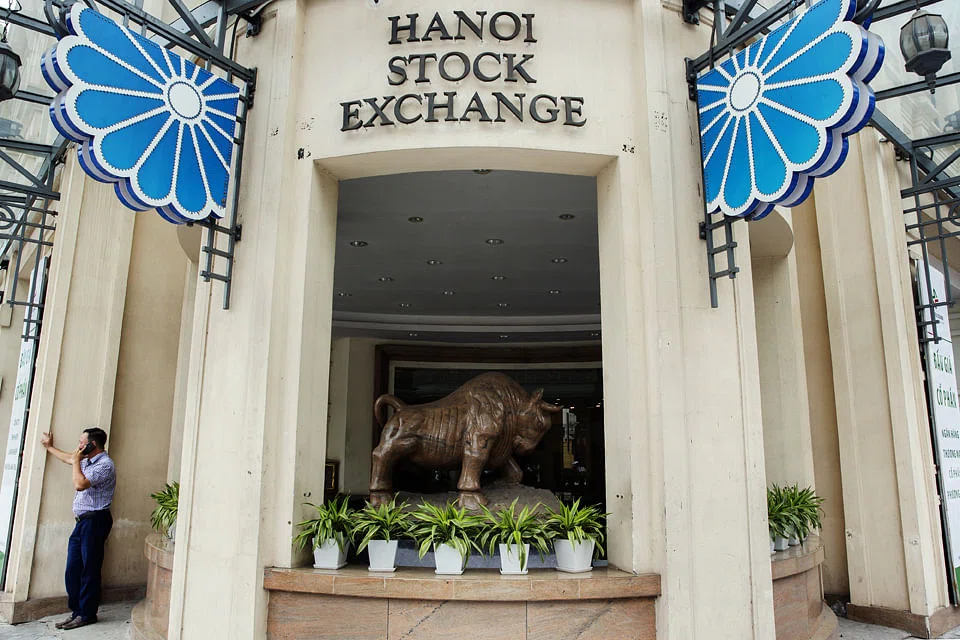
VIETNAM is boldly racing ahead with plans to boost the fortunes of its stock market. Starting Jan 1, 2021, it will begin the process of creating a new, single bourse to replace the two existing markets in Ho Chi Minh City and Hanoi. And it is decentralising ministerial power and giving more authority to the watchdog, the State Securities Commission (SSC).
The new Vietnam Stock Exchange (VSE) will replace the Ho Chi Minh City Stock Exchange (HOSE) and the Hanoi Stock Exchange (HNX), under a recent law on securities. At present, stock trading is split into two separate and often ill-coordinated stock exchanges that operate under different rules.
Vietnam first set up stock exchanges 20 years ago and now has over 30 listed billion-dollar companies, according to the SSC. Listed companies on the HOSE and HNX increased in number from five in 2000 to 743 last year. The market capitalisation of companies traded on the HOSE was more than US$141 billion on Dec 12, 2020, and that of the HNX was over US$10 billion.
Under the new law, the SSC has been given a large degree of independence from the Ministry of Finance, making it nimble and fleet-footed. But when the VSC starts operating, half its capital will be held by the state, which will still give the government some control. The VSC, for its part, will have wide authority to supervise, inspect and deal with violations by investors, brokers, and listed companies.
According to a recent report by the international law firm, Russin and Vecchi (Vietnam), the merger of HOSE and HNX into a larger VSE is expected to generate greater operational efficiencies, greater choice, increased supply and greater liquidity.
A major gainer in the sweeping revamp of the capital market is the SSC, which has been given more clout to act as an overall market supervisor and enforcer of trading rules. The SSC will also help create a new entity responsible for tasks such as registration of stocks, clearance and payment.
The new law on securities aims to curb market abuse and manipulation through various measures. First, it bans the use of trading accounts to buy and sell stocks in a manner that creates artificial supply and demand; secondly, it prohibits a person from using another person's account to trade because such transactions may manipulate stock prices; and thirdly it debars stock brokerages from using the accounts or assets of their clients in a bid to prevent them from violating trust or misusing a clients' assets.
The new law has established a new category of "professional" investors in order to exclude a large number of individual investors, who were not qualified as professional stock investors, from participating in certain segments of the market such as trading in bonds, and to improve the quality of investors.
The law thus clarifies a grey area by widening the category of "professional securities investors" to include not only financial institutions but also companies with paid-up charter capital of 100 billion Vietnam Dong (VND) (S$5.7 million) or more, as well as listed companies, individuals with a stock trading licence, and individuals holding securities portfolios worth at least two billion VND or having taxable income of at least one billion VND.
New restrictions have been imposed on private placements with the purpose of preventing the issuer from making simple private placements instead of taking the more rigorous route of a public offer. These restrictions cover private placement of shares, convertible bonds, and warrant-linked bonds issued by public companies, securities companies and fund management companies. However, such placements may also be made to strategic investors and professional investors, but with the proviso that the former may not transfer them for three years, and the latter for one year.
The new law strives to encourage better quality brokerages and fund management companies to operate by revising the single step process to obtain a government licence to two steps. They will still require a stock trading licence issued by the SSC, as they did earlier, but they must also obtain an enterprise registration certificate. Under the compliance timetable, the existing foreign and local brokerages and fund managers have until January 2023 to comply with the new licensing rules.
The SSC is in a hurry to reform its capital markets in its continued push towards excellence. Vietnam ranked fourth among the world's 10 best-performing stock markets in the August to September period this year, according to SSC chairman Tran Van Dung.
In the first 10 months of 2020, the average transaction value was about US$274 million per session, up 36 per cent against 2019.
According to Mr Dung, the Vietnamese market was back on the road to recovery after plunging nearly 33 per cent at the end of the first quarter of this year, over the previous quarter. The improvement was in step with the recovery of the broader economy. In the first three quarters of this year, the country's economic performance was among the best in the region, with trade surplus at a record of US$17 billion. The World Bank and the Asian Development Bank have predicted that the Vietnamese economy would grow between 1.6 and 3 per cent this year.
Part of the growth and recovery story is being scripted by companies listed on the Vietnamese bourses. Some 86 per cent of the listed companies recorded profits in the first nine months of this year, although their profits were down from 2019. And in the continuing effort towards improving the quality of domestic companies seeking listing, the paid-up capital requirement has been raised from the present 10 billion VND to 30 billion VND.
The Vietnamese stock market is turning out to be the preferred place for local and foreign investors as Vietnamese banks have lowered interest rates and the rise in the price of gold has slowed.
The Cinderellas entering the Vietnamese market are not watching the clock for warnings to exit the ball. Investors are confident that the party will go on.