

Swiss central bank draws flak for abandoning franc-euro cap
Swiss firms from watchmakers to ski resorts hammered by franc surge; stocks plunge
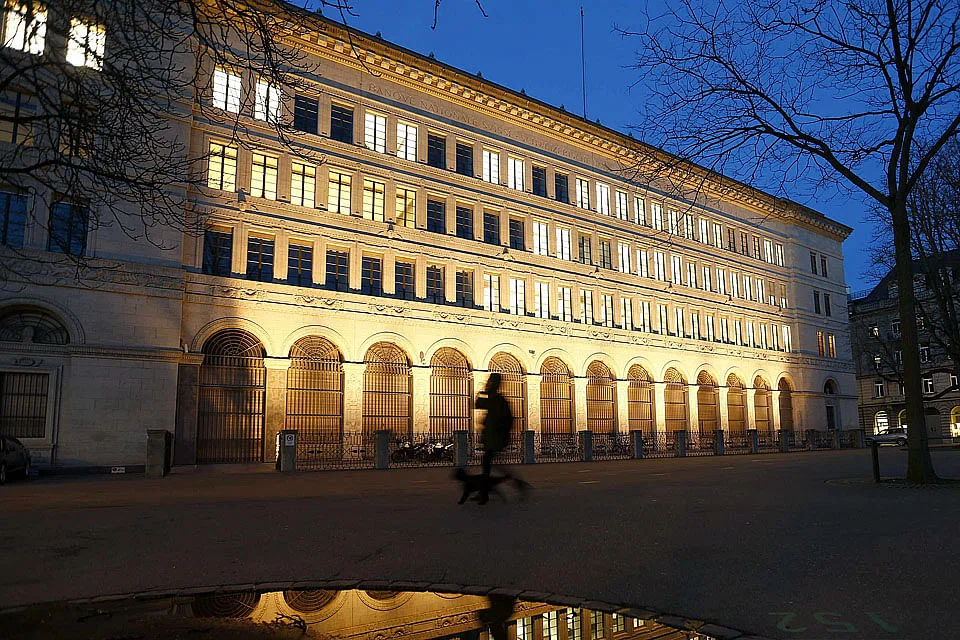
Zurich
SWITZERLAND'S central bank came under fire at home and abroad on Friday after scrapping its bid to stop the franc from rising, which wreaked havoc on global markets and bankrupted several foreign-exchange traders.
A brokerage firm in Britain and another in New Zealand declared insolvency while at home in Switzerland, exporters warned that they too could be put out of business by the Swiss National Bank's (SNB) sudden decision.
"From an economic standpoint, this move is incomprehensible at the current time," the Swiss Business Federation said in a statement, warning that the country's vital export and tourism industries would be hurt. The Swiss Federation of Trade Unions said the SNB's decision "massively endangers wages and jobs in the export industry and raises the risk of deflation in Switzerland".
Swiss newspaper Le Temps charged in an editorial that the central bank was "guilty of naivety" and questioned if it had forgotten the stabilising role it should play on the markets and the economy. The SNB had "put its credibility at risk", the newspaper said, while the Tribune de Geneve said the bank was "sinking the Swiss economy".
A rout on Swiss stocks continued on Friday, with shares tumbling about 4 per cent, after having already plunged 8.7 per cent on Thursday. The SNB had caught markets off-guard on Thursday with its shock announcement that it was abandoning the minimum rate of 1.20 francs against the euro that it had been defending for more than three years.
Analysts said the country's renowned watchmakers and luxury goods companies, including Swatch and Richemont, were likely to be the biggest casualties, with the starkest mismatch between revenues abroad and costs at home. Other Swiss blue-chips, such as food group Nestle, engineer ABB and drugs firms Novartis and Roche, would be better protected by their operations in local markets around the world, they said.
But all would be affected to some degree by what the head of brokerage Kepler Cheuvreux described as "a terrible day for corporate Switzerland". "We can expect a wave of profit warnings from Swiss companies," said Pascal Bernachon, strategist at Paris-based private bank KBL Richelieu.
Frantic trading slashed about US$100 billion off the value of Switzerland's blue-chip stocks, their biggest one-day fall on record, in what some traders described as "carnage". The benchmark SMI index slumped as much as 13 per cent, with Swatch, Richemont and biotech firm Actelion among the biggest losers, down 14 to 17 per cent.
Swiss exports account for about one-third of gross domestic product, led by chemicals and pharmaceuticals, precision instruments, clocks and watches and jewellery, and machines, appliances and electronics.
The country's biggest trading partner is the European Union - outside of which it has consistently voted to remain - led by Germany. The second-biggest is the United States. Tourism is also a major part of the economy, contributing about 3 per cent of GDP and employing 5 per cent of the labour force in the hotel and restaurant industries, mostly in small and mid-sized firms.
The central bank's decision comes as the ski season in the Alpine nation gets into full swing, and a week ahead of the World Economic Forum, the annual meeting of the world's political and business elites in the Swiss ski resort of Davos.
Nick Nelson, head of global and European equity strategy at UBS, said the surge in the franc made the already expensive Swiss stock market even less attractive to foreign investors. "Even if you sector-adjust the Swiss market and give it the same sector mix as the MSCI world index it's still pretty much one of the most expensive European countries at just over 14 times forward earnings compared to say 11 times for Germany." "Clearly this is going to be an additional headwind," he said, although for some investors already owning Swiss shares, the currency rise may offset the stock price falls for now.
The surge in the franc means the "Made in Switzerland" tag used by luxury companies as a mark of quality to drive sales in foreign markets is no longer such an advantage.
"Swatch, Richemont and other luxury players will find it difficult," said Neil Wilkinson, European fund manager at Royal London Asset Management, talking about the firms most exposed. "To negate that risk going forward, then ultimately you need to move your cost structure to a different geography. But that's easier said than done. For Swatch, your unique selling point is the fact you're selling a Swiss watch, and most people will want their Swiss watch to be manufactured in Switzerland."
That contrasts with firms such as Nestle, Novartis, Roche, Syngenta, Credit Suisse and UBS, whose revenues and costs are largely in the same currencies.
Roche, which has around 17 per cent of its operating expenses in Swiss francs, said its wide spread of costs and revenues would mitigate the impact of the surge in the franc. Novartis had 12 per cent of its costs in francs in 2013.
Chemicals companies Clariant and Syngenta with only 4-5 per cent of their costs in francs, would be minimally affected, Baader Bank analyst Markus Mayer said, while Nestle also has less than 5 per cent of its costs in francs, according to James Targett at Berenberg.
Citigroup analysts estimated the potential negative impact for Richemont's earnings in the mid- to high-single-digit percentage range in 2015 and 2016, though it would likely be mitigated by gold prices, pricing power and more cost cuts.
For Swatch, they said the surge in the franc could cost it 8-10 per cent of its earnings, noting that the watchmaker did not hedge currency risk. "Words fail me!" said Swatch CEO Nick Hayek. "Today's SNB action is a tsunami for the export industry and for tourism, and finally for the entire country."
Gary Paulin, co-founding partner of equity brokerage Aviate Global, pointed to repercussions for companies outside Switzerland, including airlines that fly to Swiss skiing resorts such as Ryanair. "Bad news for those going skiing in Switzerland, it just got 20 per cent more expensive," he said. AFP, Reuters
READ MORE: Swiss franc's rise freezes tourism
READ MORE: Fiscal lessons from Switzerland's 1-day, 18% currency rise
TRENDING NOW

MAS allocates S$1.45 billion to five asset managers in third EQDP batch: Chee Hong Tat

UOB found ‘grossly negligent’ over Stamford Land rights issue advice, to pay S$1.9 million

East Coast Road, Serangoon North View private-housing sites launched for sale

‘My grandfather’s legacy’: Sherman Kwek lays out three-year plan for CDL to drive returns

