

Tapping vast business opportunities in S-E Asia
Panellists will talk about Asean's enormous business potential at Sept 24 dialogue organised by BT and HSBC
Singapore
THE statistics show that South-east Asia - a bustling region of about 650 million people - is brimming with business potential and expansion opportunities for both Singapore and global companies.
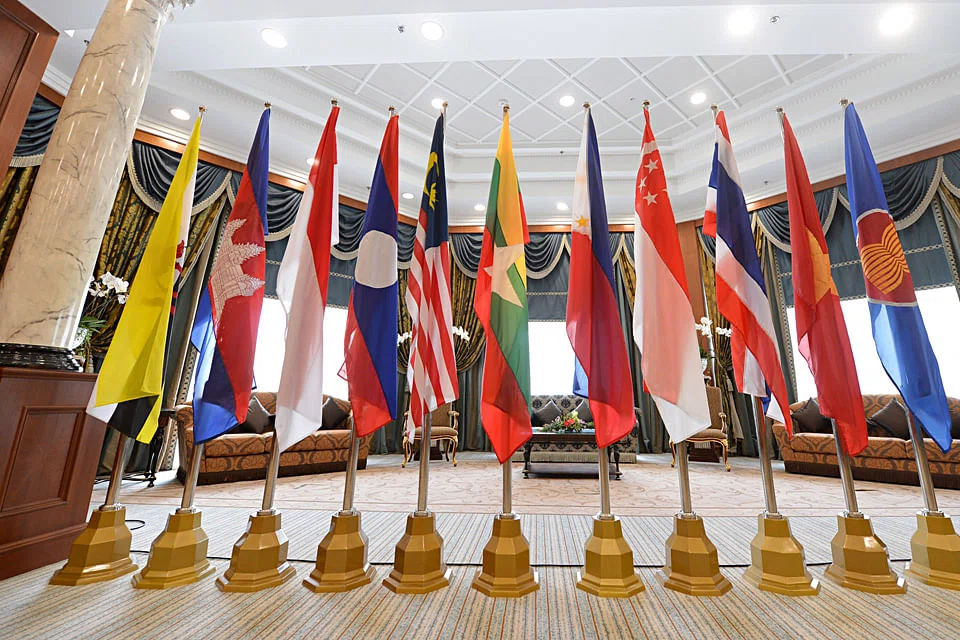
There are 10 member states in the Association of Southeast Asian Nations (Asean) grouping - Brunei, Cambodia, Indonesia, Laos, Malaysia, Myanmar, the Philippines, Singapore, Thailand and Vietnam.
Their combined GDP stood at US$2.76 trillion in 2016. Growing at a rate of 4.7 per cent, Asean's GDP is significantly higher than any other global region and translates to a per capita metric of US$4,308.
Asean is one of the youngest and fastest growing economic powerhouses in the world today. As a single entity, it is one of the world's top five economies - behind the United States, the European Union, China and Japan. As things stand, Asean is on track to become the world's fourth-largest economy by 2030.
Asean's success since the 1960s has been built on trade, peace and stability, and a firm dedication to sustainable economic growth, rather than politics.
But no region in the world has been spared by the ongoing economic uncertainty, and Asean is no exception.
A new report released by the Institute of Chartered Accountants in England and Wales (ICAEW) on Thursday found that economic growth across the South-East Asia region is expected to moderate to 4.5 per cent in 2019, from 5.1 per cent in 2018.
This downward revision comes amid another round of tariffs and trade restrictions by the US and China.
"Accommodative macro policies, coupled with domestic-driven activities, are expected to cushion the weaker trade outlook, although this will vary across economies," ICAEW said in a statement.
"Overall economic growth across the region in H1 2019 slowed to 4 per cent on the year compared to 4.5 per cent in H2 2018. This is the result of spillovers from the US-China trade war, slower Chinese domestic demand and a downturn in the global electronics cycle," the institute said.
Despite a more challenging outlook, there are still vast business and expansion opportunities across Asean. And it is with this in mind that The Business Times and HSBC are jointly organising a dialogue on the morning of Sept 24 with the theme "Asean: A region of opportunities".
The hour-long dialogue will be moderated by The Business Times deputy news editor Lee U-Wen. The session will be held at the new Straits Times Studio at Singapore Press Holdings, and will feature four panellists:
The former Barclays banker was appointed in August 2017 and is responsible for the commercial banking business in Singapore.
Banking over 5,000 companies, the division provides products and services across cash management, foreign exchange, lending, liquidity management, trade finance and receivables finance for a wide range of businesses from small and medium-sized enterprises (SMEs) to large local and multinational corporates.
He joined HSBC from Barclays where he was its global head of Product - Corporate Banking. Prior to that, he performed a number of capital structuring and origination roles in London, Hong Kong and Sydney (including the formation of Barclays Capital's leveraged finance business in the Asia-Pacific), arranging debt and equity transactions for over 100 issuers from 14 different countries.
In this role, he works closely with Singapore-based companies within the ICM sector to facilitate their growth, both in acquiring capabilities as well as in uncovering new demand markets. Concurrently, he leads broad-based digitalisation initiatives that help SMEs build stronger digital capabilities and participate in the digital economy.
Prior to this portfolio, Mr Lee was director for the Lifestyle Business Group at the agency then known as International Enterprise Singapore. Before that, he was with the South-east Asia Group, first as assistant director based in Singapore, and later as regional director (Indonesia) based in Jakarta.
He has been in this role at the lifestyle brand for games since March 2018. He is responsible for the development and execution of Razer's corporate strategy, driving strategic initiatives including mergers and acquisitions (M&A), investments, partnerships and further penetration into broader entertainment segments.
A veteran Singapore investment banker, he has over 15 years of corporate finance experience in M&A, as well as in capital markets advisory. He was formerly managing director at US investment banking advisory firm Evercore Singapore.
Before joining Evercore, Mr Lee had a brief stint at ANZ as head of debt capital markets in Singapore. He was a vice-president at JP Morgan between 2002 and 2010, and a principal at Singaporean private equity firm CMIA Capital Partners between 2010 and 2013.
He was appointed to this current role in June 2018, and leads the real estate company's department in producing market intelligence through regular research bulletins, commentaries, media columns, property supplements and knowledge-sharing at public seminars and events.
One of the primary topics of discussion at the dialogue will be the business and expansion opportunities in Asean, and what companies should look out for when navigating the various hurdles in the region, as they seek to grow their presence abroad. There will be a focus on three key Asean markets, namely Vietnam, Indonesia and Thailand.
The panellists are also expected to talk about the importance of digitalisation and how companies can leverage Asean's thriving digital economy for business expansion.
Asean's digital economy is growing rapidly, with expanding digital networks and growing numbers of mobile phone and Internet users. Nearly four million new users will come online every month for the next five years. According to Deloitte, this translates into a user base of 480 million by 2020.
There are over 700 million active mobile connections in South-east Asia alone, with a majority of them under the age of 40 and increasingly middle-class.
Research shows that these consumers spend about US$30 billion online today, and experts predict that spending could rise to as much as US$200 billion by 2025 - fuelled largely by consumption of electronics, clothing, household goods and groceries and increased travel within the region.
TRENDING NOW

China Investment Corp, PGIM’s 50% stake in Nex mall up for sale; asking about S$1.2 billion

Higher rates, weaker spending: Is the Philippines entering stagflation?

Singapore tech stocks plunge as Nasdaq bloodbath spills into region

OCBC wealth clients turn defensive amid market volatility as Q3 profit rises 3%

