Thai finance minister resigns amid economic team shake-up
 Add BT as a preferred source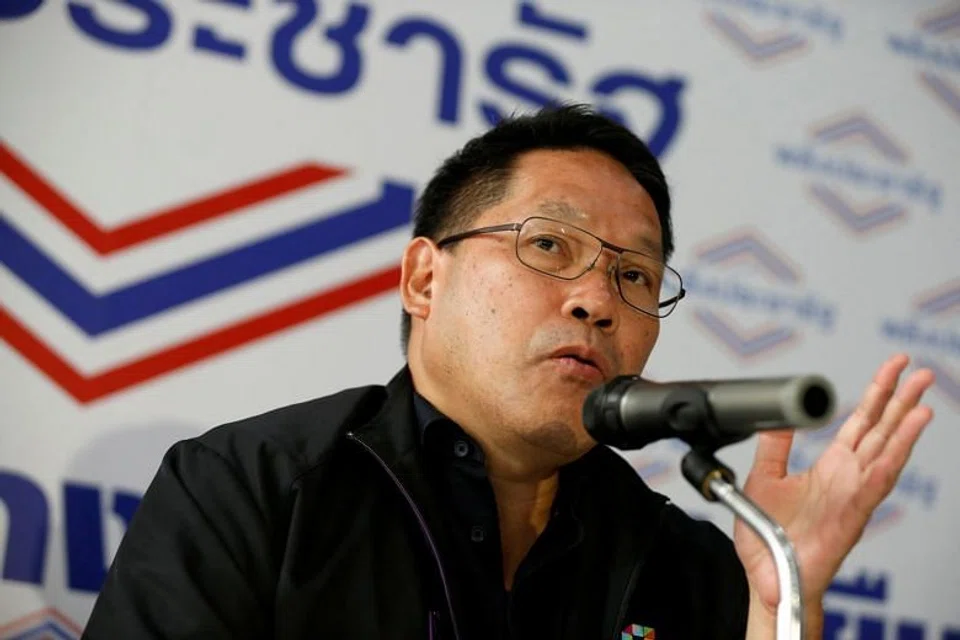
DeeperDive is a beta AI feature. Refer to full articles for the facts.
[BANGKOK] Thailand's Finance Minister Uttama Savanayana resigned on Thursday in a move that adds uncertainty to policy making at a time when Southeast Asia's worst-performing economy is struggling to recover from the impact of the Covid-19 crisis.
The departure of Mr Uttama, who confirmed his resignation at a briefing, comes as the government has been rolling out billions of dollars of stimulus measures in a bid to support an economy battered by the pandemic's hit to tourism and domestic activity.
"It's an appropriate time to resign" for the economy to move forward, Mr Uttama told the briefing. "There was no pressure."
According to media reports, Predee Daochai, president of the Thai Bankers' Association, is expected to be the next finance minister.
Longtime economic policy czar, Deputy Prime Minister Somkid Jatusripitak, also submitted his resignation, Mr Uttama said.
Thosaporn Sirisumphand, secretary-general of the state planning agency, is reported to be the favourite to replace Mr Somkid, according to media.
Navigate Asia in
a new global order
Get the insights delivered to your inbox.
The energy minister and the minister of Higher Education, Science, Research and Innovation also resigned, as part of a major shake-up of the cabinet's economic team.
"One of the most immediate issues is how soon a new economic team will replace them," said Tim Leelahaphan, economist at Standard Chartered Bank.
The shake-up comes as a process is underway to pick a new governor of the Bank of Thailand (BOT), who will inherit an ailing economy with interest rates near zero percent, a stubbornly strong currency and a mountain of household debt.
Sethaput Suthiwart-Narueput, a former World Bank economist and an economic advisor to Prime Minister Prayuth Chan-ocha, is leading in the race to be new governor, according to media.
"The markets are anxious who will fill the shoes of the economic portfolios, as the change also has implications for the central bank governor's selection process," said Kobsidthi Silpachai, head of capital markets research at Kasikornbank.
Charnon Boonnuch, economist at Nomura in Singapore, said "elevated political uncertainty remains an important headwind to the economy, as it is an obstacle to long-term reform and large-scale investment".
REUTERS
Decoding Asia newsletter: your guide to navigating Asia in a new global order. Sign up here to get Decoding Asia newsletter. Delivered to your inbox. Free.
Share with us your feedback on BT's products and services