

Tokyo to press eateries to close early amid record Covid-19 cases
 Add BT as a preferred source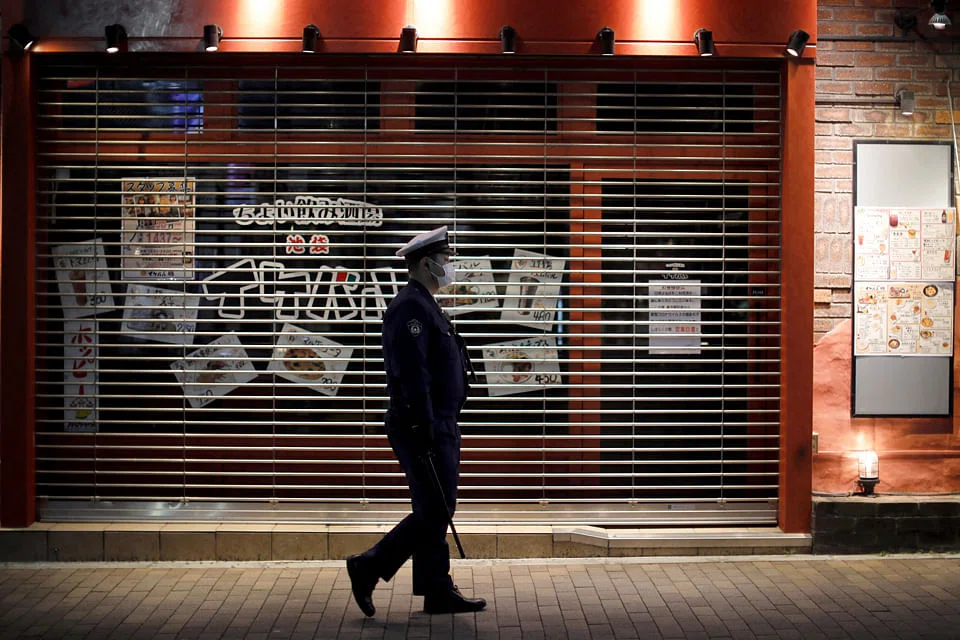
DeeperDive is a beta AI feature. Refer to full articles for the facts.
Tokyo
THE Tokyo metropolitan government will seek to have bars and restaurants close early under a virus quasi-emergency and in some cases stop serving alcohol, as case numbers soar to a record across the country, national broadcaster NHK said.
The government's expert panel on Wednesday (Jan 19) approved a plan to place 13 areas including Tokyo and its surroundings under the virus curbs, NHK said.
The decision is set to be made official later in the day. With three regions already under a quasi-emergency, the move will mean 16 of Japan's 47 prefectures are affected, accounting for more than half the country's economic activity.
The western region of Osaka is also seeing record infections that could soon prompt the government to act.
Reintroducing curbs on businesses could chill the economy, particularly if hospitalisations continue to rise and a full state of emergency is declared. In a report on Tuesday, Goldman Sachs economists estimated a one-month emergency would lead to real annualised growth turning negative for the quarter.
Navigate Asia in
a new global order
Get the insights delivered to your inbox.
Prime Minister Fumio Kishida said late Tuesday he was looking at a three-week quasi-emergency starting on Friday for the 13 areas including Tokyo.
The capital will post more than 7,000 Covid cases on Wednesday, a daily record, Kyodo reported, citing an unidentified person. Bars and restaurants that don't have certification for their anti-virus measures will be asked to close at 8 pm and stop serving alcohol under the restrictions, according to NHK.
Those that have the certification will be asked to choose whether to stop serving alcohol and close at 8 pm, or to serve alcohol until 8 pm and close at 9 pm.
Larger subsidies will be offered to those that close at 8 pm, the report said. "Shortening hours will obviously reduce spending on eating out," said Atsushi Takeda, an economist at Itochu Research Institute, adding that travel to areas under restrictions would also be affected.
"There had been expectations for a strong increase in consumption in January-March, as in October-December, but this throws cold water on that idea."
Virus case numbers soared to a new nationwide record of more than 32,000 on Tuesday, NHK said, while 10 deaths were reported. Tokyo is set to seek a state of emergency if its hospital bed occupancy rate rises over 50 per cent.
According to the metropolitan government's website, 23.4 per cent of the beds were occupied as at Tuesday. "What's different this time is that there are a lot of 'close contacts,'" said Tsuyoshi Ueno, a senior economist at NLI Research Institute.
"They will stop going to work, so there's a concern" businesses will be short-staffed and unable to provide services." Japan is heading into a wave of Omicron infections with very few of its people having received a third vaccine dose. About 1.2 per cent of the population had done so as at Tuesday, according to the website of the prime minister's office. BLOOMBERG
Decoding Asia newsletter: your guide to navigating Asia in a new global order. Sign up here to get Decoding Asia newsletter. Delivered to your inbox. Free.
Share with us your feedback on BT's products and services
TRENDING NOW

Shelving S$5 billion office redevelopment plan proved ‘wise’ as geopolitical risks mount: OCBC chairman

Eurokars Group introduces rental car franchises Enterprise Rent-A-Car, National Car Rental, and Alamo to Singapore
20 photos that show how dramatically Singapore has changed in two decades
Singapore’s key exports up 15.3% in March from electronics surge, exceeding forecasts

