

Too soon to pop the bubbly for Singapore economy
Phase One agreement offers more certainty but uplift largely comes from warmer sentiment, say analysts

Annabeth Leow
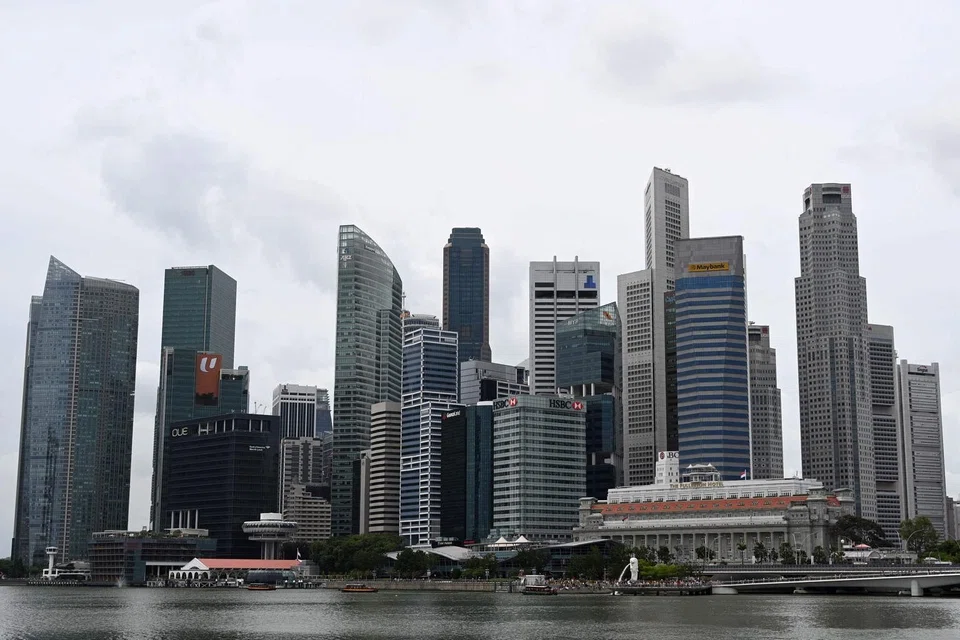
Singapore
LONG in the making, the Phase One trade deal between the United States and China can now put an end to some of the uncertainty that has dogged the global economy of late.
But it is not likely to move the needle on Singapore's growth forecasts for 2020, economists told The Business Times on Thursday, in the wake of the signing of the pact.
Hopes of trade-talk progress were already baked into economic projections for the year, so any uplift at this time is likely to come on from sentiment and a cyclical upswing in the linchpin electronics industry, rather than material factors arising out of the trade agreement, they indicated.
And, at the end of the day, a first-stage deal is just that: a starting point.
As Mohamed Faiz Nagutha, Asean economist at BofA Securities, put it in an e-mail to BT: "The Phase One deal was very much in line with our year-ahead expectations. So, we are not making any changes at the moment.
"We continue to project a shallow recovery for the Singapore economy... as policy uncertainty recedes and global growth stabilises."
Similarly, Maybank Kim Eng senior economist Chua Hak Bin said that an expected recovery here "will largely be driven by improving business confidence and sentiments, rather than the terms of the trade deal".
"Companies will be more willing to restart capex and, in turn, this will revive trade and exports... A ceasefire is not the perfect outcome, but the worst-case scenario has been avoided," Dr Chua elaborated.
Yet sluggishness could extend even to China, with United Overseas Bank economist Ho Woei Chen saying in a report that the trade deal curbs some uncertainty "but is unlikely to catalyse a strong rebound in growth, particularly for China, since the bulk of the US-China tariffs will remain".
Vishnu Varathan, regional head of economics and strategy at Mizuho Bank also warned that, as earlier tariffs stay in force, "the underlying demand in recovery may be restrained once we look past the initial inventory adjustments from relief".
On top of that, some analysts fret that China's new purchasing commitments in the trade deal could disrupt the status quo for other markets.
A Citi report on Jan 13 said that, without hikes in China's global imports capacity, "the US-China shopping list means that additional purchases from the US will come at the expense of other economies", especially as "the US is capable of increasing shipments to China of most goods in scope by re-allocating exports".
Key features in the pact include fresh pledges by China to raise its purchases of energy commodities and agricultural goods from the US.
Given Singapore's role as a petrochemicals hub, Howie Lee, an economist at OCBC Bank, warned that "if they're forced to buy that much crude, they may just process it domestically" and skip Jurong Island.
Still, he believes "the first hurt will be felt by the agriculture people" in markets like Brazil, since Singapore tends to ship intermediate goods.
Mr Lee told BT over the phone: "When you go up the value chain, I think it's not that easy to replace them overnight... Even though China is forced to buy some kinds of goods from the US, I don't think Singapore will be replaced completely."
Meanwhile, other doubts linger over how the US and China can hold up the bargain - especially whether American farms can churn out the extra supply China has agreed to buy.
To be sure, Mr Lee, who told BT that a US-China trade deal will be largely positive for Singapore "because a resumption of trade flows should lift the region", said that any such missed targets would be "not a biggie - it's just Phase One".
But Mr Varathan added more soberly that "until and unless a Phase Two agreement removes a large part of trade impediments and consequent uncertainty", a sustained up-trend may prove elusive.
READ MORE:
TRENDING NOW

He built the Vingroup empire. Now South-east Asia’s richest man is handing some key roles to his sons
US dollar falters after Iran’s offer to reopen Hormuz sends oil lower
Temasek’s Wan Chee Foong to helm PIL, Lars Kastrup to be board adviser
Despite the de-dollarisation debate, demand for dollar liquidity in Asia is growing

