Transitional support, cost-sharing key to PWM's success

Singapore
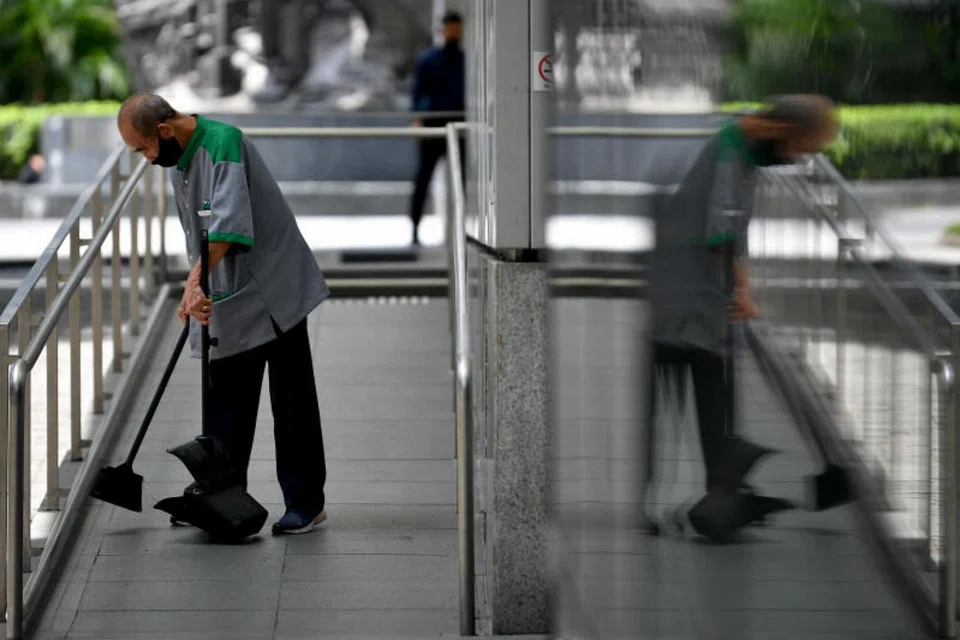
THE slew of recommendations by a tripartite workgroup to uplift 283,000 lower-wage workers could exert heavy cost pressures on companies, underscoring the critical need for transitional support measures by the government, said industry watchers on Monday.
The Singapore National Employers Federation (SNEF), which is part of the workgroup chaired by Senior Minister of State for Manpower Zaqy Mohamad, said it strongly supports the recommendations, but added that there are two key concerns raised by employers.
These are the timing of the changes and the sustainability of cost increases, especially for companies that are still struggling from the pandemic, said SNEF president Robert Yap at a press briefing.
"We are all very supportive of this, we understand the importance and we understand why we need to do it, but there are some businesses that are actually, especially during this time, under very, very exacting challenges," he said.
He said there are two types of support firms are looking for - one would be for the increased base cost, while the other is in job redesign.
DBS senior economist Irvin Seah said government support could come in the form of investment in technology and automation to reduce reliance on manpower.
It could also be subsidies for the upskilling of workers to raise their productivity, "rather than direct subsidies because that would then defeat the whole purpose", said Mr Seah, adding that these measures may be announced in the Budget 2022.
With the first-phase implementation set for September next year, OCBC chief economist Selena Ling believes this is sufficient advance notice.
"Hopefully by then, the economic and Covid-19 situation would be on a more stable footing for affected firms to pass on at least some of the higher cost impact," said Ms Ling.
Singapore Business Federation (SBF) chief executive Lam Yi Young, who welcomed the recommendations, said the changes should be implemented in a fair and equitable way.
This will ensure a level playing field so that companies which pay fair wages will not be unduly disadvantaged in terms of cost competitiveness, he said.
The changes should also be easy to implement to avoid imposing unnecessary administrative burden on businesses, he added.
"We hope the government, as a major buyer of goods and services, will take the lead in recognising companies that pay fair wages during government procurements, taking into account the added costs in the budgets for government projects and being open to making price adjustments to existing contracts affected by the Progressive Wage Model (PWM)," said Mr Lam.
The SBF also called for cost sharing, with consumers roped in to bear part of the added costs - something the workgroup alluded to in its 95-page report as well.
With the framework now extended to consumer-facing sectors, Walter Theseira, an economist at the Singapore University of Social Sciences said there will be an "inevitable effect" on consumer prices.
This is also unlike earlier iterations of the PWM that generally only affected business-to-business services that did not have a direct impact on most consumers, he said.
"This is important because we really cannot pretend that altering the wage distribution can be done for 'free'; the whole of society has to share the costs," he said.
He added: "In the earlier years, the rhetoric was very much that the PWM could result in an increase in wages that paid for itself through higher productivity and skills. While we would like to wish that were so, there is a limit to how much productivity can go up in services, and it's also not true that wages always perfectly reflect productivity or value-add.
"The wage distribution is also a social construct... and it is time that we change that social construct in favour of lower-wage workers."
READ MORE: