UK economic rebound slows in May, carmakers hit by chip shortage
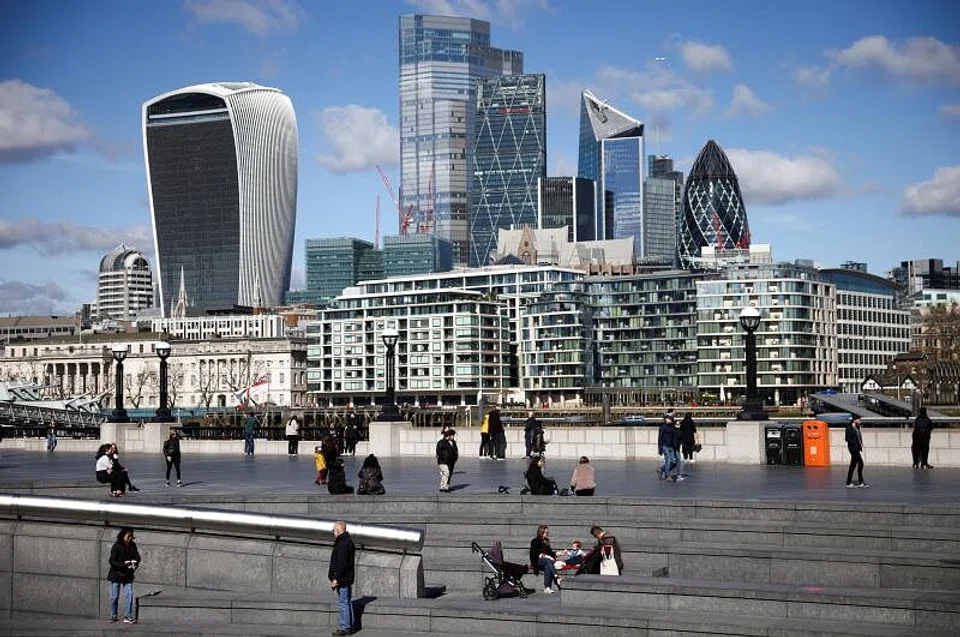
[LONDON] Britain's post-lockdown economic rebound slowed sharply in May, according to official data that also showed the impact on the country's car makers from a global shortage of microchips.
Gross domestic product grew by 0.8 per cent from April, the Office for National Statistics said, a lot weaker than the median forecast of 1.5 per cent in a Reuters poll of economists.
The Office for National Statistics revised down its figure for growth in April to 2.0 per cent from its previous estimate of 2.3 per cent - reflecting a reduced contribution from Covid-19 testing services - although the estimate for March was increased.
"Of course, the pace of the recovery was always going to slow as the economy climbed back towards its pre-crisis level.
But we hadn't expected it to slow so much so soon," Paul Dales, an economist with Capital Economics, said.
Sterling fell slightly after the figures were published.
The Bank of England expects Britain's economy to grow by 7.25 per cent this year, the fastest annual growth since 1941 when Britain was rearming during World War Two. Last year output plunged by almost 10 per cent, the biggest drop in more than 300 years.
April saw the easing of restrictions for non-essential retailers, hairdressers and pubs and restaurants that could serve customers outside. In May, hospitality firms were allowed to resume indoor service.
"The sharp slowdown in growth suggests that the recovery is losing a little steam as the temporary boost, from the earlier phases of reopening, fades," Suren Thiru, head of economics at the British Chamber of Commerce, said.
Despite the slowdown in May, the 0.8 per cent growth rate was faster than typical pre-pandemic, month-on-month rises in GDP.
Britain's dominant services sector grew by 0.9 per cent from April, including a huge 37.1 per cent monthly jump for accommodation and food services.
Industrial output grew by 0.8 per cent while construction output contracted by 0.8 per cent from April, hit by the fourth-rainiest May since 1862. The chip shortage affecting car makers led to the biggest fall in their output since April 2020, the ONS said.
Britain's economy grew each month between February and May, but GDP was still 3.1 per cent smaller at the end of May than it was in February 2020, before the pandemic struck the country.
Compared with May last year, when the country was grappling to come to terms with its first coronavirus lockdown, GDP was up by nearly 25 per cent, the ONS said.
Prime Minister Boris Johnson plans to lift most of the last restrictions from a third lockdown on July 19 after a fast rollout of Covid-19 vaccinations.
New cases of the Delta variant of the coronavirus have accelerated in recent weeks but private-sector data and surveys covering that period suggest no major hit to hiring or consumer behaviour in late June and early July.
The ONS said publication of trade figures, which should have been released with the GDP data, had been delayed until 1100 GMT.
REUTERS
Decoding Asia newsletter: your guide to navigating Asia in a new global order. Sign up here to get Decoding Asia newsletter. Delivered to your inbox. Free.
Share with us your feedback on BT's products and services