

UK Parliament seizes control of Brexit options
MPs to work on new approach; 3 ministers quit Cabinet to vote against PM May
London
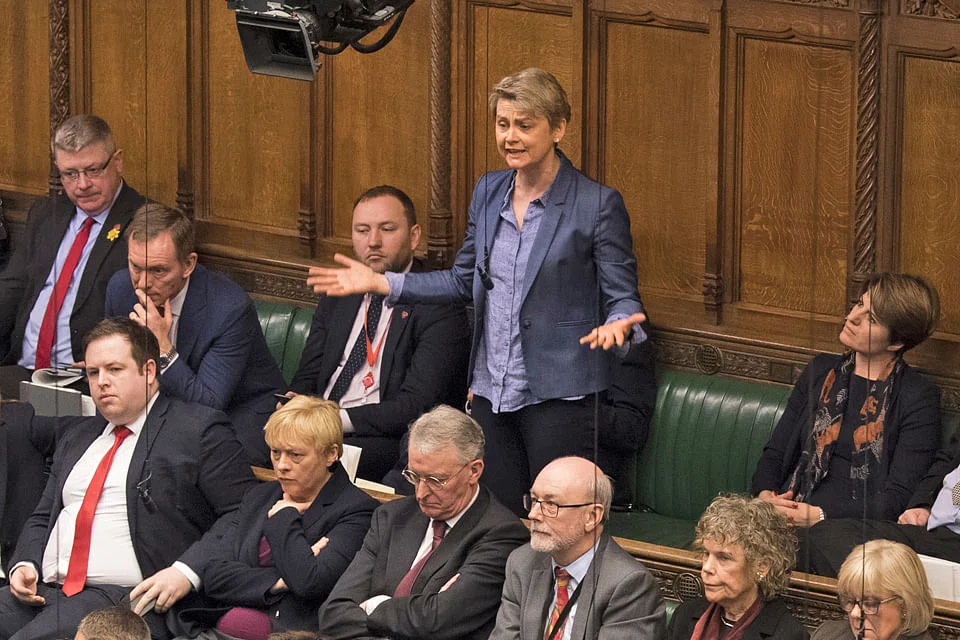
BRITISH MPs have passed an amendment that gives parliament the power to hold votes on various Brexit options, taking over the controls from Prime Minister Theresa May.
The unprecedented measure was passed by a 329-302 margin and saw three junior ministers quit the government to vote against the prime minister who has not been able to get MP support for the withdrawal deal that she and her team have negotiated with the European Union.
The pound rose immediately after the result, before paring gains. Britain's blue-chip index bounced back from two sessions of losses on Tuesday, as exporters benefited from a weaker sterling.
All the "indicative votes" that have been discussed would hopefully give parliament and the government an indication on what sort of Brexit, cross party MPs are prepared to accept. But all the options to be considered are non-binding and can only come into effect if there is a bill.
The government under Mrs May can reject the options, but that could set off a no-confidence motion.
Mrs May will engage constructively with the process, her spokesman said. But any of the options considered must be deliverable in negotiations with the EU.
The prime minister will also address her Conservative lawmakers on Wednesday, possibly to announce a resignation date in a last throw of the dice to win support for her twice-rejected deal. According to a party source she could set a date for her resignation at the meeting.
The EU, perceiving a no-deal Brexit as a serious threat, on Monday issued a lengthy release explaining what people and businesses of EU nations need to do if such an outcome takes place.
The EU, which has taken control of the Brexit timetable, has extended the Brexit date to April 12. If Mrs May manages to get support for her deal, the EU will grant an extension until the end of May 2019 before European elections take place.
Conservative Brexiters said they could vote for her deal if Northern Ireland's Democratic Unionist MPs back it and the PM sets out a firm date for her resignation. Conservatives do not want Mrs May to lead trade and other negotiations as they believe she has been a poor negotiator.
April 12 is a key date: if the EU increases the Brexit extension further, UK parties have time to forward candidates for the European elections. That would infuriate people who voted for Brexit in 2016.
The EU is not prepared to re-open Mrs May's withdrawal bill, but all 27 nations would need to accept any of the options that Parliament chooses. The main option is "Common Market 2.0". This is close to the deal that Norway, Iceland, Liechtenstein and Switzerland have, although the Swiss deal is slightly different.
These nations are members of the European Economic Area (EEA) which is part of the single market that has free movement of capital, goods, services and people.
As members of the European Free Trade Association (EFTA) the nations are free to negotiate with the EU and other nations.
The UK, however would still have to be member of the customs union to keep the Ireland and Northern Ireland border open.
The advantage of such a deal is that the UK would be in the EU's Common Market but not subject to the EU's political unification ambitions. The disadvantages are that the UK would not be able to negotiate independent trade deals with the US, Asia and other non-EU nations.
Also, the UK would have to accept EU migrants against the majority wish of the 2016 referendum and be a rule taker, that is, have no say in future EU regulations.
Bottom line, remaining in the EU is preferable to Common Market 2.0, the soft Brexit option.
Another option is Labour's desire to be part of the customs union and single market, and to be able to vote on EU rules. The EU has already rejected any vote on its trade or other deals so this option is regarded by experts as "fantasy" and likely to be rejected in the vote.
Yet another is a referendum to allow the people to vote on Mrs May's deal or remain in the EU. This is likely to be rejected as the question would be heavily weighted against people who preferred Brexit. The only referendum question that would likely be accepted would again be "in" or "out".
If there is still no agreement, political experts believe an election would have to take place.
"A general election now would be a Brexit election," said former clerk of the House of Commons Lord Lisvane. "It would be a great shame if issues such as crime, health and education take a back seat".
The risk is that a hard-left Labour government under Jeremy Corbyn would win.
TRENDING NOW

Could stablecoins be the future of money?

Once staunchly pro-China, Malaysian Chinese businesses are now distancing themselves from Beijing

Vietnam’s data-centre investment rush faces reality check on power and site constraints

‘My grandfather’s legacy’: Sherman Kwek lays out three-year plan for CDL to drive returns

