

Ukraine war may drive up wheat, flour prices in Singapore

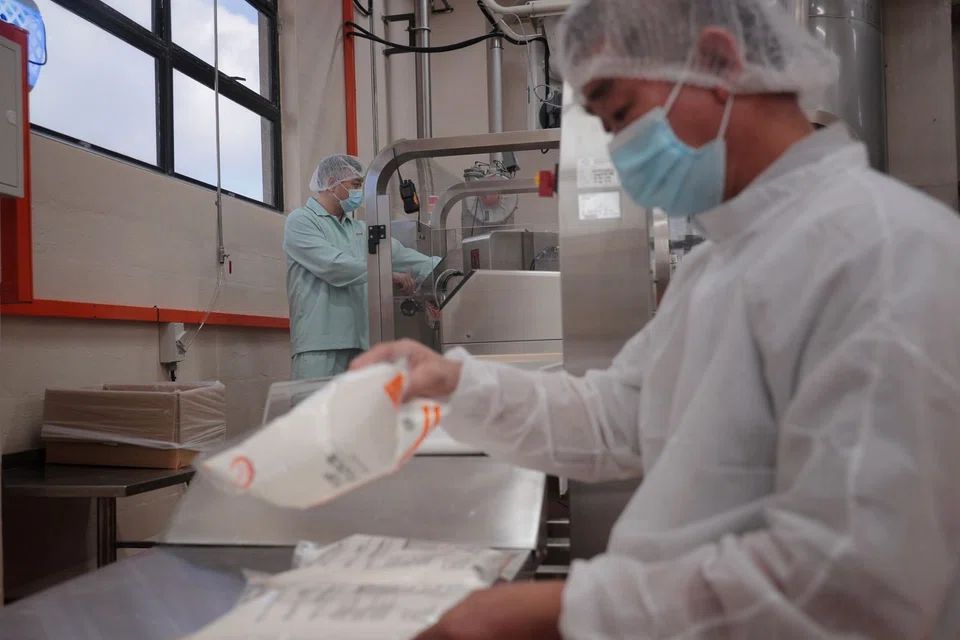
ALTHOUGH Singapore does not import wheat or flour directly from the Black Sea region, the ongoing conflict between Russia and Ukraine is still expected to drive up already-increasing prices of wheat and flour in the city-state, industry watchers and players told The Business Times.
Oscar Tjakra, a senior analyst at Rabobank, noted that global wheat prices were already at a high from weather disruptions that have hit global wheat production in the last 2 years.
A Rabobank report from Feb 17, before Russia invaded Ukraine, forecast global wheat prices to rise by 30 per cent if war broke out and sanctions were implemented. This would hit domestic wheat and wheat flour importers, as well as bakeries, snacks and noodle producers here, he said.
Steven Yeo, general manager of flour miller Prima, said: "Wheat is the largest raw material for many of our wheat-flour products, and we expect prices to remain volatile. If wheat prices continue to rise, our customers may expect to see some price adjustments accordingly."
But he added that Prima will continue to monitor the current climate and ensure that price adjustments "are kept at a minimum" for consumers. The firm sources wheat from the United States, Canada, and Australia, which are the top 3 sources of wheat for Singapore; Australia accounts for more than half this country's wheat imports. Small quantities are also imported from Malaysia, Japan, and France.
According to UN Comtrade data, Singapore imports between 200,000 and 250,000 tons of wheat and 100,000 to 120,000 tons of wheat flour annually. For the last 10 years, it has not imported wheat or wheat flour from Russia or Ukraine, which collectively account for about a quarter of the world's wheat supply.
In 2020, Singapore's total wheat flour imports came from Malaysia (34.8 per cent), Japan (21.8 per cent), Sri Lanka (15.3 per cent), Vietnam (10.1 per cent), India (5.8 per cent) and South Korea (3.5 per cent).
Retailers and bakeries interviewed by The Business Times acknowledged the rising cost pressures from the ongoing Russia-Ukraine war, and said these increases may be passed on to consumers in the long run.
A spokesperson for home-grown baking supplies retailer Phoon Huat said that costs of their imported raw materials and supplies have risen over the past 2 years, due to an increase in manufacturing and shipping costs. She declined to reveal the quantum of the rise, but said these costs have already been passed onto consumers.
For Tan Yuzhong, director of Keong Saik Bakery, the impact of the war on flour prices remains to be seen, as suppliers will generally still have a "couple months" worth of inventory to cushion supply shocks.
"At the moment, we haven't heard from our suppliers that the price of flour will go up because of the war. But I might hear something different in 1 to 2 months, when the stock runs out," he said, adding that he expects an increase of 3 to 5 per cent in the cost of raw ingredients, including flour. His bakery uses flour only from Japan.
One way for Singapore wheat importers to mitigate these anticipated increases is to plan or secure their wheat procurements, especially in the short term, analyst Tjakra said.
This is because the "export capacities and availabilities" of other global wheat exporters might be limited, as traditional Black Sea wheat buyers begin to diversify and source wheat from other markets, such as Australia.
"Even though Australia produced a record wheat crop in the marketing year of 2021 and 2022, the majority of shipping slots are booked for the coming months. Hence, Singapore's wheat importers will need to compete with other international wheat buyers to obtain their shipping slots," he said.
But diversification may not necessarily be easy further down the value chain.
Franz Hofbauer, master baker at Bakery Brera & Fine Foods, said it is more difficult for artisanal bakeries such as his to diversify flour sources and negotiate prices with suppliers than it would be for baked-goods franchises. He is anticipating a 10 per cent increase in the cost of flour from the second quarter of 2022.
All of Bakery Brera & Fine Foods' pastries and bread are produced in small batches and use higher-grade flour from Japan and France.
"Bigger bakeries are in a better position to negotiate price increases than us, because they buy ingredients in bigger quantities and produce bread on a larger scale," Hofbauer said. "Even if we buy Vietnamese flour at a lower price, it wouldn't solve the main problem. Our products will not be the same."
READ MORE:






