

Unemployment benefits proposal 'interesting to watch' due to past policy resistance

Singapore
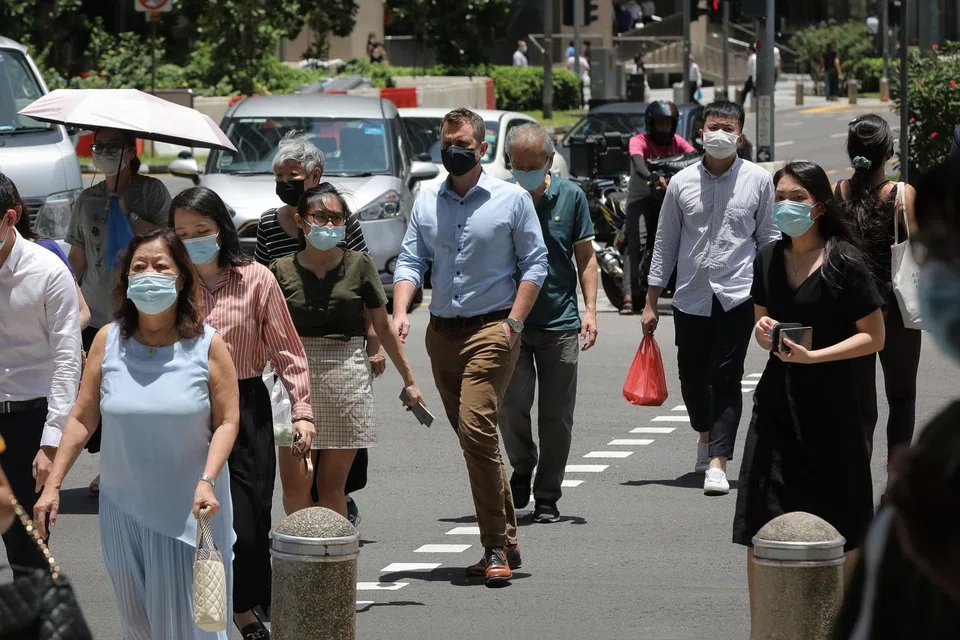
A PROPOSAL to introduce unemployment benefits in Singapore signals a wider recognition of the disruption faced by workers in the face of economic restructuring as well as the Covid-19 pandemic, industry observers said.
On Thursday (Oct 21), a joint taskforce comprising the National Trades Union Congress (NTUC) and the Singapore National Employers Federation (SNEF) called for the government to provide unemployment benefits as part of 9 recommendations to better support professionals, managers and executives (PMEs).
During a media briefing, Patrick Tay, NTUC's assistant secretary-general and co-chair of the taskforce, said the taskforce has not come up with specific parameters, as the issue needs to be further studied.
He listed 3 questions that need to be answered: when unemployment benefits should be triggered, the quantum, and how long these benefits should be given out.
"The key is, we don't want this unemployment support to be providing a disincentive to work, meaning this support is to help you to alleviate some of the challenges in the period that you're looking for a job," explained Tay.
These benefits should thus be rolled out together with "active labour market policies", he added.
For example, job seekers may need to participate in programmes organised by two of Singapore's placement agencies - Workforce Singapore and the Employment and Employability Institute.
In that sense, income support during unemployment already exists right now, DBS senior economist Irvin Seah pointed out, taking the form of professional conversion programmes where job seekers are paid an allowance while undergoing training. But to call such support "unemployment benefits" suggests a shift in perception politically.
Commenting on the proposal, OCBC chief economist Selena Ling said this is a "very interesting development to watch" since there has been policy resistance to the concept in the past due precisely to concerns about it disincentivising work ethics.
"The timing of this proposal may be a recognition that the pandemic has accelerated if not exacerbated some of the structural issues facing the lower-skilled and even PMEs, with technology and digital disruptions and rapid change in some industries, and that these problems may not subside rapidly, even with existing initiatives like the SkillsFuture initiative and the SGUnited schemes," she said.
Walter Theseira, an economist from the Singapore University of Social Sciences, added that economic shocks due to Covid-19, broader economic changes as a result of globalisation and digitalisation have made careers much less secure, and PMEs may no longer believe that unemployment is "something that happens only to lazy or bad workers".
At the same time, the government's view may also have shifted towards realising that full employment without unemployment benefits is actually hard to maintain in the context of a rapidly changing economy without significant underemployment. "(Underemployment) could be more costly to the economy and society if it prevents skilled workers from re-entering their careers or using their skills more productively," said Assoc Prof Theseira.
Maybank Kim Eng senior economist Chua Hak Bin said more generous unemployment benefits for a short transition period would help strengthen the social safety net for PMEs and provide more search time to find better job matches.
"The costs of such temporary unemployment benefits will likely be much smaller than the size spent on wage subsidies under the Jobs Support scheme," he noted.
Asked if unemployment benefits could add to the strain on the government's finances, DBS senior economist Irvin Seah said persisting unemployment would also eventually result in a strain on the fiscal coffers.
For example, workers who have lost their jobs would see their household incomes fall. In some cases, these households could be recategorised as lower-income ones that qualify for government transfers.
However, Seah has some reservation about the fact that Singapore's policies seem to be "increasingly shifting to the left", even if this is to be expected of a maturing economy.
"Striking a balance will be critical - we do not want Singaporeans' mindsets to shift overly leftward where the state has to be responsible for even their livelihoods," he said.
Apart from unemployment benefits, the taskforce's recommendations cover concerns such as workplace fairness as well as ensuring opportunities for hiring, career progression and skills upgrading.
They come as a result of a year-long public consultation involving 10,000 PMEs, union leaders and business leaders to understand their concerns, said the taskforce.
NTUC secretary-general Ng Chee Meng told reporters that the pressures on PMEs, especially the mature ones, have been exacerbated by Covid-19 even as they have had to face increased competition due to economic restructuring.
"We think that this is a space that the labour movement should step in, to protect and represent the interests of this increasing pool of PMEs, who have traditionally been able to fend for themselves, but are increasingly vulnerable," said Ng, a co-adviser to the PME taskforce.
Fellow co-adviser and SNEF president Robert Yap said the consultation has laid the "harder parts", adding that a "very firm response" from the government should come by 2022.
READ MORE:
TRENDING NOW

Two Singapore-listed palm oil firms named in Greenpeace report on Indonesian plantation fires
Singapore Airlines flight returns to San Francisco after ‘unruly’ passenger incident
Singapore looking into which companies responsible for haze-causing fires: PM Wong
Deluge IPO 3.86 times subscribed ahead of SGX debut

