

US-China trade tension pushes supply chains from China to Asean
Singapore
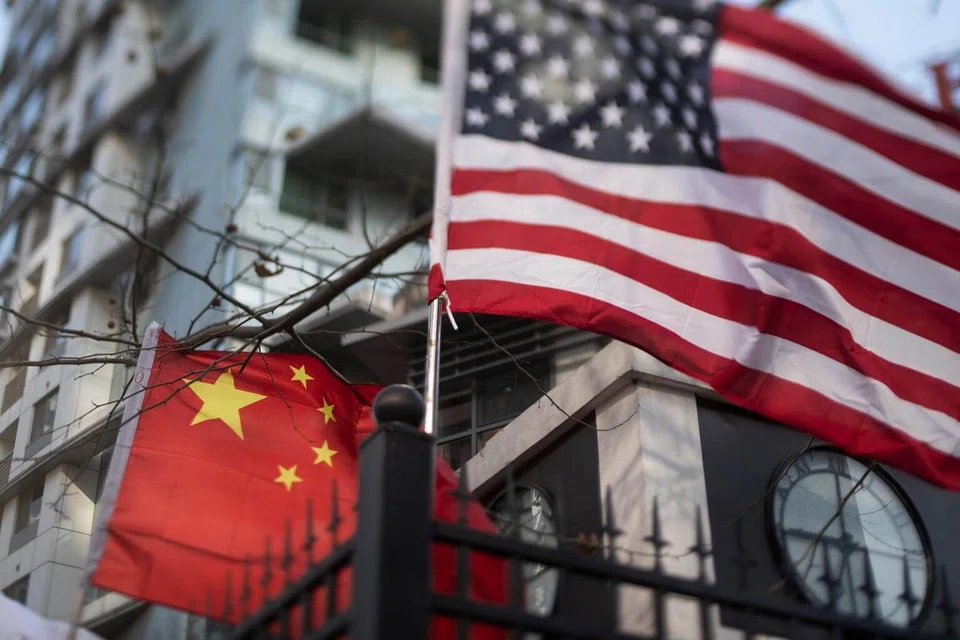
THE threat of a US-China trade war is speeding up the migration of supply chains from China to Asean, with Malaysia, Thailand, Vietnam and the Philippines the main beneficiaries.
The gains from the trade diversion are indirect for Singapore, by way of an increase in Singapore exports of upstream components to Asean and regional hub-related services, says a report by Citi bank's economics research team in Singapore.
Entitled "Supply Chain Shifts to Asean: Taking Off?", the report says that China's exports to the US of the affected items are three times larger than Asean's. "Even if a small fraction of China's exports are diverted, the impact on GDP growth for Asean could be meaningful."
It calculates that if just 10 per cent of China's affected exports are diverted to production bases in Asia, they could boost Vietnam's exports, after taking into account capacity constraints, by up to 1.2 per cent of gross domestic product (GDP) - and for Malaysia, the Philippines and Thailand, between 0.5 and 0.7 per cent of GDP.
"To further reap the GDP growth potential of trade diversion, Malaysia and Thailand will need to add new capacity; Vietnam would need to raise domestic value-added of exports and the Philippines would need to overcome challenges from rationalisation of fiscal incentives under tax reforms," the report says.
"While Singapore may be less of a direct beneficiary from the trade diversion, its exports of upstream components to Asean (especially Malaysia) have risen in tandem with increasing trade and production activities in the latter," it adds.
The report notes that the south-bound migration of supply chains from China to Asean had started around 2010-2011 - sparked by an erosion of China's earlier labour cost advantage and later, the push by its Belt and Road-related investments, as China shipped excess capacity in heavy industries.
"US-China trade tensions may accelerate this trend, with the range of affected industries likely broadening beyond labour-intensive and heavy industries, to include more automated and tech-intensive sectors (that would be impacted by US technology restrictions)," the report says.
Pointing to a precedence for this, it notes that trade frictions between Japan and the US in the 1980s led Japanese firms to increase direct investment in East Asia to build "export platforms" for the US market.
"More recently, US tariffs on China-made solar panels and washing machines prompted a shift in production to Malaysia and Vietnam," the report says.
Despite relying on a small sample of 47 firms, the report says its analysis of the data still provides interesting insights. This shows that the shift in supply chains to Asean is mostly accommodated by existing spare capacity, especially in machinery and electronics.
"This is understandable, given a pre-existence of geographically dispersed supply chains in this sector," the report says.
New capacity is also added to make room for the supply chains coming into the region - and this is seen across a broader range of industries, including apparel, where cross-border supply chains are less prevalent.
Less commonly cited are the outsourcing of the incoming supply chain operations to new partners and the acquisition of Asean-incorporated firms to do the work, says the report.
"New capacity additions were mostly led by Chinese and Hong Kong incorporated firms, while MNCs from Taiwan, Japan and US were more active in utilising existing capacity in Asean," it says.
While Singapore may be less of a direct beneficiary from the trade diversion, its exports of upstream components to Asean (especially Malaysia) have risen in tandem with increasing trade and production activities in the latter.
TRENDING NOW

Singapore bars Alice Huang, woman tied to affair with Nvidia’s Jensen Huang, for misleading police

Nvidia prepares to oust Jensen Huang after news of second affair, with executive: reports

Higher rates, weaker spending: Is the Philippines entering stagflation?

Nvidia’s market value sinks below US$4 trillion after CEO Jensen Huang resigns

