

US dollar shortage in March threatened to spark off another financial crisis
Tightness in greenback - not seen even in global financial crisis - led MAS to weigh contingencies for fresh meltdown
Singapore
THE severe stresses in the global financial markets in just about two weeks in March were enough for the Monetary Authority of Singapore (MAS) to dust off contingency plans for another financial crisis.
It gives a sense of the "great anxiety and stress" that reflected a tightness in dollar funding not seen even in the global financial crisis - though decisive action by the US Federal Reserve in establishing swap lines with central banks such as MAS helped to turn that around.
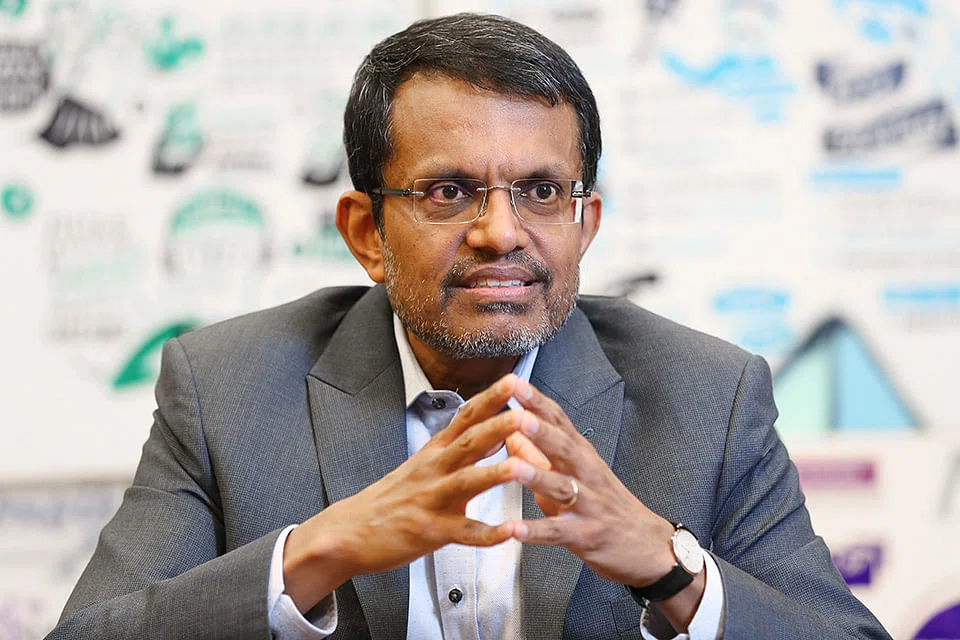
Managing director of the MAS Ravi Menon recounted this in a recent interview with the Institute of International Finance (IIF) in discussing the risks posed by the Covid-19 crisis.
He pointed to the severe stresses in March in the corporate bond market, especially the US commercial paper market, which is a market used quite actively for dollar funding by businesses here and in the region.
"We were taken aback by the degree of stress that we saw globally in financial markets during those two weeks in March, including in the United States," said Mr Menon in the transcript of a May 28 podcast interview that was released on Thursday by the MAS.
"I remember some of my traders telling me, in their 30 years watching markets, they've never seen the US Treasury market, for instance, seeing this kind of tightness. You just couldn't trade, and that was worrying."
MAS set up in March a US$60 billion swap facility with the Fed to support US dollar lending to businesses in Singapore and in the region. The backdrop to this is that globally, total USD-denominated cross-border lending to emerging Asia markets has surged, jumping almost three times to US$2.1 trillion in 2019 from about US$760 billion in 2007. About half of non-bank loans issued by banks here are to emerging markets in Asia, BT earlier reported.
"We were dusting off our contingency plans for a financial crisis, but thankfully, the Fed stepped in strongly and put in place measures that went even beyond what we saw in the global financial crisis," Mr Menon said.
Mr Menon said the Fed's timely use of swap lines, which were "very creative new facilities", helped to stabilise markets. Capital outflows in some of the regional economies seen at that point in March also abated.
"It was a period of great anxiety and stress for about two to three weeks, but quickly, that came under control in most of the region."
Still, a hard slog ahead remains as economies work to recover from this pandemic-driven crisis.
The current debt build-up is likely to be the "number one aftermath" of the Covid-19 outbreak to be dealt with from as early as next year. Expectations of a recovery in the second half of this year are set to be "severely tested", said Mr Menon.
This sharp concern over debt comes as it is "almost inevitable" that renewed outbreaks and secondary waves of infections will come to pass, given the highly infectious nature of Covid-19.
MAS is "absolutely" watching the big increase in corporate debt among emerging markets in this region, said Mr Menon, in response to a question on the trend in this current cycle.
"One of the risks we are quite concerned about is renewed capital outflows from emerging market economies. They remain vulnerable if there is a round of secondary waves of infections," he told IIF.
"How we deal with these secondary waves is going to matter a great deal. Different countries will respond differently and they have different capacities."
IIF data showed that emerging markets added more than US$3.4 trillion to the global debt pile last year, with total emerging market debt exceeding US$71 trillion. With that, the ratio of emerging-market debt to their GDP hit a fresh high of 220 per cent of GDP in 2019, up from 147 per cent in 2007.
Overall, global debt hit a new record high of US$255 trillion in 2019, with a surge in debt accumulation seen last year alone at US$10.8 trillion compared to that of US$3.3 trillion in 2018. Global debt is now 322 per cent of global GDP, 40 percentage points higher than in 2007.
Mr Menon pointed to the "mismatch" between market expectations and how the economies are likely to emerge from this crisis.
"I think the market expectation that there's going to be a recovery in the second half of this year and then we'll all gradually get out of this over the course of 2021 is going to be severely tested," he said.
"There are going to be setbacks. It's going to be a fits-and-starts kind of recovery. That could trigger renewed capital outflows from emerging economies, because of a renewed rush into liquid and safe assets. That's never a good scenario for emerging markets - tighter financial conditions and corporate refinancing risks."
While the ace in hand now is having banks in better shape than before - given stronger capital and liquidity buffers they now hold following the global financial crisis just over a decade ago - the "weak card" in the financial system currently is that the high level of corporate debt even before the pandemic hit, is set to rise further in many parts of the world.
"If the Covid-19 situation is not contained, that debt is going to continue to grow and credit risks will start to mount," said Mr Menon.
"Once all these loan deferments and forbearance is over, because you only can do so much, then you're going to have more corporate distress. I think that is going to be a big problem we have to deal with."
This comes amid an exacerbation of existing stresses once increased deterioration in credit quality comes through, with ratings downgrades due soon.
Mr Menon said this is especially the case in the US and Europe, where there are many corporate bonds "at the borderline" of between investment grade and below. "All these BBB rated bonds, if they cross that threshold, we could have fire sales, large outflows, and sell-offs. This could exacerbate some liquidity risks," he said.
"So corporate downgrades is something we're looking at carefully, which is why I think it's important that emergency measures that all governments and central banks have taken cannot be carried on for too long. We need an exit strategy before this debt accumulates to a point where we have to deal with it for years after."






