

Vietnam, Singapore, Indonesia lead in BRI opportunities
Respondents in SBF survey say they held out most promise in Asean, S Asia

Janice Heng
Singapore
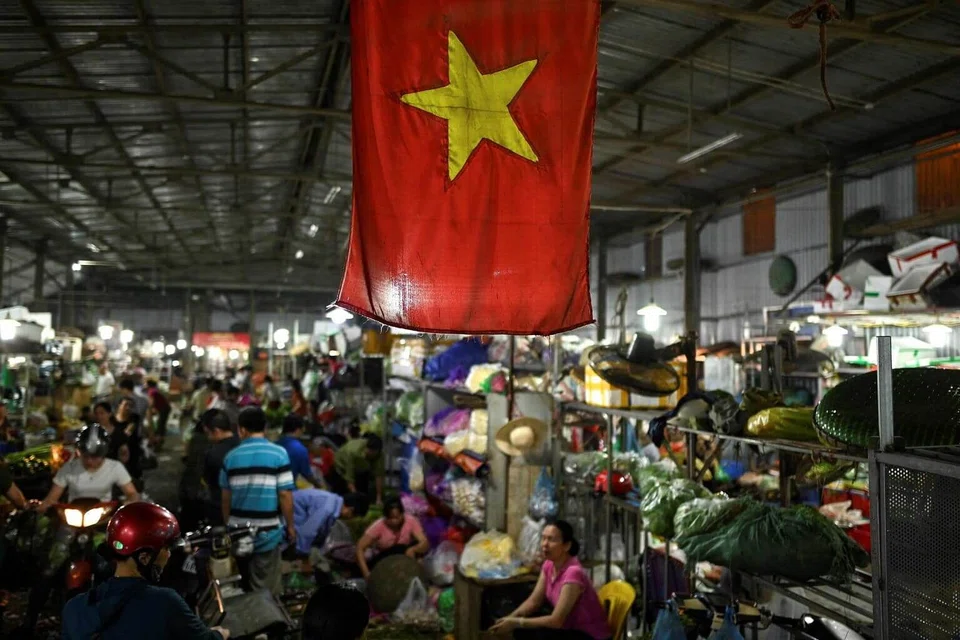
VIETNAM, Singapore and Indonesia are seen as the markets in Asean and South Asia with the most opportunities related to China's Belt and Road Initiative (BRI), according to a survey by the Singapore Business Federation (SBF) and PwC Singapore.
Vietnam was named by 66 per cent of respondents as a country where their firm "primarily sees BRI opportunities". Singapore and Indonesia were each named by 57 per cent.
The three countries also came in joint first, along with Thailand, as the survey respondents' choice of preferred government partners.
The survey was conducted by invitation only, with almost 50 senior representatives of companies and organisations in the regional infrastructure market, in sectors including financial and professional services, oil and gas, manufacturing, and construction.
Almost a third of respondents were currently involved in BRI-related projects, while another 30 per cent were in the preliminary information gathering and analysis stage.
A report on the results was released on Thursday morning at the fifth Singapore Business Regional Forum, an annual SBF flagship event. It was published in conjunction with the forum as well as Friday's Singapore Regional Infrastructure Summit.
Said SBF chairman SS Teo: "The BRI holds opportunities not just for Singapore's big corporations, but its smaller firms as well. Our companies are well-positioned to provide legal, financial and other professional services, as well as good partnership with Chinese firms.
"Through initiatives like BRI Connect and the Singapore Regional Business Forum, SBF has been helping Singapore firms connect with partners in Singapore, the region and beyond, to open doors to new opportunities," he said. "We hope more of our companies will tap these platforms and team up with larger companies, both local and foreign, when they venture overseas."
Smart cities and urban development emerged the top sector in which survey respondents saw opportunities, cited by 43 per cent. It was followed by industrial estates and special economic zones (41 per cent), as well as information and communications technology (39 per cent) and roads and ports (39 per cent).
As for risks, the top risk category was political risks, cited by 75 per cent of respondents. Second was financial risk (68 per cent) and third was governance (64 per cent).
PwC Singapore partner Jennifer Tay, who specialises in capital projects and infrastructure, noted that infrastructure development plans include considerations ranging from transportation and power to banking, housing and education.
"It will also require the balancing of commercial, operational and demand risks among different infrastructure," she added.
"For example, without a strong logistics and transport backbone, industrial parks will not be able to attract investors, at the same time, investors in logistics and transport need to be able to forecast the demand for these infrastructure," Ms Tay said.
Asked about their expected financial scale of BRI involvement, 41 per cent of respondents expect to be involved in projects of at least US$100 million, while 25 per cent expect to be involved in smaller ones.
A third indicated no expectation, which the report said "could be attributed to a lack of a concrete business plan for BRI projects or that these companies are providing services instead of direct investments".
Just under a third of respondents expect to be involved in a BRI project this year, with 45 per cent expecting it in the next three years and the rest further in the future.
TRENDING NOW

Knight Frank’s Tan Tee Khoon leaves firm, Nicholas Keong takes over auction business
Keppel Energy, Sembcorp Utilities and Tuas Power to supply biomethane in pilot project

GovTech retrenches another 38 staff in second round of layoffs
Take-up of new private homes dives 45% in Q3 as prices accelerate with 1.4% rise

