

'We can't live life based on what Trump tweets'

Annabeth Leow
Singapore
US TARIFFS on billions of dollars in Chinese goods might go up on Friday, as American President Donald Trump has threatened, casting doubt over the outcome of trade talks.
But with uncertain ties between the United States and China, companies have already hedged their bets in the Asean region - and Singapore's economic policy-makers are taking note.
Economic Development Board (EDB) executive director Lee Eng Keat said on Thursday: "Regardless of how the US-China trade talks pan out, there is a future of growth that is then focused on those who are willing to come together and work together.
"The overall sense is that we can't prepare for what Trump does - we can't live life based on what he tweets. The Singapore policy is always to prepare for the future."
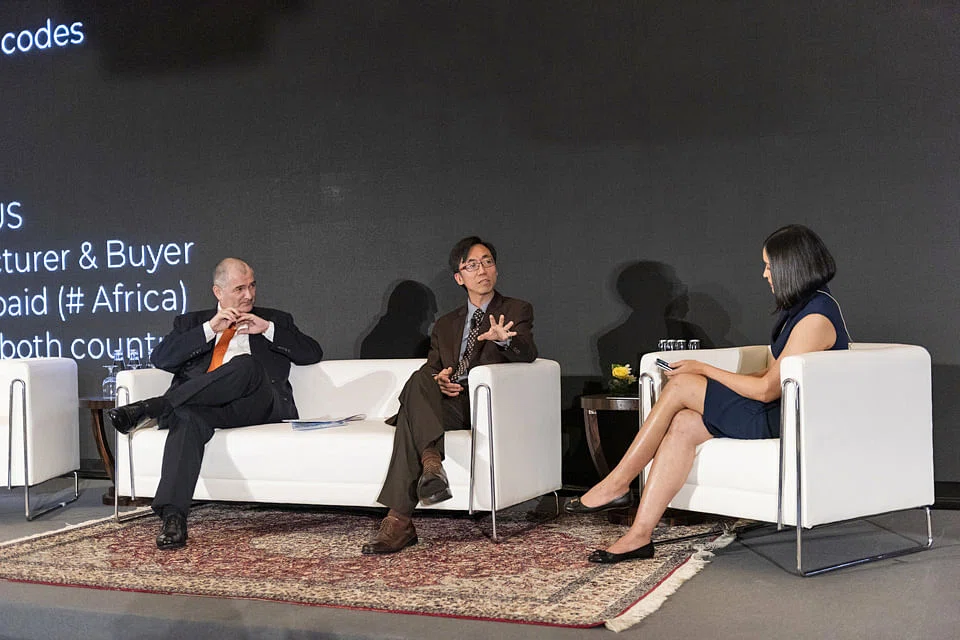
Mr Lee was taking part in a public dialogue at The Fullerton Hotel, during the Invest Asia 2019 conference held by Maybank Kim Eng in a tie-up with Industrial and Commercial Bank of China unit, ICBC International.
"What we're seeing is that, with agile supply chains, companies hedging for the future, Asean will certainly benefit. We do feel that the slowdown will impact us in the short run, but we're already seeing companies invest in manufacturing capacity in South-east Asia."
British electronics giant Dyson, which has a motor factory in Tuas and a research facility in Science Park, last year said that it would set up an electric-car plant here by 2020; it also plans to move its corporate headquarters off its home turf into Singapore.
"They have a presence out in the neighbouring region, and they know how to integrate," said Mr Lee, referring to Dyson's ongoing South-east Asian supply chain and operations.
"At the end of the day, their understanding of why they want to be in Singapore is essentially: Singapore is at the heart of Asia, and we have a good supply chain network."
Supply Chain Management Outsource president Nicolas de Loisy, Mr Lee's dialogue partner, said: "I think Vietnam and Thailand are the biggest winners, but Singapore will win for anything coming into South-east Asia, because Singapore is a nexus place, same as Hong Kong, same as Dubai, same as Gibraltar ...
"Anything that comes from China or the US to South-east Asia, Singapore will benefit."
Mr Lee said that the EDB has cottoned on to corporate interest in Vietnamese industrial real estate, as well as business opportunities in Thailand, Malaysia and Indonesia.
When asked by panel moderator Sophie Kamaruddin how the EDB has prepared for supply chain shifts, he replied that - even while US-China trade tensions were picking up - "there is a sense of needing to go out and map out the supply chains".
"That's something that the EDB has been doing, in understanding of semiconductors or automotive supply chains, as well as some of the telecom supply chains," he said. "What are the different areas where we can knit our supply chains together, in order to meet some of the labour shortages?"
Ms Kamaruddin also asked whether Asean could take "collateral damage" in the trade crossfire between the US and China.
Mr Lee responded, without going into specific details: "There have been conversations even between US customs and Singapore customs.
"I am pretty sure that US customs is also going around South-east Asia to ensure that kind of understanding is there."
TRENDING NOW
Singapore government slaps loan curbs on individual private-hire car buyers

If Europe goes to war, the fallout will be felt in East Asia
The grid is the transition: Why Asean’s next energy challenge is coordination

Indonesia stocks suffer worst plunge in nearly 30 years as MSCI proposes standalone status

