Why Singapore remains a role model for managing national savings
RECENT news about Middle Eastern governments redesigning the institutional architecture of their sovereign wealth funds (SWFs) has prompted much debate about best practices in sovereign asset management. For example, a number of governments created separate vehicles for direct investments, due to distinct governance requirements. While this is a helpful operational improvement, assets are best managed against specific liabilities of their owners, and the biggest long-term liabilities of most governments are pensions. Some developed economies with mature pension systems, such as Australia or New Zealand, have deliberately built government-run pension reserves to address them. But in the context of emerging markets, the holistic model built by Singapore in the 1970s is clearly winning out.
On a per capita basis, Singapore has the largest official reserves of any country in the world. More importantly, it also has a few of the most established sovereign wealth vehicles as well as one of the oldest public pension funds in Asia. Given that the majority of the world's SWFs were founded in the 21st century, Temasek's founding in 1974 and Government Investment Corporation's (GIC) launch in 1981 make them veritable classic institutions. Since that time, these institutions have travelled a long path, but the fundamental architecture of Singapore's national savings has remained the same. The lessons from Singapore's success carry implications not only for resource-wealthy countries, but also for any developing countries accumulating significant reserves.
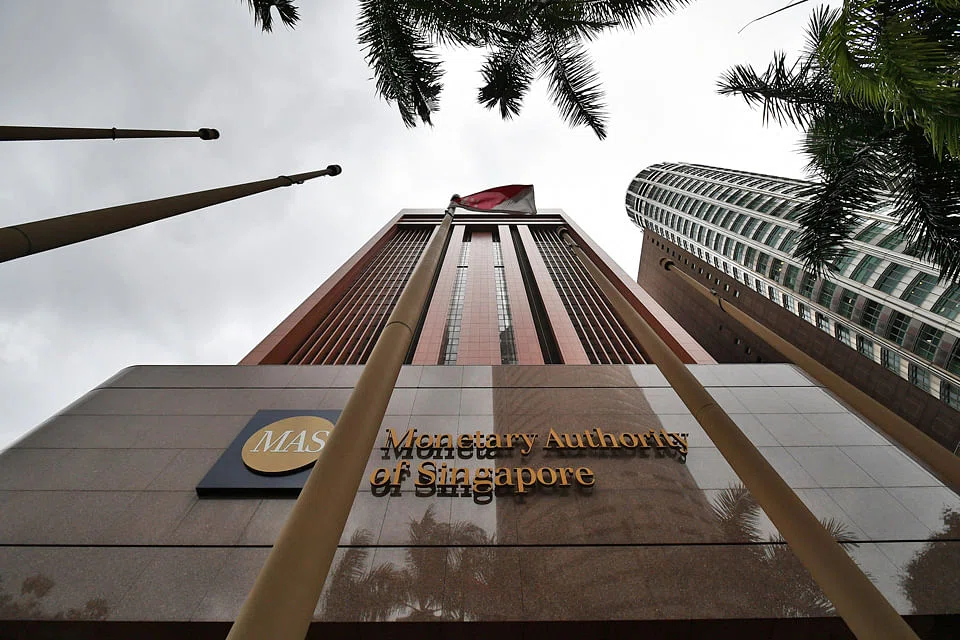
The defining principle of Singapore's model and the main driver of its success is the creation of an effective group of state institutions that pursue carefully delineated tasks that are complementary to each other. An appropriate analogy is an orchestra with different instruments coming together to create a harmonious sound. In this mix, there are four institutions: a) Monetary Authority of Singapore (MAS) - the guardian of core official foreign reserves; b) Temasek - the development-focused SWF; c) GIC - the classic long-term diversified savings vehicle and d) Central Provident Fund (CPF) - the public pension fund. On their own, as solo artistes, these institutions are formidable investors, but viewing them individually would provide a distorted picture.
The MAS is the central bank which manages the core part of foreign reserves, in part to back up the national currency. Such reserves need to have a minimum layer of highly liquid and safe assets, but due to MAS's sophistication, it is also able to pursue a return objective. However, the delineation of tasks within Singapore's model means that excess reserves beyond a certain level are best managed by a standalone entity, which led to the creation of GIC.
GIC is the quintessential SWF, investing national savings abroad in a diversified portfolio. Having served as the model for many SWFs, it could be considered a relatively conservative investor by SWF standards, with the 20-year nominal return of GIC reported last year as 5.7 per cent in US dollar terms.
Yet the caution of GIC is offset by Temasek, which achieved a 15 per cent annual return since inception in 1974. In contrast to GIC, it has a developmental mandate which it pursues by buying direct stakes (mainly locally or regionally), and then reinvesting proceeds into foreign assets. It shares some features with private equity funds, and, uniquely among SWFs, is able to raise debt to finance its expansion, rather than relying on the government's capital injections. A financial analyst unaware of MAS's and GIC's existence might be alarmed by regional concentration risks and the absence of a meaningful fixed income portfolio to achieve a risk-adjusted return.
Both Temasek and GIC have consistently delivered returns that are higher than the return offered in the core funds provided by the national pension fund CPF. This is why one needs to consider the architecture in a holistic manner. CPF has traditionally invested well over 90 per cent of its assets into government-backed fixed income solutions at guaranteed return rates. On the face of it, this would appear insufficient, and major global pension funds moved away from this model decades ago. However, the interest rates on CPF's fixed income holdings exceed the market return on sovereign debt, as the government issues special securities exclusive to CPF. This is a luxury that few other national pension funds enjoy, and it stems from the work of the three other institutions that together generate returns that support government finances. CPF's cash holdings are placed with the MAS, the proceeds of the special bond issuance are held by the finance ministry, and ultimately a substantial portion of those proceeds are given to GIC to manage. On the one hand, this ultimately allows CPF members to enjoy comparatively high returns while only being exposed to AAA risk; on the other, Singapore's sovereign wealth vehicles are able to source capital not only from excess reserves, but from private savings. However, in the absence of substantial returns on its sovereign wealth, the CPF would presumably need to take on such risks across all saving pools in order to achieve similar returns.
CPF members also have the right to reallocate part of their savings into more complex portfolio solutions, managed outside of CPF. Since 2014, CPF has been working with the Ministry of Manpower to develop options such as Lifetime Retirement Investment Scheme to broaden its offering to the members; but with the introduction of such a scheme, the core layer of pension savings would still be managed under the holistic sovereign wealth approach.
In short, the simplicity of CPF's asset allocation, the high return nature of Temasek's portfolio, the diversification of GIC and the liquidity of MAS all work in tandem to achieve an optimal strategic outcome. It is increasingly seen as a proven model for managing national savings. Given that these are all state institutions operating in a vibrant market economy, Singapore's example may hold particular lessons for other nations on their path to becoming high-income countries. The challenge is to mirror the clarity of purpose and skilled coordination across multiple institutions that are the key to the success of Singapore's national savings system.