

Wipo nomination boosts Singapore's global standing as hub for IP enforcement, resolution
It'll persuade more foreign companies to see Republic as safe place for IP assets

Claudia Chong
Singapore
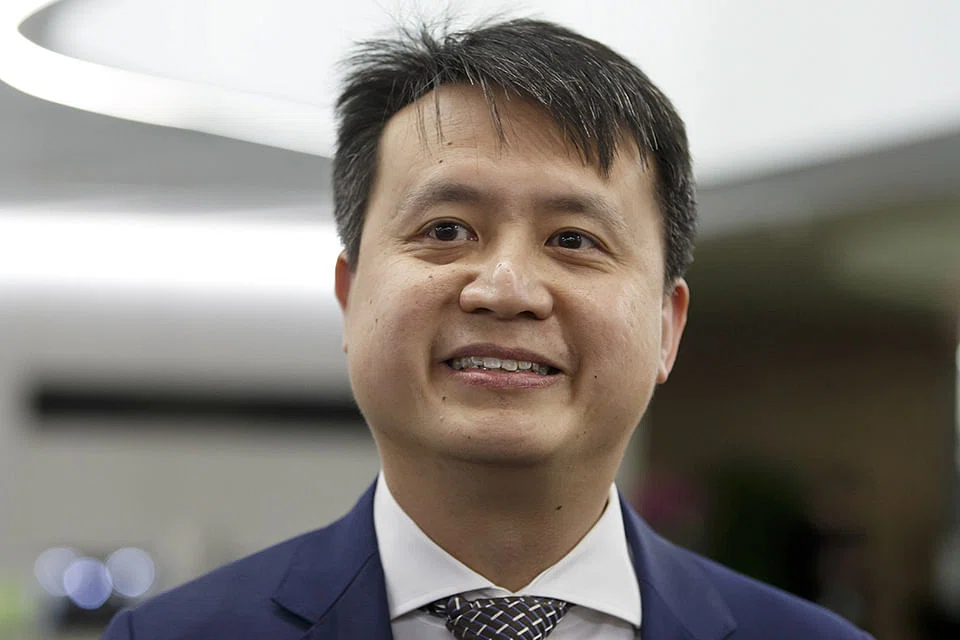
SINGAPORE'S intellectual property (IP) chief's nomination to helm the United Nations World Intellectual Property Organization (Wipo) comes at an opportune time when more foreign companies are looking to conduct IP activity in Singapore.
The nomination anchors the Republic's international standing as a hub for strong IP enforcement and dispute resolution, say industry players.
If his nomination is confirmed, Singaporean Daren Tang, who is chief executive of the Intellectual Property Office of Singapore (IPOS) under the Ministry of Law (MinLaw), will assume the duties of director general on Oct 1, 2020, for a six-year term.
As head of IPOS, Mr Tang drove the strategic transformation of IPOS from an IP registry and regulator into an innovation agency that helps to build Singapore's future economy, MinLaw and IPOS said in a statement on Thursday.
"The nomination is about sharing with the global community a set of Singaporean DNA as an efficient, inclusive, collaborative and neutral bridge builder with the aim of delivering outcomes that will benefit member states and their communities," IPOS told The Business Times in a separate statement.
Adrian Tan, partner at TSMP Law Corporation, said the nomination shows there is universal trust in Singapore's IP credentials.
"The Wipo head has to be a blend of regulator, diplomat, influencer and evangelist. He has to promote respect for intellectual property around the world. The fact that a Singaporean is named to this position testifies to the widespread trust that the international community places in Singapore."
The vote of trust is likely to nudge more foreign companies to eye Singapore as a safe harbour for their IP assets. More multinational corporations have been expressing interest in migrating their trove of intangible assets to Singapore, said Andy Leck, head of Baker McKenzie Wong & Leow's IP practice.
Mr Leck cited a strong IP protection regime, a transparent and efficient legal system, attractive tax incentives for IP-rich businesses and a tech-friendly ecosystem as reasons for the trend. Singapore was ranked second in the world and top in Asia for having the best IP protection, according to a 2019 report by the World Economic Forum.
IPOS clinched second spot in the 2019 annual ranking of the world's most innovative IP offices, second only to the European Union.
Innovation now stems not just from MNCs but also from smaller innovative companies, said Audrey Yap, managing partner of law firm Yusarn Audrey, who has served as Wipo's regional consultant.
"These high-growth enterprises are changing the face of the IP space not only in Singapore but globally. Singapore has adapted well to these trends and government activities and policies have supported this. Companies are setting up here not because Singapore is a market per se, but because it is a very relevant and a key hub," she said. For instance, the European Union-Singapore Free Trade Agreement (EUSFTA), which came into effect in November 2019, has enhanced measures in protecting and enforcing IP rights for IP owners.
Singapore is building its presence on the international stage as companies begin to build their corporate growth strategies around IP, said Lam Chung Nian, head of WongPartnership's IP practice.
IP is becoming increasingly important as a source of competitive advantage in a company, said Lim Kuo-Yi, managing partner of Monk's Hill Ventures, which invests in early-stage tech startups in South-east Asia.
"This is the start of an inevitable progression where research and development and IP creation capabilities become central to the success of the ecosystem," said Mr Lim, who sits on the board of IPOS.
Mr Leck hopes to see Singapore continue its efforts as a thought-leader in legislative reforms to deal with IP protection and enforcement issues arising out of evolving technologies such as artificial intelligence, big data and blockchain.
TRENDING NOW

He built the Vingroup empire. Now South-east Asia’s richest man is handing some key roles to his sons
32 companies, 6 individuals bag accolades at Singapore Corporate Awards 2026
Can a first-time homebuyer couple earning S$18,000 a month afford a new EC unit?
Floods compound Philippine growth woes from public-works scandal

