

Workforce growth likely to fall to 1-2% in next five years
Singapore
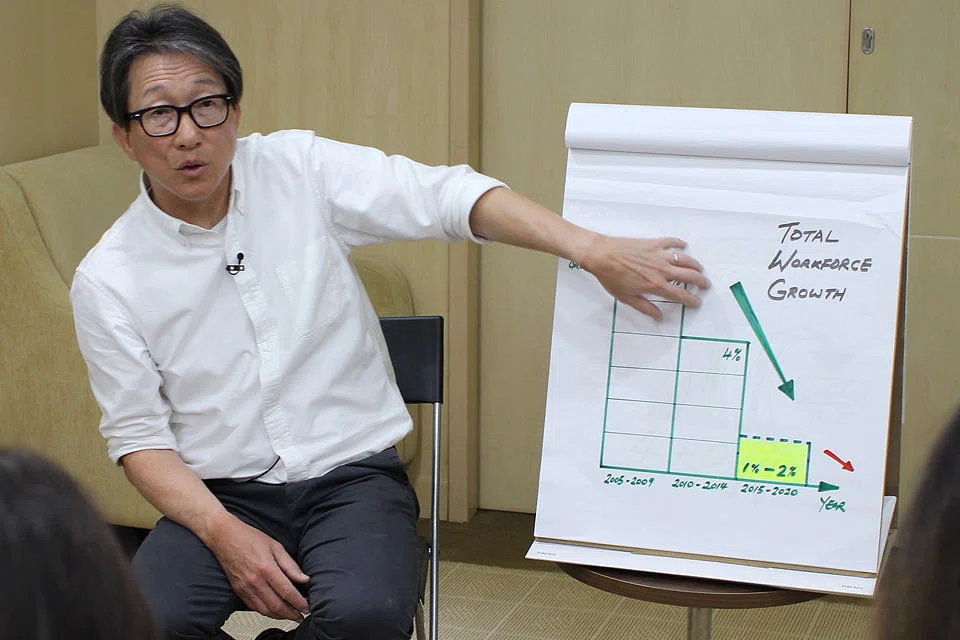
SINGAPORE'S total annual workforce growth is expected to continue on its downward trend to 1-2 per cent between 2016 and 2020 - and this decline is likely to continue beyond that period as the local workforce growth will eventually stagnate, with baby boomers entering retirement.
Manpower Minister Lim Swee Say shared this at a media briefing on Thursday, as he painted the Republic's labour outlook for the next five years, following preliminary employment estimates released by the ministry.
Singapore's local workforce growth is on a "structural downtrend", having dropped consistently from about 4 per cent annually from 2005-2009, to about 3 per cent annually the following five years, and then to zero in 2015, he said.
For the next five years, Mr Lim expects the local workforce to grow at about one per cent every year.
"I don't think it will stay at zero per cent (like in 2015) because we will continue our efforts to promote a greater labour force participation rate. We will continue, for example, to extend the re-employment age, so the workers stay longer and so on."
In the next five years, Mr Lim said the government will continue to moderate the foreign workforce growth here "at about the level today", which now stands at about 2 per cent.
"The foreign workforce has been growing at double digits, at more than 10 per cent from 2005-2009, then it dropped to about 6 per cent in the last five years (2010 to 2014) and since then, we've been tightening (it)," said the minister.
What all this means for Singapore is that there could be three possible outcomes, which Mr Lim described as "the good, the bad, and the ugly".
On a hypothetical basis, if the government were to reverse its tightening of foreign labour, the ratio of local-to-foreign workers would continue to fall. Assuming no increase in productivity, the outcome would be what he deemed "ugly".
In the second scenario, which also assumes that productivity growth is zero, a decline in total workforce growth would result in a "bad" outcome.
So the only "good" outcome Singapore has to strive for is to complete the restructuring of the economy, he stressed.
"To complete restructuring means, yes, as we continue to slow down manpower growth, especially tightening on the foreign workforce growth, we have to find ways to improve our national productivity . . . and the economy can continue to grow, jobs can continue to be better and wages can continue to go up."
Still, there is a danger as the total workforce grows even more slowly, noted Mr Lim, who added that it "could become the bottleneck of future growth" - curbing businesses from growing and preventing new industries from taking off.
To ensure this does not happen, he said Singapore has to turn human resource into human capital.
"In other words, don't look at every worker just as a headcount but look at them as a valuable resource. How can you invest in this capital? How can you let this capital continue to grow and have greater returns?"
For that to happen, a mindset shift needs to take place at the national, industry and enterprise levels.
On a national level, the ministry will work more closely with the various industries to see how they can optimise the deployment of Singaporeans.
The government will support the growth of sectors such as security, cleaning, construction, and food and beverage as manpower in these areas become leaner, he said.
For others like manufacturing, where employment numbers are falling, the ministry will work with other agencies to help them transform.
Ways to have more investments to grow new or emerging sectors with tremendous growth opportunities including data analytics and cyber security will also be explored.
On an industry level, Mr Lim said there has to be a change in people's mindset - from one where locals compete with foreign labour within the country, to one where local and global capabilities come together to compete against the rest of the world.
Finally, he said companies have to keep improving their human resource practices so that they have a strong Singaporean core as well as a strong commitment to keep investing in human capital.
The details for these are still in the works, said Mr Lim, who pointed out that as Singapore undergoes economic restructuring, job growth will decline but job quality will improve.






