

Workforce Singapore making progress in helping workers displaced by economic restructuring: PM
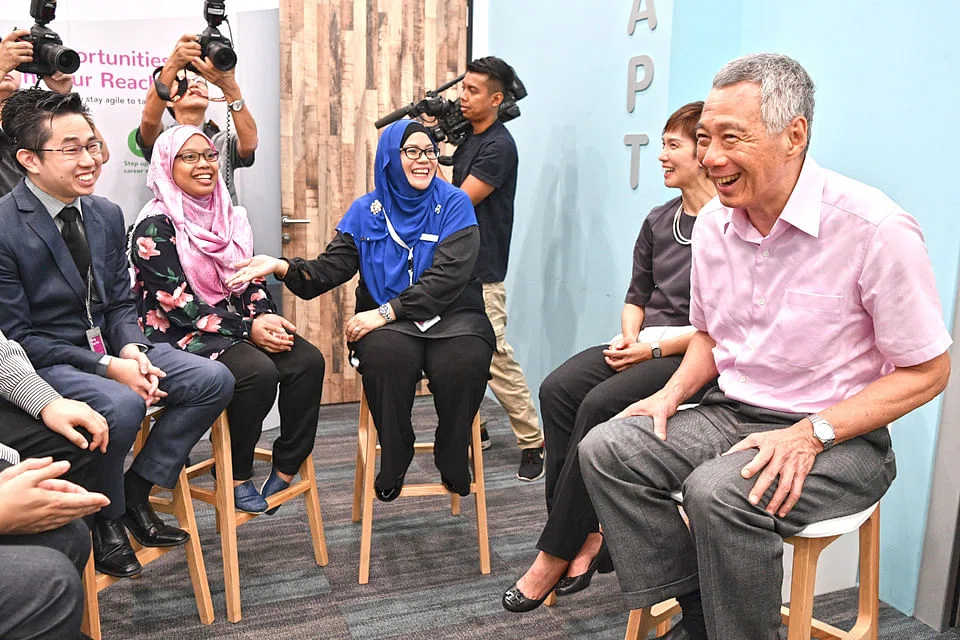
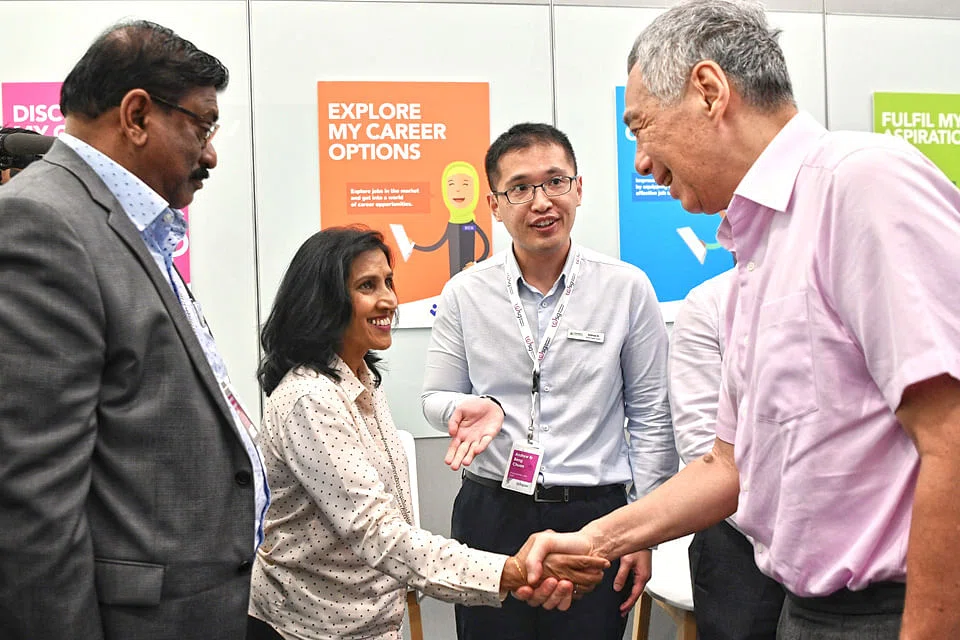
Mr Lee visited the Lifelong Learning Institute for a first-hand look at WSG's efforts in securing jobs for some 30,000 people
Singapore
WORKFORCE Singapore (WSG) is gaining momentum in its efforts to help workers who are victims of economic restructuring to find new employment, according to Prime Minister Lee Hsien Loong.
Some 30,000 people were placed in new jobs under the WSG's Adapt and Grow programmes last year, up from 25,000 in 2017," he told reporters on Friday after a three-hour tour of the Lifelong Learning Institute in Eunos.
"So we are getting momentum and it's the right direction to go," said Mr Lee who was there for the first time to see first-hand how the WSG's Careers Connect has been coping and helping workers displaced by economic restructuring.
"A lot of work has been done, (with) a lot of passion," said the Singapore leader, who, accompanied by Minister of Manpower Josephine Teo, also chatted with the Lifelong Learning Institute's staff, workers it has helped to place in new jobs and their employers.
Mr Lee said we can't fight change. The way forward is to go with the change - and therefore become more productive, do better jobs and earn better pay.
"But the journey there is not easy... (so) it's important to encourage WSG, which is so directly involved in this, and also to show Singaporeans that, in fact, there is a lot of help available," he added.
Mr Lee said the Lifelong Learning Institute is the first significant visit he is making this year - and it's the right signal to send because the economy is doing well and the productivity numbers are good.
"I'm not sure we will sustain them but it shows that on the macro basis the economy is making progress," he said. "It's not just expanding but actually upgrading and improvement is happening."
Yet, the improvement is uneven across the board, Mr Lee noted. While the export-oriented sector is upgrading to become more competitive, the domestic services sector is slower at it.
"We have to work at the domestic services part too because a lot of those are Singapore companies, SMEs, big employment there, and we want to make sure we have programmes to reach them and can upgrade them and the workers in them," he said.
Mr Lee said the relevant government agencies are helping SMEs improve productivity and profits and reducing costs. "These are thing we are dong with many of our companies. Small ones so we have to do it one by one - as they say sea shell by sea shell - but it is something we are making progress... and I want to recognise that."
Asked for his assessment of Singapore's economic restructuring exercise after eight years - with two more years to go, Mr Lee said: "It's a long journey and, as the Chinese say, 'always on the road' ".
He noted that the economy has grown while productivity and workers' wages have increased. Unemployment, on the other hand, is down and employment rates have risen - for the old people particularly and also for women.
"So we have made a lot of progress," Mr Lee said. "We're not done. I don't think we'll ever be done. Ten years from now, I'm sure we'll still be talking about productivity growth and upgrading. But I think 10 years from now, if we do our work right, we will be in a stronger position than we are today."
TRENDING NOW

Once staunchly pro-China, Malaysian Chinese businesses are now distancing themselves from Beijing

Britain’s mansion tax shows the difficulty of targeting wealth

Three hats, one goal: How Ng Kian Swan runs sustainability at NUHS

COE review: The gap between luxury and mass-market cars isn’t the only one worth bridging

