Leveraging the power of data
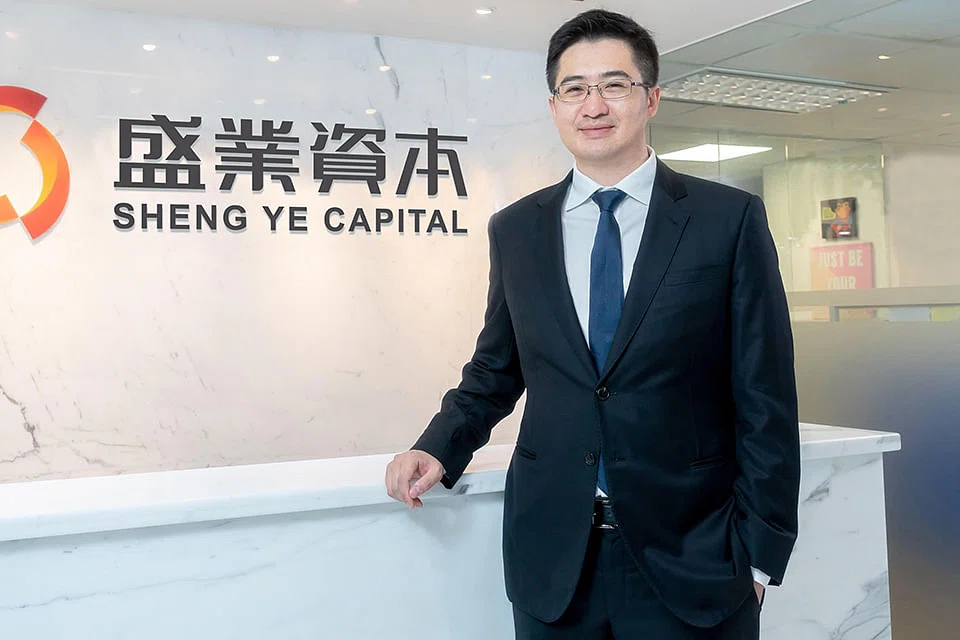
Sheng Ye Capital's Jeff Tung takes advantage of trends like digitalisation.
 Add BT as a preferred source
WHILE students attending classes together receive the same information, it requires a special quality or a certain je ne sais quoi to see opportunities where most others simply draw blanks.
For China-born Singaporean Jeff Tung, founder of supply chain fintech firm Sheng Ye Capital, that "eureka moment" happened at a lecture during his semester abroad at a Shanghai University.
The idea, as it turned out, would eventually germinate into a billion-dollar business catering to the financial needs of thousands of small and medium-sized enterprises (SMEs).
The lecture he attended expounded on the subject of supply chain financing, using a major electronics manufacturer as a case study.
This manufacturer sourced parts from smaller suppliers across China. As companies rushed to get the business, many extended credit terms of as long as 90 days to it for their parts.
However, many of these suppliers, mostly SMEs, only saw payment some 160 days later.
SMEs were also not well serviced by banks in China and suffered from a lack of liquidity.
While his other classmates took the information at face value, Tung wondered if other enterprises in dominant positions behaved like this big manufacturer. Sure enough, he found that SMEs were constantly being squeezed, and they managed to achieve operating margins of only about 8 per cent to 10 per cent.
Seeing a unique market opportunity to target a perennial pain point for SMEs, he started Sheng Ye Capital to address their factoring needs.
For his acumen in founding the company and establishing it as one of the largest foreign registered commercial factoring businesses in China, which provides one-stop solutions to SMEs through its platform, Tung was awarded the Young Business Leader of the Year at this year's edition of the Singapore Business Awards.
He confesses that it was "childish" reasons that drove him to start the company when he was just 26. Tung said that at the time, he did so out of a desire to show that he was better than others.
GROWING PAINS
Yet, the company's success over the last 8 years belies the difficulties that he and his team faced, top of which was a lack of understanding by businesses of the service that he was offering. When Tung first introduced the idea of factoring, or bao li in Mandarin, SMEs he approached thought that he meant bao xian li pei, which means insurance claims. This was the price he had to pay for being a pioneer to help the market understand accounts receivable financing.
While he was born in China, Tung is a Singaporean and spent 15 years living and studying here. It was tough for him when he first started Sheng Ye Capital in a country that seemed quite foreign to him as he had to build up his connections from scratch while conducting market research.
Thankfully, he had help along the way. He is very grateful to his parents for being his first "angel investors", and as his family was in the oil trading business, they had contacts that he could leverage.
He started by approaching a leading enterprise in the oil and gas sector to get their supplier list. From there, he began cold calling companies and making site visits to raise awareness about his service offering.
Since then, Sheng Ye Capital has grown from strength to strength. After landing his first client in 2014, the company listed on the Hong Kong Stock Exchange with a valuation of HK$1.6 billion (S$277.4 million) in 2017. Its market capitalisation is currently about HK$8.7 billion.
However, as the company grew, traditional banks began to turn their attention towards the market segment as well, making the scene more competitive.
Tung realised that as a startup, the company had to minimise risk and maximise returns to survive. He figured that it had to look for smaller SMEs and contracts to work with, and do them at scale. From processing 100 transactions a day, it would have to prepare to clear 100 times more transactions in the same time span.
This was a tall order, since the company did not even have an IT department at the time and he did not have any background in IT either. Still, he decided to invest in creating such a team and building its capabilities.
One such development was in the area of applying natural language processing (NLP) and optical character recognition (OCR) technology to develop patterns and assist staff with identifying potential fraud cases, mitigating some moral risk.
"Any single invoice that is being forged... and we can't differentiate with our naked eyes or through experience, was going to cause a huge loss to a small-sized company like us at the time," he says. For instance, in the past, the company usually receives value-added tax (VAT) invoices with four data points that staff had to manually input into the national tax bureau's website to cross-check them. After continuous training, the company's OCR system can now process 1,000 VAT invoices in a second.
Today, the company clears every accounts receivable financing application within 1 working day compared to the 2 to 3 weeks it took previously, improving customer experience and operational efficiency.
DIVERSIFYING CLIENT BASE
These developments have also helped the company diversify its client base since an over-concentration of clients tends to worry institutional investors and banks.
"From the risk diversification point of view, we had to go for smaller accounts receivables and go for a larger supplier base. In case anyone goes into default, we still have the capacity to withstand the risk." he says.
After eight years of operation, Tung remains focused on the road ahead and how to transform Sheng Ye Capital to take advantage of trends like digitalisation.
"If you tilt the number 8 horizontally, it becomes an infinite symbol, right? So we call this year a transformational year because it will open up infinite possibilities," he says, adding that the firm is looking at more ways to entrench itself deeper in the SME ecosystem.
Tung understands that Sheng Ye Capital's core strength was in its robust risk engine, built on reams of data on the credit behaviour of the company's SME customers over time.
To stay relevant and competitive, he aims to build on this dataset further by providing software with Internet-of-Things (IoT) hardware to help businesses digitalise their supply chains.
"Being part of the supply chain, we are able to have firsthand information on how the supply chain operates from the upstream to the downstream. We know how clients behave in the supply chain, we know the services, and not just financial services, that they need at different stages of the supply chain," Tung says, adding that he hopes to increase the efficiency for all stakeholders involved and bring in other funding partners to provide financial services.
An example of this is in the construction sector, where he noticed that paper records are used most of the time. Supervisors manually count and keep track of materials like steel or concrete supplied to building sites.
Instead, he hopes to provide surveillance cameras with OCR technology to log the car plates of vehicles entering the premises. Another camera could be used to count the number of items loaded onto the lorry.
An unmanned weighing scale could log the weight of the supplies delivered. All this data can be transmitted to a supervisor's office computer or his mobile phone, saving time.
Tung says the equipment can also be tailored to different sectors, such as using surveillance cameras with OCR in the healthcare sector to track inventory of medicine or equipment in a smart warehouse.
DOING GOOD
Aside from expanding the company's operations, Tung has also been building a culture of philanthropy at Sheng Ye Capital by encouraging staff to take on social projects.
Before the Covid-19 pandemic, the company's staff built a school in Fujian province to serve a very remote village.
"It was initially compulsory for company staff to attend on a yearly basis but soon, it became oversubscribed so we have had to go on an allocation basis," he said.
It is even ingrained in the company's human resource policies that staff who wish to be promoted have to also commit a minimum number of community service hours, which then contribute towards a yearly goal for the company.
Tung admits that he has a soft spot for educational projects. When he was still an undergraduate at the Singapore Management University (SMU), he participated in a school building project in Henan province.
". . . We're not born equal so I think education is one of the more effective ways to minimise the gap, or at least to make sure that all of us somehow can be at the same starting point," he says.
Since graduating, he and fellow SMU alumnus Benjamin Twoon, established a S$1 million PAK Entrepreneurship Fund in 2015.
Additionally, he has contributed an endowed sum of S$1 million in 2020, which was the single largest contribution gifted by an SMU alumnus then.
Tung says that he was inspired to give back to society by his grandfather. While his parents and grandparents came from humble beginnings, his grandfather made sure that he not only understood his privileged position in life but wanted him to also go beyond surviving and living to flourishing and finding the meaning of life.
After two years of national service in Singapore and four years at SMU, he realised that there was a lot that he could do to give back to society and the underprivileged.
"I was very fortunate that with the team's effort, we were already making money in the first year... and I think as long as the business still stands strong, we will continue to give back," he says.
Decoding Asia newsletter: your guide to navigating Asia in a new global order. Sign up here to get Decoding Asia newsletter. Delivered to your inbox. Free.
Copyright SPH Media. All rights reserved.