New mood of optimism in South Africa
The popular new President, Matamela Cyril Ramaphosa, marks a turning point for the country.
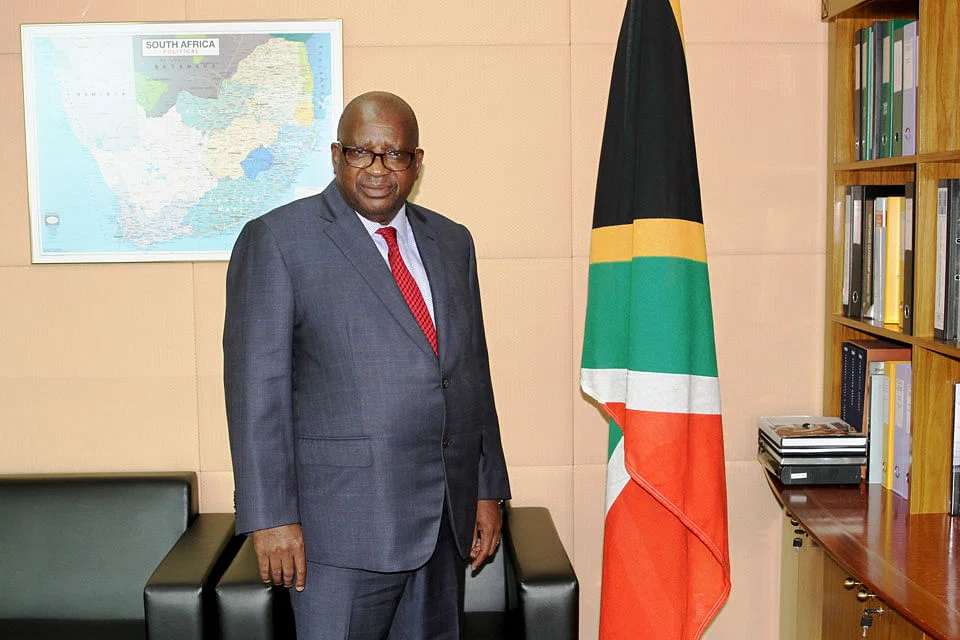
THERE is palpable excitement in South Africa and there is a new mood of confidence and optimism in the country with a popular new president having taken office. Having been elected as the new leader of the ruling African National Congress (ANC), Matamela Cyril Ramaphosa, 65, was elected by Parliament as South Africa's new president on Feb 15, marking a turning point for the country.
He was earlier vice-president under scandal plagued president Jacob Zuma, who was forced to resign under mounting pressure from the ANC, leaving both the leadership of the party and Africa's second biggest economy in the hands of his deputy.
After his election as the new president, Mr Ramaphosa, addressing the nation said: "Our intent is to continue to improve the lives of our people."
The businessman was later sworn in as South Africa's fifth post-apartheid president. The South African stock market jumped 4 per cent on the news. Mr Ramaphosa came into prominence as a young man fighting the white minority apartheid regime in the 1970s and 1980s. He subsequently rose to become a union leader and one of the nation's wealthiest black business executives.
"His inauguration as president has brought a new mood of confidence and optimism to South Africa, as well as to the international community which knows that South Africa is an attractive and secure investment destination," said South Africa's High Commissioner to Singapore, Modise Casalis Mokitlane, in an interview with The Business Times on the occasion of his country's national day on Friday.
LONG-STANDING RELATIONS
"Our new ministers are experienced and knowledgeable, and many have long-standing relations with policymakers and leaders in different countries through their previous portfolios. This allows South Africa to build on relations to accelerate development and service delivery to our people."
The high commissioner said that Mr Ramaphosa has made it clear that at the centre of his programme is job creation and poverty reduction, demonstrating continuity with current programmes, but accelerating the most important deliverables that the country's citizens want.
"Since his inauguration, President Ramaphosa has achieved many important goals for our people: a national Youth Employment Service with one million internships has been launched, a Jobs Summit to address unemployment is scheduled for July 2018, our critical state-owned enterprises have been reinvigorated with new boards to steer them through their challenges, and our apex economic institutions have been stabilised through careful appointment of leaders," he added.
The government remains seized of its previous programmes as well, seeking to implement these more speedily. In all, the new initiatives complement the existing programmes and will ensure more effective service delivery to the people, as well as to investors.
"Singapore is reacting positively, as with the various international markets, to the strengthening of the South African currency, the retention by Moody's of the investment rating it last imposed on South Africa, the shelving of the prospect for downgrading (imminent before the new dynamic), the positive mood pervasive in my country, and the resilience of institutions underpinning our democracy can only enhance further strengthening of our bilateral relations," says Mr Mokitlane.
When Mr Ramaphosa was South Africa's vice-president, he visited Singapore in October 2016 at the invitation of Deputy Prime Minister and Coordinating Minister for Economic and Social Policies Tharman Shanmugaratnam. While here, he also called on then Singapore President Tony Tan Keng Yam.
During the visit, as part of his official programme, Mr Ramaphosa received briefings on Singapore's housing and economic policies, as well as the country's experience in port management.
Mr Ramaphosa is planning to host an investment summit in South Africa later in the year, and it is expected that this will elicit many new investments for South Africa. "The government already has in place many world class and effective plans and programmes, like the National Development Plan and Industrial Policy Action Plan. What we are seeing though, is the more rapid implementation of the programmes, supported by more pro-business and pro-investment approaches," says the high commissioner.
Significantly, South Africa's positive global trade balances for 2016 And 2017, as well as the inauguration of Mr Ramaphosa have reversed the decline of its currency, the Rand against the US dollar. Over the first quarter of this year the Rand - compared to other emerging market currencies - has had the best spot returns against the dollar.
The renewed confidence in South Africa's positive political and policy momentum has elicited substantial foreign portfolio inflows, with net purchases of R47 billion (S$5 billion) worth of equities to date this year.
As a result of all these developments, Moody's has taken South Africa off the downgrade watch-list, which also reinforces the positive sentiment.
"This renewed confidence is easily seen in that on April 18, 2018, during the visit of President Ramaphosa to the United Kingdom, he and Prime Minister Theresa May agreed on a programme valued at £50 million (S$92 million) to assist with programmes to make South Africa even more attractive to investors, and to assist with programmes to dismantle trade barriers in Africa," says the high commissioner.
In a recent interview with Bloomberg in London, Mr Ramaphosa said he was seeking US$100 billion in foreign investment to help kick-start the South African economy.
"President Ramaphosa is planning to host an Investment Summit in South Africa later in the year, and we expect that this will elicit many new investments for South Africa. Already, we are aware of new proposed investments and interest from Singapore, and we expect that this will increase into the future. My mission will also be hosting an investment seminar during August 2018 to assist Singaporean companies and institutions understand the investment framework and potentials of the different IDZs and SEZs in South Africa."
Turning to bilateral relations between Singapore and South Africa, the high commissioner said that they are excellent. "We find a great deal of complementarity between our economies and our global view of developments. Under President Ramaphosa, I believe that this will have an even more positive effect on South Africa-Singapore bilateral relations, in that these will continue to strengthen, broaden and deepen into the future."
PLAYING A BIGGER ROLE
"President Ramaphosa is familiar with Singapore, and his deep understanding of economic issues, has led him to identify Singapore as a partner that we can learn from. Our bilateral trade is very healthy, although we believe there is much room for expansion," he adds.
In 2016, bilateral trade between South Africa and Singapore amounted to S$1,232,919,660 and in 2017 it reached S$1,386,285,162. These two years saw a trade balance slightly in favour of South Africa.
High Commissioner Mokitlane says that the increased confidence of Singapore in South Africa is demonstrated by the increased tourist arrivals from Singapore which rose 15 per cent in 2017. He also noted that Singapore Airlines plans three additional flights per week to South Africa to meet the growing demand during the upcoming holiday season.
South Africa is looking to play a bigger role in the upcoming Africa-Singapore Business Forum (ASBF) to be held here in August 2018.
The high commissioner says that he is confident that the ASBF will ensure that Singapore's largest economic institutions will again be exposed to and deepen their relations with Africa. "We believe that Africa continues to be undervalued as a trade, investment and industrial partner by Singapore companies. South Africa congratulates the Government of Singapore for hosting this critical economic partnership event," he adds.
"The South African government has always participated in the ASBF. This year will again see a delegation from South Africa participating in the event. We are still in the planning stages for this event, but it is likely our delegation will consist of senior officials from our Department of Trade and Industry, and InvestSA, our EDB. As usual, there will no doubt be strong private sector representation as well," says the high commissioner.