How Covid-19 is reshaping priorities and behaviour among Asia's ultra-wealthy
They place high value on digitalisation, financial guidance, and sustainability.

THE private banking industry has benefited from the growth in Asia wealth over the past decades, bolstered by the region's burgeoning development and benefiting from globalisation trends.
However, the impact of the unprecedented novel coronavirus pandemic has shown us that even the ultra-wealthy were not insulated from the fallout from Covid-19. Our dependence on global connectivity has brought about economic and market turmoil, disrupted entire industries, and forced us to reshape how we work, live and play.
Once the world has weathered the Covid-19 storm, the upward trajectory of Asia wealth is likely to continue, with a growing proportion of the world's ultra-high-net-worth (UHNW) population coming from the region.
EMERGING TRENDS AMONGST UHNWI
This crisis has reshaped the priorities of the region's UHNW individuals (UHNWI). These priorities are the yearning for meaningful connections reinforced by accelerated digitalisation, the increasing need for guidance on investments and family services solutions from private banks, and their understanding, willingness and, for some, their enthusiasm of being a part of the sustainability revolution.
These were the key findings of a recent study by Lombard Odier and five of its strategic alliances in the region. The study included more than 150 UHNW participants across Asia.
TECHNOLOGY AND BANKING RELATIONSHIPS
The emphasis by UHNWIs on technology and digitalisation during the study is unsurprising, considering the impact of Covid-19 and the need for robust solutions in terms of delivering a first-class, seamless service.
What does this mean for the future of private banking - particularly with respect to banks building trust with clients and prospective clients? Results of the study clearly show UHNWIs' desire for banks to offer new services and new ways of communicating as next steps in the evolution of banking.
While each country's participants held strong views regarding how critical IT-related banking services will be, individuals in Indonesia, the Philippines and Thailand ranked their view of the importance of these services slightly higher than their peers in markets such as Japan and Hong Kong. This suggests that technology is seen as more important and valuable when it is rare and a clearer differentiating factor.
REPORT SOLUTIONS: A KEY NEED AMONGST UHNWI
Reporting solutions were also highlighted as a key need among the ultra-wealthy, with the ability to report a performance net of tax of particular interest to many UHNWIs who typically have multi-country exposure.
Ultimately, the quality of the advice and services is what makes the difference in the end. Having cutting-edge technology facilitates delivery and staying close to clients. Banks with strong technological capabilities will be the winners.
REACTIONS TO INCREASED MARKET VOLATILITY ON CLIENT BEHAVIOUR
The stock market corrections at the start of 2020 and subsequent mixed recovery across markets were unsettling, but results from the study highlighted that UHNWIs were largely able to remain focused in spite of the financial shocks, particularly those with a long-term view.
However, while most UHNWIs said that the crisis had not changed their expectations or way of investing, they acknowledged that they needed more support and guidance input from their banks.
For these investors, lower-for-longer interest rates, the shifts in traditional diversification of asset class and the future of globalisation are the main factors transforming the landscape for investment decisions. This accrued need of guidance from their bank is the reason why 44 per cent of respondents picked a mix of discretionary and active advisory mandates as their most favoured portfolio mandate.
EXTRA FINANCIAL SERVICES: A DIFFERENTIATING FACTOR
In the study, 76 per cent of participants said the availability of extra financial services influences the choice of their bank. The most important of these services are, on average, financing solutions, access to entrepreneurs, and real estate opportunities in a given Asian country.
It matters even more today as countries are harder to access. Thus, a differentiating factor is having the opportunity to connect with peers in a constructive manner in another country or a given sector, and discovering new opportunities and perspectives.
SUSTAINABILTY: SEEING THE WOOD PAST THE TREES
With sustainability placed in the spotlight during the pandemic, results of the study show that 89 per cent of UHNWIs think the sustainability trend is here to stay, with 61 per cent of respondents taking sustainability and ESG factors into account when making investment decisions.
However, UHNWIs' interest wanes when it comes to believing that sustainability will bring about superior returns. About 56 per cent of respondents said that they had not yet actively increased the proportion of sustainability factors in their portfolios, are still unsure, or do not plan to do so in a foreseeable future.
Nonetheless, there is an increasing appetite for UHNWIs to be engaged in discussions on sustainability. In fact, UHNWIs - in Japan and Thailand in particular - now consider sustainability as a factor in deciding which bank to choose.
It is therefore clear that a lot more work needs to be done by banks to guide UHNWIs through this uncertain landscape - to cut through the noise regarding the types of investments available, information disclosure and performance visibility. There is an opportunity for private banks to engage their clients more on the theme, and help to educate them along the way.
FAMILY SERVICES AND BUSINESS CONTINUITY AMID COVID-19
With most of Asia's ultra-wealthy families still helmed by first- or second- generation family members, Covid-19 also brought to the forefront issues of concern regarding family businesses and family wealth governance that have become more urgent.
For family businesses, many have been focused on how to ensure family members are safe and well while preserving reporting lines and strategy during the pandemic.
The underlying health concerns brought about by Covid-19 have made a lot of participants reflect broadly on the need for workable succession planning. Hence, ensuring a smooth transition is essential, despite the sensitivities surrounding the issue.
Despite this, the study shows that only 42 per cent of respondents have already structured their family governance. The question for such UHNWIs is whether there is genuinely no need for family governance, or whether there is a need but it is simply not acknowledged.
If the latter is true, there is an urgent need for banks to accompany these UHNWIs. As such, the post-Covid world offers a tantalising opportunity for banks to forge a closer relationship with clients and prospective clients.
RETHINK EVERYTHING
The Covid-19 pandemic has given people a uniquely shared experience of enduring crisis together, and transcending cultural, political, social and economic differences. Perhaps most importantly, it is forcing the world to look at and reshape itself following the pandemic.
This is an important crossroads for private banks. Those who are equipped with stability and foresight, a modern product offering and an innovative mindset are those that will be able to service the region's growing UHNW population and reflect the increasing sophistication and complexity of their wealth management demands and needs.
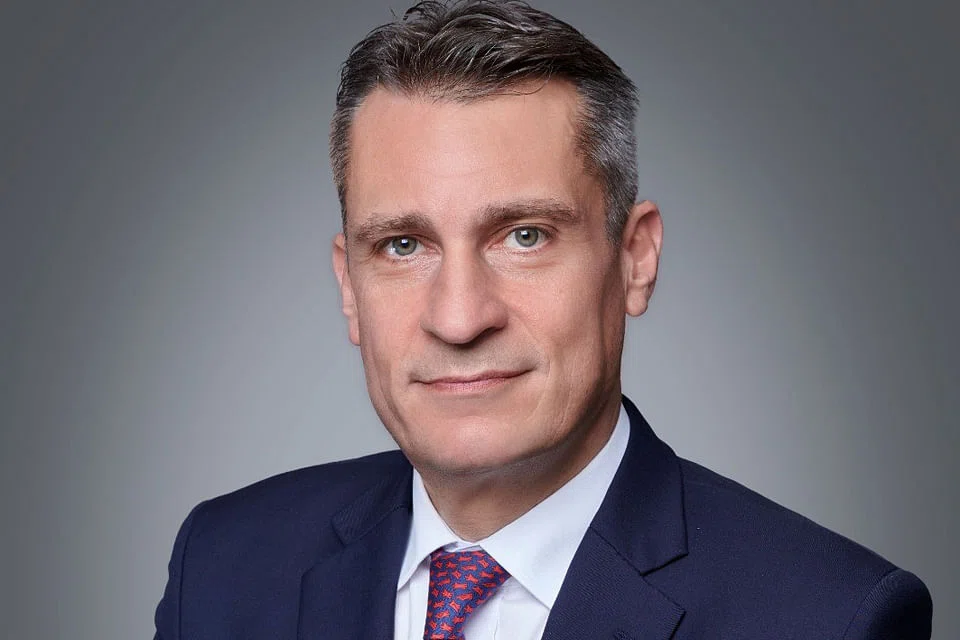
- The writer is limited partner and CEO, Asia, Lombard Odier
Decoding Asia newsletter: your guide to navigating Asia in a new global order. Sign up here to get Decoding Asia newsletter. Delivered to your inbox. Free.
Share with us your feedback on BT's products and services