

Adapting to changing times
Kazakhstan is putting new economic plans in place to ride out the current turbulence and prepare for the future.
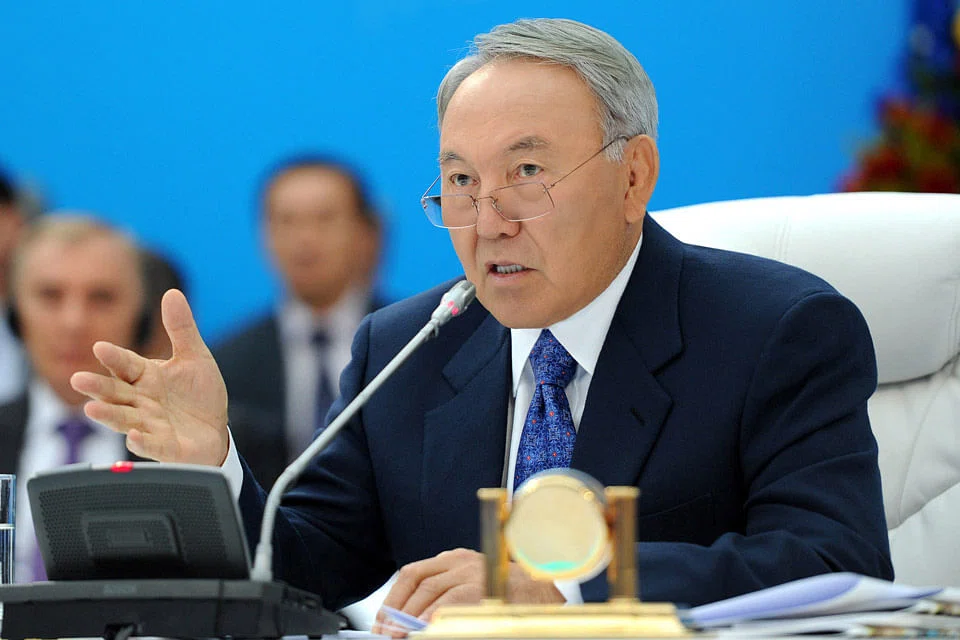
REFLECTING changing global realities, Kazakhstan President Nursultan Nazarbayev is putting in place a new economic policy called Nurly Zhol, or Path to the Future, which will put the country in a good position to not only ride out the current turbulence but also prepare for the future.
"The entire world is facing new challenges and threats today. The world economy has still not recovered from consequences of the global financial and economic crisis. The recovery is ongoing at a very slow and uncertain rate, and some countries still are in a decline," Mr Nazarbayev noted in his recent State of the Union address. He added that geopolitical crisis and the sanctions policy of the leading powers also create an additional obstacle for the recovery of the world economy.
Mr Nazarbayev went on to add: "From my experience, I feel that the years to come will become the time of global challenges. The entire architecture of the world will be changing. Not all the countries will be able to get through this complicated stage in a decent way. Only strong states, consolidated peoples will cross this line."
The president acknowledged that Kazakhstan has been negatively affected by these factors as global commodity prices fall amid the slowdown in general economic growth.
Kazakhstan is facing these issues head-on by taking positive steps to respond to the threats posed by the wider economic and geopolitical environment. The government has completed the development of a new large-scale development programme. "It will be countercyclical in nature and will be targeted at the continuation of structural reforms in our economy," said Mr Nazarbayev.
In the same way that US$10 billion was withdrawn from the country's National Fund to help it ride out the 2007-2009 global financial crisis, Mr Nazarbayev said that the time has now come to draw down from the fund again. "Now we are in the period, when we must use these reserves. They will help to overcome uneasy times and stimulate the growth of our economy. Kazakhstan should avoid repeating the mistakes of other countries and use its internal resources for economic growth efficiently."
Gains from Kazakhstan's oil and mineral exports are set aside in the National Fund, to be used in times of need to increase the resistance of the economy to external shocks, including when prices of natural resources drop.
Mr Nazarbayev reiterated however that these resources are not intended for short-term measures but are for key moves to transform the economy. Investments will be made to boost the development of transport, energy, industrial and social infrastructure, and small and medium businesses.
In February, one trillion tenge (S$7.2 billion) was allocated from the National Fund to support economic growth and employment in 2014-2015 in two tranches of 500 billion tenge each. A further second tranche is to be allocated towards achieving various goals such as building up the country's enterprises and infrastructure, and reviving the banking sector.
To build up the food and chemical industry, as well as the engineering and services sector, 100 billion tenge will be used to issue easy-term loans to small and medium businesses, as well as large enterprises.
Meanwhile, to revive the banking sector and buy out bad loans, additional capital of 250 billion tenge will be injected into the country's Problem Loans Fund in 2015.
Funds will also be pumped into infrastructure development to improve conditions and attract new investments. For projects such as the dry port complex, and the infrastructure of special economic zones in Khorgos-East Gate and the National Industrial Petrochemical Technological Park in Atyrau and Taraz, 81 billion tenge will be allocated in 2015.
Transport infrastructure will also be invested in. Looking ahead to the country's showcase EXPO-2017, Kazakhstan is building up its transport systems to cope. With the capital Astana's airport set to reach its 3.5 million passenger maximum capacity this year, 29 billion tenge will be allocated in 2015 for the construction of a new terminal and a reconstruction of the landing strip. This will increase its capacity to 7.1 million passengers per year by 2017. For the construction of EXPO-2017, an additional 40 billion tenge will be allocated to the already allocated 25 billion tenge. "The forecasts of development of the global economy for 2014 and next two years were subject to a downward revision by the International Monetary Fund and the World Bank. This is why we need to operatively revise some positions, as well as to make adjustments to the plans for the forthcoming period. We have no time for hesitation," Mr Nazarbayev warned.
MULTIPLIER EFFECT
Recalling how Kazakhstan, through prudent policies, was able to ride out the global financial crisis well, Mr Nazarbayev said that the country's economic policy has been re-orientated. It has to work within the constraints of a drop in income due to falling commodity export prices while meeting the government's responsibilities to society. This will be done by supporting the sectors which create the highest multiplier effect on economic growth and employment. Thus, new initiatives are needed to stimulate business activity and employment, Mr Nazarbayev said.
The Infrastructure Development Plan will become the core of Kazakhstan's new economic policy. This is expected to take four years and will match the second five-year phase of its industrial and innovation development policy. The total investment portfolio for this plan is six trillion tenge, with 15 per cent comprising state investments.
Of these investments, Mr Nazarbayev also highlighted the importance of modernising housing and utilities infrastructure, and water and heat supply networks. Anticipated investments are expected to be no more than two trillion tenge with an annual allocation till 2020 from all sources of funding of no less than 200 billion tenge. "Today we see big interest to the investments into the modernisation of housing and utilities from the European Bank for Reconstruction and Development (EBRD), the Asian Development Bank (ADB), the Islamic Development Bank (IDB) and private investors," said Mr Nazarbayev.
He emphasised the need to ensure their maximum involvement through provision of long-term investment rates while also co-funding such projects by the state to keep rates affordable. Kazakhstan will allocate up to 100 billion tenge each year to the acceleration of rates of modernisation of heat and water supply systems in addition to the funds already planned for in the budget.
The strengthening of housing infrastructure is seen as another priority. As Kazakhstan's cities develop, this is accompanied by a significant cross-flow of the population, which creates pressure on the labour market and city infrastructure, including on the housing fund.
Therefore, Mr Nazarbayev recognizes a need to revise the approach to the construction of rental housing units. The state will construct social housing to rent and provide it to the population for long term rent with the right to buy it out, he said.
The provision of housing directly, without mediators, with low-interest loans will enable it to reduce the cost of acquisition. No first instalment and low mortgage interest will make housing more affordable for various strata of the Kazakh population. Therefore, an additional 180 billion tenge of funding for rental housing will be provided during 2015-2016.
Development of social infrastructure is also seen as a priority, with revitalisation of the school system to take place in three phases. An additional 70 billion tenge will be allocated for this while another 20 billion tenge will be allocated relieve the problem of a lack of kindergartens and pre-school organisations within three years. It is also hoped that there will be additional private sector involvement in this development.
As well, up to 10 billion tenge will be allocated by 2017 to 10 higher education institutions defined within the framework of the industrialisation programme based on which the link between science, economic sectors and staff preparation will be ensured.
Finally, the role of small and medium businesses and their business activities has also been highlighted. To support them, 100 billion tenge will be allocated from the National Fund. This has led to the creation of 4,500 jobs. However there has been a demand shortfall for these funds of 23 billion tenge.
Unprecedented business credit at 6 per cent rate for 10 years has been created and has boosted the small business environment. "We should continue our work to develop small and medium business as a driver of economic growth and increase its share to 50 per cent of GDP by 2050," said Mr Nazarbayev.
He noted however that the country needed to effectively use credit facilities for small and medium business given by the ADB, EBRD, and the World Bank amounting to 155 billion tenge in 2015-2017.
In light of the worsening economic conditions he spoke about earlier, Mr Nazarbayev revealed the bold decision to allocate an additional US$3 billion from the National Fund for the period from 2015 to 2017.
The government will prepare revisions to the 2015 budget to take into account the additional allocation and ensure effective and rational use of these funds. A commission to be created by the president will strictly monitor the effective use of funds and report personally to him.
Mr Nazarbayev emphasised that the investments from the National Fund must be accompanied by structural reforms in the respective economic sectors, with joint implementation of projects with international financial organisations.
He highlighted for example, that the World Bank, ADB, EBRD and the IDB are ready to allocate about US$9 billion for 90 priority projects. The allocated funds should support investment activities, prevent a drop in the population's income and stimulate the creation of new jobs. This will result in sustainable economic growth in the short and medium term.
Mr Nazarbayev reiterated that Kazakhstan's education, healthcare and agriculture development programmes must continue apace despite the changing global economic conditions. "The Nuly Zhol new economic policy is our global step on the path to become one of 30 most developed countries of the world."
SET TO WORK
He pointed out that all the necessary conditions for successful work have been created. "An administrative reform was carried out, the new structure of the government and executive power is working. Every minister knows what to do. We removed redundancy and unnecessary links in management. Akims have the necessary scope of authorities. The region has everything - programmes, resources, finances. Everybody is responsible for its area of work. They just need to knuckle down and set to work."
It is anticipated that the new policy will become a driver of the growth of Kazakhstan's economy in the next few years. For example, some 200,000 new jobs will be created just from the construction of roads. All of this means employment and growth of income of the population.
The Nurly Zhol plan is expected to create a multiplier effect in other economic sectors: production of cement, metal, machinery, bitumen, equipment and related services. "Roads are lifelines for Kazakhstan. Life has always emerged and developed in our vast expanses around roads. We must create such a transport network that car, railway and airlines stretch to all directions from Astana. Like arteries from the heart. Like rays from the sun," said Mr Nazarbayev.
The new lines built by Kazakhs will renew the economy and community. They will firmly link all the corners of the country with its centre. Cargo traffic is set to accelerate and increase while transit cargo through the country will grow.
Mr Nazarbayev sees Kazakhstanis driving on modern and qualitative highways, and able to get to any region in a safe and fast way. In addition, the social infrastructure will improve, new and modern schools and hospitals will provide high-quality services. "Finally, this will affect the welfare and the quality of life of each Kazakh. And the main thing - all of this will remain in our land as wealth of our future generations."
TRENDING NOW

He built the Vingroup empire. Now South-east Asia’s richest man is handing some key roles to his sons
Despite the de-dollarisation debate, demand for dollar liquidity in Asia is growing
Can a first-time homebuyer couple earning S$18,000 a month afford a new EC unit?
Asia needs new energy security architecture

