

Bridging the trust gap
THIS WEEK'S TOPIC: What can be done - by business leaders and companies - to build trust?

THIS WEEK'S TOPIC: What can be done - by business leaders and companies - to build trust?
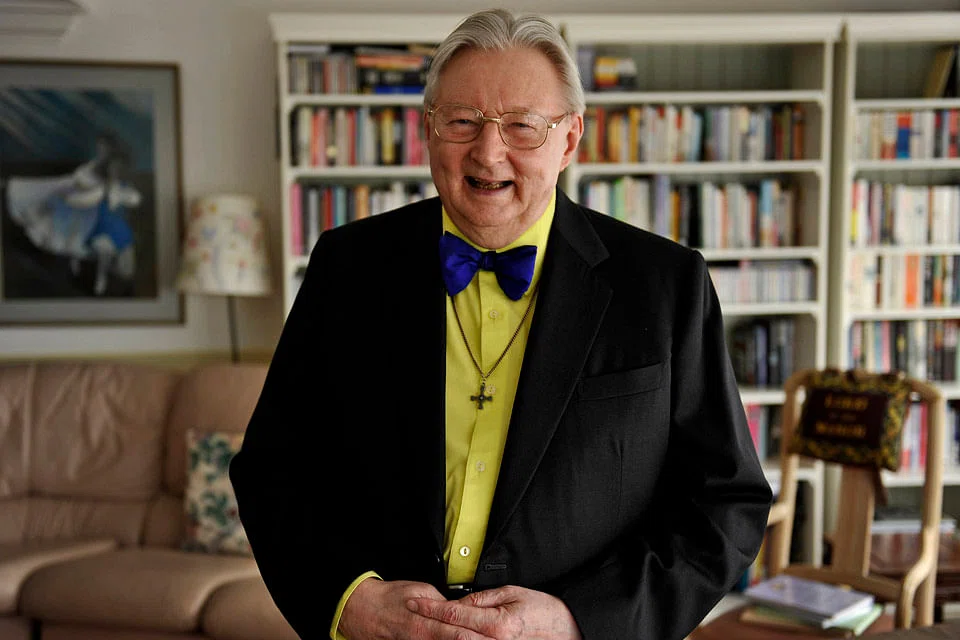
John Bittleston Founder & Chair Terrific Mentors International Pte Ltd
Trust is broken by bad behaviour. When that is compounded by self-congratulatory claptrap dressed up as public relations, it has been lost forever. Wells Fargo is a good example of what not to do and how not to compound it when you've done it. We no longer believe any e-mail or letter that begins with the words "in order to improve . . ." because we know that it is yet a further attempt to steal from us.
Business leaders and companies will rebuild trust when they behave with integrity, tell the truth and stop using obfuscating jargon to bury their misdemeanours.
David Gerald Founder, President & CEO SIAS
Corporates have everything to gain by establishing a trusting relationship with stakeholders.
The best way to build trust is not to create situations that would lose it but take positive actions - like acting with integrity and good intent, demonstrating this through being transparent in disclosures, and being fully accountable to stakeholders. Just one wrong action, like a failure to disclose a related party transaction, can lose the trust built up over years in a company.
The "withdrawal" in trust has a far greater consequence than the "deposits".
Max Loh Managing Partner EY Asean and Singapore
Trust is the "glue of confidence" that binds institutions, businesses, societies and people together to achieve success.
Real trust is about empowering relationships based on doing the right thing and less through regulations. Building trust requires corporates and leaders to commit to a purpose in society beyond immediate profits and gratifications, underpinned by a governance culture and actions that demonstrate integrity, transparency, accountability and quality in delivering what its purpose promises.
The increasingly pertinent concepts of sustainability, corporate social impact and the "triple bottom line" elaborate on this view of business, providing companies with new ways to think about how they conduct business and build trusted relationships while performing well.
Victor Mills Chief Executive Singapore International Chamber of Commerce
Sadly, there will always be unethical commercial behaviour given human nature. Thanks to the information revolution and social media there is now nowhere to hide from public scrutiny.
This will help more of us to consistently conduct fair commerce, to behave openly and honestly, to mean what we say and to always strive to act in the best interests of everyone affected by what we do.
When we make mistakes, these must be promptly admitted and put right. The consistent practice of ethical, selfless leadership builds and sustains trust in leaders and businesses. It also results in more equitable communities.
Eugene Wong Founder and Managing Director Sirius Venture Capital
Regulations and disclosures are like the speed limits and traffic rules imposed - which still can never determine how the driver drives his or her car.
I think it was Peter Drucker who said that "culture eats strategy for lunch!". Look at all the great sustaining companies in the world. I believe they all have honour and integrity in their codes and values statements.
Good business practices ultimately come down to trust, to honouring our business commitment and to delivering our goods and services with integrity. I cannot see how trust can be built without these.
Amos Poh Executive Director Kingsland Global Ltd
The trust gap that is widening between all players in today's world seems to have a simple root - in this increasingly fast-paced landscape, there are less meaningful interactions between parties, and less time to establish impactful and lasting relationships that truly matter.
Trust, in the corporate environment, can only be built by working together for long periods of time.
To establish trust with partners and stakeholders, we firmly embrace the values of sincerity and integrity in all our dealings at every level, both externally and internally.
With consistency, this approach over time bridges the trust gap, which is becoming increasingly apparent in our operating environment today.
Jayajyoti Sengupta APAC Head Cognizant
In the digital economy, consumer trust has become the new battleground for success. Our research reveals that one of the biggest threats to companies today comes from the ability to win and keep consumer trust. Organisations need to master the fundamentals of data ethics, make transparency and data security key performance indicators, and show consumers a return on the value of their trust, what we call the "give-to-get" ratio. They must give customers a 360-degree view and complete control of their information to ensure they feel secure amid their ever-increasing digital footprint, add human intelligence to analytics capabilities, and focus on self-regulation based on openness and accountability.
Matthew Johnston Area Vice-President, ASEAN & Korea Commvault APAC
Trust is about doing the right thing, whether it's in our work or personal lives. At work, it only comes when organisations and stakeholders can see consistency and transparency in our actions. This is even more important in today's data-driven economy as we need to be able to build trust in the "truth" of our data. Secure and robust data management practices are absolutely critical today in order to achieve this end. Businesses that build their strategy and operations around the trust equation will emerge winners in any race.
Dileep Nair Independent Director Keppel DC REIT Management Pte Ltd
Trust is engendered when there is alignment between values, words and action. Simply "doing what you say" and "saying what you do" is not enough. It has to be backed by your beliefs and sincerity. Building trust in organisations must start at the top. A company's board and top executives have to believe in the company credo and what it stands for. This must be translated into policies and procedures to guide corporate actions for the company to achieve its stated objectives. The trust developed with its stakeholders has to be carefully nurtured. Just like a bowl of china, trust once broken, is very difficult to restore.
Seah Kian Peng CEO NTUC FairPrice
Trust is the foundation for creating a successful and sustainable business. It should be a critical strategic priority as trust establishes corporate reputation, promotes brand integrity as well as convey product and service reliability. It is a reflection of the organisations' value proposition encompassing its business structure and beliefs that impacts their bottom line as well. Trust is built up over time and it is during periods of crisis that helps define or destroys an organisation. At FairPrice, trust is the cornerstone of our mission, core values and service motto. It is a privilege accorded to us by our customers. We have in place a structured corporate governance framework for accountability and promote ethical conduct for our partners and ourselves as we strive to make lives better for all. It is always work in progress.
Ana Dhoraisingam Chief Executive Officer, Singapore PineBridge Investments
In order to build trust, we need the building blocks of honesty and integrity. Trust and integrity are two sides of the same coin. When people have little trust in one another, or in their leadership, organisations are not going to achieve their fullest potential. Integrity starts at the top - with the people at the helm. Good corporate governance frameworks mean little when people act in a spirit that is contrary to that. Imbuing a culture of good values starts at the core - with our families and our upbringing. Society needs to acknowledge this openly.
Jacqueline Loke Senior Partner Dentons Rodyk & Davidson LLP
To determine whether a business is deserving of trust, you need to go to its core. External validation helps, but it only provides some credibility to the matter or event being reported. For a business to be trustworthy, that value has to be built from the inside out, starting with the corporate philosophy. The core of a business is its people. Things like HR practices, the integrity of its CEO and board members, an open and respectful relationship between management and employees, go towards creating a culture of respect, integrity and honesty within the organisation that suggest a trustworthy culture.
Jean-Michel Dumont Chairman Ruder Finn Asia Pacific
Corporate crises are increasingly making headlines, leading to an assumption that companies are inherently misbehaving. The rise of social media has created the perfect storm for increased scrutiny - from employees, consumers or anyone with an Internet connection.
More regulation is not necessarily the solution. It has become unacceptable for a company to be two-faced or have conflicting messages. This strategy will crash in a Web-enabled world. Corporations need to walk the talk and build a culture aligned with their values, balancing the concerns of the society in which they operate.
This can be reflected in a diversified management and board that have a genuine link and desire to be part of the local community. Transparent communication of this culture is critical, ensuring it is understood by all stakeholders.
Yeoh Oon Jin Executive Chairman PwC Singapore
Trust is the bedrock of any corporate's relationship with its stakeholders. The key issue is whether there is the will and ability by the board and management to form deep trusted relationships with the various stakeholders. Trusted relationships enable the reporting/viewing of unpredictable events and information gaps in a more positive light of reliance rather than with doubt or suspicion of a hidden motive. The alignment of objectives and values with the key stakeholders together with consistent and clear communications are paramount. Regulations and disclosure standards help set the baseline expectations for the communications and interactions with stakeholders but ultimately, to achieve a "trusted" culture, the interactions must be accompanied by consistent words, actions and behaviours by the board and management which are aimed at enhancing a trusted relationship.
Matt Harris Chief Executive AIG Asia Pacific Insurance Pte Ltd
Building trust is an exercise in proactivity, accountability and transparency, especially for the insurance and service industries.
We must move beyond due diligence, and adopt an open and customer-centric approach at every touchpoint. As insurers, we should not waver in delivering our claims promise - our customers experience a swift and hassle-free claims process where they are regularly updated.
AIG's independent directors also provide expert views to enhance our corporate governance. To bring us even closer to our key stakeholders and keep any trust deficit at bay, regular communications to our external partners and employees is key.
Paul Henaghan President, South East Asia Dell EMC Enterprise Business
Trust is built over time, and across a succession of positive experiences. For businesses, this means having the ability to anticipate, innovate and consistently deliver what the market needs. In an age where the business landscape continues to ebb and flow dynamically as a result of continued disruptions, strong relationships, built on trust, is a business imperative. The agility to respond to market changes, combined with a strong corporate governance and a culture of openness, delivered in the spirit of transparency and shared ownership, will foster trust across a business ecosystem and set the path to successful relationships with customers, partners and employees.
Edwin Khew Teck Fook President The Institution of Engineers, Singapore
Building trust is a complex, multi-faceted matter. What has worked really well for IES is our commitment to hold regular meetings with our various stakeholders and partners including government authorities, engineering organisations and Institutes of Higher Learning (IHLs). Our aim is to entrench them in our vision, roles and programmes and for us to understand theirs. Such sessions are essential as trust has a lot to do with a healthy understanding and respect for what each other does. This approach has united our partners and IES towards common goals and has moved us towards working in tandem to advance engineering and technology in Singapore.
Reuter Chua Head ACCA Singapore
Trust has always been the cornerstone of successful businesses. However, rapid digitisation has added new dimensions to the definition of trust. Building trust in the digital age must therefore be multi-dimensional and reflected across a company's operations and strategy with strong support from the top. With social media communication becoming a norm; cyber-threats making theft of customers' and competitive information increasingly possible; and the creation of new business models; there is a need for new models of governance to be explored and installed.
Business leaders must recognise any potential risks and gaps in their business models which undermine trust and be prepared to lead the way to building trust on a solid foundation with both internal and external stakeholders. One way to build trust is to adopt transparent practices such as the use of integrated reporting, which provides stakeholders a clear and concise explanation of how the business is run, removing any possibilities of doubt.
Wong Heng Chew President Fujitsu Singapore
In order to build organisational and employee trust, companies must make sure that the initiatives they implement inculcate a culture of compliance, openness and transparency. This not only applies to how business is conducted but in all aspects, such as commitment to environmental protection, through which we can encourage responsible thinking. Additionally, our employees undergo ethics and compliance training programmes on a regular basis. By putting in place organisational policies that encourage trust, companies can stay true to their own ethical principles, as well as demonstrate to their employees and the community at large that they are committed to doing business the right way.
Charles Tidswell Vice-President, JAPAC Socialbakers
From my experience, trust in your brand and company has to be felt not only by your external public such as customers or investors, but also by your employees. The reach of social media means that your employees can also be your greatest advocates. They have to believe the company goal and vision is authentic - the importance of this should never be underestimated. Time and time again we see brands with an objective tone of voice, such as media companies, win out on social media, and I think this is a testament to how well people naturally respond to this.
Lee Fook Chiew Chief Executive Officer Institute of Singapore Chartered Accountants
Trust takes years to build, but can be broken in an instant. The key ingredients to build trust in a company are a culture of transparency, fairness, and clarity of communication. It requires business leaders to be trustworthy and walk the talk, setting a strong tone from the top that cascades to every level of the company. When well managed, even crisis can become an opportunity to build trust. To foster a culture of trust, every individual needs to have the ethics and integrity to do the right thing, particularly in challenging situations. The importance of having the conviction to do the right thing cannot be overemphasised. That is why ethics and integrity are at the heart of the accountancy profession.
Turid Solvang Co-Founder and Managing Director Norwegian Institute of Directors
A company's greatest asset is its stakeholders' trust. We know too much today to focus solely on maximising profit. As companies, we have a contract with society, and every board of directors should ask themselves: What is the purpose of this company - what do we want to contribute, what role do we want to take on in society? If we compromise our bond of trust with society, we lose the trust of our stakeholders, and with that, our licence to operate. Whichever industry we are in, we are first and foremost in the business of trust, so we need to make trust our business.
Uantchern Loh Chief Executive Officer Black Sun PLC
Although many of us have heard of the saying "In God we trust, and the rest we audit", we don't take it seriously. We use it in jest to justify why we implement internal controls and perform audits. But we should take this phrase seriously. That's precisely why we have the three lines of defence in organisations - management as the first line of defence, risk oversight as the second and internal audit as the third line of defence - because we trust only God. Things can and will go wrong with business processes, whether intentionally or otherwise.
Joe Manning Vice-President, Pacific Asia Abbott Nutrition International
Building trust begins from within. It starts with employees who represent and uphold the values of a company, and is sustained through our actions in society. Businesses should work with employees to continue fostering a culture of integrity and a spirit of collaboration to cultivate an open and transparent workplace environment. With trust at the core of business, companies can empower employees to succeed in their jobs and live up to their fullest potential - which is good for them, good for business and good for society.
Rick Scurfield President NetApp APAC
The widening trust disparity between governments, corporations and stakeholders is a real challenge in all corners of IT and technology-driven industries, particularly when it comes to the privacy and security of data.
Bridging the trust gap can be achieved when governments and corporations work together to build a bulletproof infrastructure that protects citizens' personal data; boosts innovation to empower stakeholders; helps to improve competencies through technology; and increases transparency in every stage of the data lifecycle.
Governments and businesses can no longer be complacent when it comes to building accountable frameworks with solid data foundations. They need to start galvanising data security and privacy measures before the widening trust gap begins to negate the incredible progress that globalisation and technology have brought about.
Gery Messer Managing Director, Asia Pacific CenturyLink
People build organisations, so it is imperative that creation of trust starts with employee engagement. Leaders need to inspire trust in the form of character - integrity, respect and faith, and competence - capabilities and commitment to excellence.
At CenturyLink, we frame trust in economic terms and create them with an explicit objective - we ensure that employees understand what the organisation's goals are, and clarify what is needed from them to reach that goal. In that process, we listen and find out on a personal level the challenges they face and factors for success. Building trust does not happen overnight, but leaders can certainly take steps to foster that climate to impact business results over time.
Mao Gen Foo Vice-President, Asia OpenText
As a technology provider, confidence and trust are essential. However, technology terminology and complexity can be confusing, and that confusion can too easily lead to mistrust. Technology brands are also increasingly sensitive to trust issues, because of incidents such as data breaches and subsequent concerns around privacy. For this reason, technology firms need to focus on demystifying the subject as much as possible.
To do this, we depend on our staff to be trusted advisers to customers, prospects, and more broadly within the industry too. That reflects throughout the organisation including business leaders and our customer-facing staff.
Jessica Tan Managing Director Microsoft Singapore
We live in a remarkable time when computing has been democratised and organisations are increasingly dependent on technology. Today, technology has outpaced the laws that govern so many of the capabilities and services that are essential to global commerce and innovation.
It is now more important than ever before for companies to build trust with customers and stakeholders. Increasing interconnectedness and sophistication of cybersecurity threats make a consistent approach to security and privacy necessary.
This means that we have to continuously update our security controls to protect our customers and stakeholders; be transparent in sharing how customers' data are being collected and used, and set clear privacy guidelines for customers to determine how their data can be shared and used, in order to collectively build greater trust in technology and all that it promises.
Gary Tom President, Asia Pacific Walton International Group
Business leaders are accountable to their stakeholders. In this regard, it is imperative that they not only communicate well with them but also be transparent in their corporate activities.
With over 30 years of experience in land acquisition and administration, Walton, as one of North America's premier land administrators, understands land and regards it as a lasting investment. In view of this, it is crucial that we inform our investors that investing in the parcels of pre-developed land is not a "get-rich" quick scheme but a long-term investment.
Walton gives full disclosure of our investments' risks and we also encourage all investors to do their due diligence before committing to any type of investments.
Mark Billington Regional Director ICAEW South East Asia
Companies can help build trust by publicly acknowledging that they have a broader range of responsibilities than simply maximising profit. They should state what these are, and how they are meeting them. They can also state openly what their values and principles are. Business environments will change and they will have to develop coherent responses but if they are upfront about what they believe in, they will be seen to be accountable. This will give them a solid foundation for building trust with stakeholders and society.
Allan Robertson Senior Vice-President, Sales, Asia Pacific Intralinks
There is a fundamental shift in the world whereby we are moving towards a new world reality shaped by mistakes of past regimes and digital technologies with a new generation coming into being. The confluence of these will and has caused friction, hence, issues of trust have emerged. Transparency and ethical code of conduct are all key to building trust, and these in turn are all part of good corporate and governmental governance. Technology also has a role to play - enabling more ways for people to communicate, be more productive and most importantly, collaborate securely in an environment of trust.
Ronald Lee Managing Director PrimeStaff
Transparency and credibility are key. It always starts at the top, with the leader of the organisation walking the talk. Gain the trust of internal stakeholders first and foremost and then validate this by the help of an independent third party.
For example, companies can voluntarily comply with the Code of Corporate Governance, which is currently not mandatory. Making additional financial and non-financial information available to the public will certainly help build more trust with investors.
Dipal Patel General Manager, Pharmaceuticals GSK Singapore
At GSK, we believe how we do business is as important as what we do. We are the first healthcare company to introduce patient-focused interactions with healthcare professionals. We've changed the way we compensate our sales representatives and have stopped paying external doctors to speak about our prescription products. GSK is also committed to making the results of our clinical trials publicly accessible and we are the first company to open up our clinical data to external researchers.
In order to bring innovative medicines to people in poorer countries whilst continuing to incentivise innovation, GSK is leading the way by implementing a graduated strategy for intellectual property, as well as a tiered approach to pricing. Through these changes to the way we work, we are becoming more transparent and in turn gaining the trust of our customers.
Tan Chong Huat Managing Partner RHTLaw Taylor Wessing LLP
At the risk of over simplifying the subject, I would recommend that business leaders and companies remember the acronym "GRACE" ie Governance, Risk, Anti-Money Laundering, Compliance & Ethics. These are important virtues when it comes to building trust.
The embracing of each and every one of them will be essential to guide and promote trust, and prevent the destruction of trust that have been established, built over time and maintained between companies and stakeholders.
Good governance that delivers performance and profitability which complies with regulations (among others, anti-money laundering as in the recent BSI / 1MDB case), conforms with good ethics, and is equipped with adequate and effective risk management will offer a good trust-enabling framework.
Needless to say, the honesty, diligence and accountability of business leaders will be of foremost importance in determining the trust quotient of the companies they helm. Examples include Dr Cheong Choong Kong (Singapore Airlines) and Warren Buffet (Berkshire Hathaway), just to name a notable few.
Over time, some of these companies become great institutions which are trusted and loved by their stakeholders, with a distinctive culture of honour and integrity. Hence the importance of "GRACE"
Tan Tiong Cheng Executive Chairman Knight Frank Pte Ltd
In this unpredictable and somewhat troubled world, the virtue of trust becomes more elusive to attain. Yet, this necessary hallmark of trust has been the key to Singapore's success. Our unwavering mission to instil integrity and honesty starting from the government down to businesses and communities has nurtured a strong culture of trust, building a national brand reputation for Singapore and in forging a safe haven status sought after by people around the world.
At Knight Frank, our mission to be a trusted advisor is the cornerstone that inculcates our virtue in serving our clients - to consistently provide advice to what is in our client's best interests with sincerity and to do what we say we are going to do.
Our key to professional success is to gain the trust and confidence of not just our clients but with our colleagues in the Knight Frank family, building truly special and enduring relationships with them.
Karl Hamann Chief Executive Officer QBE Insurance (Singapore) Pte Ltd
How companies gain and maintain the trust of all stakeholders depends on various factors, including a company's ability to consistently deliver on their promises to their customers as well as protect their shareholders' interests. Specific to corporate governance practices, it is no longer enough to adhere to regulations. Firms today must employ additional measures reinforcing transparency and fairness at every level, while illustrating a commitment to strengthening and institutionalising positive ways of doing business. Effective corporate governance is essentially another form of business insurance as it requires companies to meet the expectations of shareholders, customers and employees.
Toby Koh Group Managing Director Ademco Security Group
Trust in any company begins with its board of directors, good corporate governance and transparency. Companies must adopt best financial reporting practice in line with latest norms. Internal audit should be an integral part of a company's review process to mitigate risk to shareholders, clients and staff.
The board may not be able to have clear visibility into every facet of the business. Hence it is good practice for directors' contact details to be made available openly so as to facilitate whistle-blowing. Employees must be rallied that it is everyone's responsibility to safeguard the company's interest.
Jaya Dass Country Manager Randstad Singapore
Organisations and leaders must keep promises made to their employees. As obvious as this may seem, not honoring your word can cause employees to lose trust in its leaders to deliver a rewarding and trustworthy environment to work in.
Maintaining a robust internal audit and compliance process also helps to instill trust in an organisation. It sends a loud and clear message that customers can trust in that organisation to deliver to a high quality ethical standard. Organisations that articulate a clear strategy and vision are also creating pathways to building trust. When there is transparency and a clear direction towards an organisation's future, a sense of security and trust is cultivated. Building a principled, transparent, future thinking organisational climate goes a long way in instilling and building trust.
Chrisol Correia Director, Market Planning LexisNexis Risk Solutions
Financial transparency is recognised by the Singapore government and others worldwide as a critical condition for effective identification of terrorism financing, money laundering, tax crime and corruption crimes.
As such, it is imperative that corporations provide fuller financial transparency as markets globally become increasingly complex and interconnected.
Companies that develop a culture of financial transparency and accountability will benefit from more effective financial crime controls and the business benefits of an enhanced reputation for trustworthiness.
Amid a rise in digital transactions, we are seeing greater concern around data security and sharing personal details. Without trust, individuals withhold information, making financial institutions and regulators less able to monitor for and trace financial crimes. Building trust between individuals and institutions prompts financial inclusion. This in turn creates a virtuous cycle in which financial inclusion and transparency propel the highest standards of behavior that are critical to fight financial crime.
Lim Soon Hock Managing Director PLAN-B ICAG Pte Ltd
Honour is the currency for trust. Business leaders and companies will have to work for trust and to earn it, by being honourable, in every endeavour big or small. In fact honour is the foundation of trust.
Giving and receiving honour must be from our hearts. Business leaders and companies must walk the talk. In other words to win trust, our behaviors or actions must not belie our beliefs or commitments or challenge our conscience. For business leaders, their private persona and public persona must be one and the same, as much as possible.
Robin C Lee Group COO Bok Seng Group
Trust is an extremely fragile thing. The most admired companies can collapse overnight when their credibility is questioned. No doubt good corporate governance is the basis of building trust, but in today's world we often have to go beyond mere compliance.
In times like this when the world economy is facing fierce headwinds, companies and business leaders need to consciously communicate effectively and honestly with stakeholders in a manner that is informative and timely. Interestingly, trust is also about having the guts to execute plans and actions no matter how tough or unpopular so as to keep the business healthy and be ready when the tide turns.
Thomas Wai Director, Asia Pacific Talent Plus, Inc
Low trust causes friction, high trust generates engagement. Trust is the key leadership competency of the global economy. In working with business leaders over the years, we recognise that true leadership is about leading by example, inspiring trust and loyalty.
The means used and end results are equally important. Leaders need to be direct, transparent, demonstrate care and loyalty, and when required - call a spade a spade. Not showing care for employees, withholding bad news, delivering half-truths, wrongfully claiming credit, and manipulating the truth, are all acts that destroy trust. Leaders need to ask themselves - when was the last time they taught their executives how to build trust?
Amanda Goh CEO Edelman Singapore
Balancing communications around purpose and profit matters. This year's Edelman Trust Barometer survey found 78 per cent of the population expect the CEO to be visible in discussing societal issues, be involved in public policy discussions and have a personal view on these issues. This is seen as more important than discussing financial results at 71 per cent. In Singapore, the survey found that businesses should focus on access to education and training. Meeting these societal expectations while keeping pace with change gives businesses an edge in building trust. This can be achieved through in-house training programmes, collaboration with schools, or aligning with ongoing government initiatives.
David Leong Managing Director PeopleWorldwide Consulting Pte Ltd
Trust in business is the epitome in all dealings. Without trust, there will be resistance and friction. Trust is the strength of bonds between clients, staff and people. Without trust, businesses cannot function properly.
Businesses need to be set up with a culture of trust that begin from the top to bottom and peer to peer. Trust is needed in inter-company, inter-personal, inter-stakeholder interactions and as business leaders we must show trust, be trustable and trusting at the same time. We must show trust to subordinates so that they can share the same trust to their peers. Clients must have trust that we deliver our best for them with their interest at heart in our dealings. With trust, dealings become easier.
Building trust is about doing the right things, making the right decisions for each other - trusting that each interaction, each relationship will reciprocate the same trust throughout the web of relationships in interpersonal and inter-company dealings.
Christophe Duchatellier CEO Adecco Asia Pacific
The proliferation of communication channels and how stakeholders consume information are changing how business leaders connect with stakeholders. Business leaders now need to be seen as more visible and approachable. By harnessing digital channels for transparent and open engagement, leaders can address the need to be more accessible to their key stakeholders who are actively consuming information on those channels. Leaders can communicate beyond the business, to include personal stories and values through creative story telling formats for respective platforms. Governments need to lead with authenticity and transparency and the same applies with business leaders and companies.
Patrick Liew Managing Partner Greenpro Capital
Building of trust starts from within the company. Research shows that trustworthiness of a company depends on attributes of its employees, including their ability, integrity and benevolence. In addition, a study by University of Pennsylvania shows that when employees are grateful, it increases trust, while anger decreases it.
In other words, the quality of your employees and how they are being managed may have a bearing on trust levels in the workplace and throughout the value chain.
Business leaders should therefore build an environment where employees can feel grateful that they they are being appreciated, valued, and looked after on a long-term basis.
When employees trust the company, they will help the company to earn trust from key stakeholders. It's the people in the organisation that makes the organisation work.
Goh Yang Chye Managing Director GYC Financial Advisory
Be trustworthy.
Dora Hoan Group CEO Best World International Ltd
Trust is about people believing in your reliability, ability, and strength. To build trust, one has to have strong integrity, be consistent and committed. Business leaders must walk the talk and talk the walk, keeping to your word and promises at all times. You need to foster trust by having strong communication and close working relationships with all stakeholders. The bonding is essential for building trust. Once you have established the trust, your company's brand will also be established. So brand building is also another way of building trust.
The secret to my company's success is TRUST. We involve all our stakeholders in decisions that affect them, set common goals together so that their goal becomes our goal, and align ourselves to pursue this shared goal in one direction. As everyone become highly engaged and involved with each another, trust is built. Building trust is a cycle, and it has to work both ways. Mutual trust is what drives our business to achieve success. Only with trust can you get the results and the business you want.
Zaheer K Merchant Regional Director (Singapore & Europe) QI Group of Companies
Trust is only built by business leaders and companies when they act in a trustworthy manner in everything they do. Being the glue that holds the relationship between a business and a customer together, trust can be built by keeping and staying true to a promise; in business terms, the brand is the promise, and business leaders and companies will do well to align business strategy with branding. At an organisation level, trust is built not just by business leaders who exhibit qualities like competence and integrity, but also by all employees simply because leaders empower and motivate ordinary employees through a virtuous cycle of productivity, flexibility and innovation. As the adage goes, "trust is hard won and easily lost", and business leaders and companies should always bear this in mind when making corporate decisions that affect not just their customers but also their employees.
Derrick Chang Acting CEO PSB Academy
The benefits of higher education are often reaped years after students have entrusted their time, fees and aspirations to their institution of choice. As a leading private education institution, we do our very best to help our students succeed in the real world, because we've always believed that the surest way to build trust is to consistently over-deliver on one's commitments. In 2015, our graduate survey found that about 9 in 10 students gained employment six months upon graduation, while 6 in 10 of them enjoyed higher pay or better career prospects. As trusted stewards, we continue to pursue engagements with industry on our students' behalf, while investing heavily in advanced learning facilities such as our new 100,000 square feet city campus at Marina Square to deliver on a remarkable student experience.
TRENDING NOW

Good Class Bungalow market activity picks up pace on ‘realistic’ pricing
Indonesia imposes US$116 million in fines over manipulation of Sinar Mas, Prajogo-linked stocks

Singapore identifies 7 firms responsible for haze fires, notices issued urging action: Grace Fu

Once staunchly pro-China, Malaysian Chinese businesses are now distancing themselves from Beijing

