Challenges and contingencies
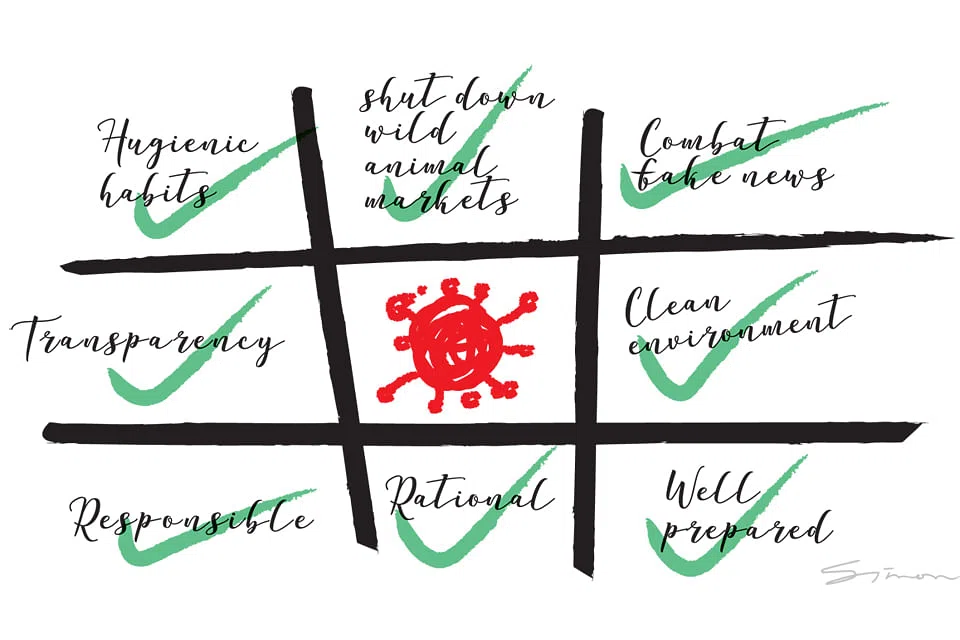
THIS WEEK'S TOPIC: What early lessons can be drawn so far about efforts to contain the novel coronavirus epidemic?
THIS WEEK'S TOPIC: What early lessons can be drawn so far about efforts to contain the novel coronavirus epidemic?
Chris Brankin Chief Executive Officer TD Ameritrade Singapore
One early lesson we could draw thus far is that misinformation spreads fear - and fear impacts anxiety and decision-making. If the markets can offer any indication of public sentiment, there appears to be growing confidence that we can overcome this quickly, thanks to the region's coordinated efforts to help contain the epidemic. Prime Minister Lee Hsien Loong's recent address to the nation is also a sure sign of the strength of Singapore's risk communication and crisis preparedness. In terms of the potential economic impact of the crisis, one important lesson for investors is to stay calm and ignore the short-term noise when making investment decisions. That doesn't mean things can't get worse, but we have reason to be optimistic despite the uncertainty.
Goh Puay Cheh Executive Director The Institute of Internal Auditors Singapore
While lessons could be drawn about the novel coronavirus epidemic, it is still an ongoing global fight against considerable unknowns and uncertainties.
Like a cybersecurity threat, this epidemic is a clear and present crisis. We must invest in ways to prepare for, respond to and recover from any business interruptions. Businesses must be ready to activate their business continuity plans at varying levels of operational capacity. During such trying times, the key considerations are to maintain operational agility and keep communications channels open with employees and stakeholders.
As a community, we must stay calm and carry on with our lives. Co-operate and be socially responsible. With a mindset of openness, co-operation, readiness, we can overcome the crisis and respond effectively to any eventuality.
Victor Mills Chief Executive Singapore International Chamber of Commerce
The first lesson is how interdependent the world is and how interconnectedness can spread viruses. Next, wild animal markets everywhere must be closed for good to reduce the chances of viruses in animals infecting humans. The next lesson is individual responsibility for good personal hygiene; behaviour is key as is the maintenance of clean environments. Next, information that is clear, factual and timely must be communicated by governments to citizens everywhere. The Singapore government's gov.sg WhatsApp group is a prime example of good communication. This helps manage the fear factor which can often be a bigger problem than the viral outbreak itself.
John Bittleston Founder and Chair Terrific Mentors International Pte Ltd
In early stages, true disclosure is the only way to handle new diseases. Governments have responsibilities to try to avoid panic but in today's world, information - both truthful and false - will flood social media at the hint of a problem. The Chinese government has done a relatively good job of containing the disease so far in China. But their delays in announcing the problem plus the shoddy treatment of the young doctor who tried to warn the world detract from their achievement, which is a shame. The Singapore government, as we would expect, has handled the crisis extremely well, finding the balance between urgency and fear correctly. The world needs to be prepared for further disease outbreaks. They will become the new normal.
Emma Smith CEO Sandpiper Communications
Much remains unclear about the risk and characteristics of this novel coronavirus. This understandably provokes emotional responses such as fear and anxiety. The main lesson we have learned is that communication is key. Combating misinformation quickly and clearly is vital to prevent escalation, as is providing factual updates regularly. In the current environment, giving clarity to action being taken by governments and medical experts is paramount. In addition, enabling people to take an active role in reducing the spread of the disease and mitigating their own risk, is both reassuring and empowering.
Emma Thompson Founder and Managing Partner Spurwing Communications
As the novel coronavirus is spreading, so too is false information. The World Health Organization warned against an ''infodemic'' - an abundance of information that makes it difficult for people to find trustworthy, reliable advice. Containing the spread of false information is equally important as containing the virus.
Together we need to keep encouraging businesses, media, government agencies and NGOs - everyone with an influential voice in the Covid-19 narrative - to adopt accurate and sensible reporting. Several themes underpin the Singapore government's key messages to the public, and they are working well - do not panic, maintain good personal hygiene, and be reassured that our healthcare systems are well-resourced. Journalists and social media conversations are rightly using the scientific term for the virus to diffuse xenophobia.
As healthcare communications specialists, we are working with our clients to reinforce these messages and provide insights that help people think objectively around the virus. This is an important lesson for any epidemic to contain the spread of misinformation.
Helen Ng CEO Lock+Store
One important lesson learnt from the novel coronavirus outbreak is that we will never be fully prepared for pandemics, especially since international borders are more porous than ever before, but we should always be ready to mount the best possible defence. A lot of resources have been devoted to counter-terrorism efforts in recent years, with mock attacks staged on a regular basis. The same rigour should be applied to our pandemic preparedness. Once the current outbreak has been contained, we would need to evaluate our action plan and carry out regular disaster response drills involving all stakeholders. In future, our response should be swift, coherent and battle-hardened to save lives and prevent significant damage to the economy.
Allan Tan Managing Partner Ying Communications
Governments need to manage the inevitable ''infodemic'' alongside the pandemic. Leaders should speak from the same script, and speak often. Stick with rational messages that explain rapidly unfolding situations clearly, simply, and unambiguously.
Debunk false narratives, especially the ones gaining traction, with facts. Announce good news (such as recoveries) along with the bad (such as new infections); don't spin. Aim to sound like the adult in the room when others are losing their heads. Beyond words, walk the talk: enforce announced measures, apply the rules consistently, be compassionate when you can. We can all take a page out of the Singapore government's playbook.
Tony Lombardo Chief Executive Officer, Asia Lendlease
Managing an epidemic is not new to the region. The Singapore government has formulated a well-considered response plan armed with the learnings from the Sars episode. The openness that the government has exercised in sharing information has been extremely useful to support the formulation of sound strategies to tackle this challenge.
There are a lot of unknowns still, but planning for the worst while hoping for the best will enable all to take a balanced view. Over the last two weeks, Lendlease has taken proactive steps to encourage staff to work from home where feasible, with some 70 per cent of staff now working flexibly. Where flexibility is not feasible (for frontline workers, for example), we have introduced measures to protect the affected workers. We are all in this together and when individuals, businesses and government all play their part, we can overcome the challenge before us.
Damian Tan Managing Director Vickers Venture Partners
The spread of the novel coronavirus underlines the risks that infectious diseases pose to the global population, especially as our world becomes increasingly borderless. Currently, vaccines take years to create and billions of dollars to develop. We must continue to pursue innovation and invest in science to develop new ways to address this. It is vital for pharmaceutical companies, research institutions and public health departments to form partnerships in the pursuit of vaccine development and greater healthcare access to people across the world. Companies like Emergex are doing just that with their focus on researching, developing and manufacturing vaccines at scale for infectious and virulent diseases.
Tan Suee Chieh President-elect Institute and Faculty of Actuaries
There is a saying: ''The first casualty of war is truth''. Likewise, the first casualties of the Covid-19 outbreak are common sense and truth, leading to unwarranted panic.
The most important lesson for me as a trained psychologist and an actuary is this: our deepest fear is the fear of the unknown. So, let us get a handle of the data, separating the signals from the noise. I list below:
So actuarially speaking, there is no need to fear. As Franklin D Roosevelt said, ''The only thing we have to fear is fear itself.''
Dolly Goh CEO Singapore National Co-operative Federation (SNCF)
The novel coronavirus outbreak is once again testing Singapore's pandemic readiness and response. While the authorities work hard to contain the situation, we must remember that Singaporeans need to play our part in ensuring our own well-being, as well as that of others by practising social responsibility and maintaining good personal hygiene.
Values such as mutual help and co-operation hold even greater relevance during this difficult time, as it calls for us to stay united in order to tide over this tough period together as a community. Knowledge is also crucial in order to minimise false panic. In the spirit of caring for the community, we have seen residents and volunteers coming together to distribute free masks and hand sanitisers.
Similarly, to show care for our frontline medical workers, youth in the co-operative movement led by the Singapore National Co-operative Federation Campus have been expressing their appreciation by delivering packed hampers and self-made thank-you cards as a form of encouragement.
Craig Ellis Chief Executive Officer MSIG Singapore
While global efforts are still ongoing to contain the Covid-19 outbreak, the Singapore government's crisis preparedness and risk communication approach have been commendable. Strong leadership, clear reinforcement of protocols and procedures, as well as transparency in sharing critical information at timely junctures are all valuable lessons for countries and even companies to learn from.
At the same time, businesses and individuals all have a role to play in the fight against Covid-19. At MSIG, we have rallied our staff to support on-ground public health efforts and implemented split team and work-from-home arrangements as part of our business continuity plan. As an insurer, we are also helping our policyholders with their travel insurance where there has been a change in their travel plans. We are facing exceptional times, and businesses can contribute to building social resilience and play their part in managing the risk during this crisis.
Jan Herzhoff Managing Director, Asia Pacific Elsevier
The immediacy of the Covid-19 outbreak shows that evidence-based processes are not any less important but, rather, must be accelerated in such times of uncertainty. In order to contain the epidemic, we need to ensure that new knowledge is reliable and accessible to the public, especially healthcare professionals who are at the frontline of patient care. This process of knowledge discovery about the virus needs to be validated by peer review and evidence-based processes to ensure its reliability and safety. There is a need for a free global consolidated information centre that provides researchers, clinicians and the public with one-stop access to evidence-based information to address the many uncertainties about this outbreak.
Jill Smith Chief Executive Officer Manulife US Real Estate Management Pte Ltd
With the infection having surfaced in the CBD, it is more critical than ever for companies to do their utmost to combat the outbreak. The health and safety of our staff is top priority at our firm. All large-scale meetings have been converted into conference calls, and temperature screenings are conducted upon entry into Manulife Tower. Not only are employees provided with masks, hand sanitisers, and flexible working hours to avoid the office crowd, staff are split into two groups to alternate between working from home and the office every 14 days. Our US teams are on standby to assist tenants at our nine properties should a health incident occur. Lastly, besides taking care of our staff and tenants, we also remember the more vulnerable communities, donating close to 130 bottles of hand sanitisers to the isolated elderly.
Daphne Teo Co-Founder & CEO NSG BioLabs
Firstly, the efforts around the world and in Singapore show the importance of communication and scientifically-guided advice to the public and all stakeholders and coordinated measures in a difficult time. It is important to be rooted in science and clinical evidence to focus on what matters and prevent unnecessary concerns arising from incorrect information.
Secondly, it is clear that containment and treatment still take too long, especially when in reactive mode. This highlights the need for proactive vigilance and preparation. Consistent investment in R&D, medical capabilities and new technologies is needed to increase our understanding of disease biology, catch diseases early, and act faster on treatment. Doing so successfully requires the combined effort and long-term support from governments, companies, investors and researchers, and this should be applied broadly to cover a whole range of medical areas. Infectious diseases have unfortunately been under-resourced. On a positive note, residents in NSG Biolabs, like Engine Biosciences and Acumen, are building applicable therapeutic and diagnostic technology platforms with government and international university collaborations that will hopefully put us in a better position in the future.
Christina Teo Executive Director Singapore Association of Pharmaceutical Industries
A concerted effort across industry, academia and government has made Singapore's response to this outbreak swifter than in previous episodes. Singapore's contribution to the fight against Covid-19, the rapid development of a test kit by A*Star, also demonstrates the value of innovation in health and biomedical sciences, after two decades of investment in the area.
Communications has also been unprecedented in terms of speed, transparency and coordination which helps keep Singaporeans informed and debunk fake news. Prime Minister Lee Hsien Loong's speech last weekend, which has been praised internationally, has done much to curb panic and shore up confidence.
SAPI has been updating members on government guidance, and supports national efforts to address this challenge. We are confident we will emerge stronger as a society through this episode, as we did after Sars.
Andrew Watson SVP and GM, Asia Pacific Japan and Greater China SAP Concur
The importance of an employee duty-of-care programme that can anticipate travel challenges in our highly mobile region has become obvious in the last few weeks. Predicting risks, taking preventative measures, and responding briskly to crisis all help to maintain business continuity.
Organisations must aim to keep their travelling staff safe at all times, leveraging systems that can locate and communicate with them instantly to render assistance when the need arises. The corporate travel system must also allow quick policy updates, visibility and automated enforcement. Lastly, user-friendly and dependable remote working technologies are non-negotiable, as are healthcare plans that adequately insure employees against overseas hospitalisation, quarantines and other untoward events.
Neil Narale Partner Mercer Marsh Benefits, Singapore
Mercer has seen many organisations in Singapore take swift action to manage risks, protect their employees, and address questions on fiscal integrity and work-from-home arrangements. Given past global health crises, business continuity and contingency plans should be part of a resilient organisation's business risk management. Firms with these in place have moved faster, creating less fear and panic.
Employee-centric organisations have also focused on having their leadership teams provide direct and frequent all-staff communication on non-monetary support including health and wellness initiatives, reminders of practising good hygiene, activating teleconsults as an alternative form of checkup, precautions around travel and receiving visitors, and flexi-working arrangements. Reviewing and putting in place appropriate insurance cover for employees is also fundamental for employee reassurance.
Tripti Lochan Co-CEO VMLY&R Asia
The novel coronavirus has graduated from epidemic to a mild pandemic in less than two weeks. In situations like this, misinformation and the fear it creates can mutate and spread faster than the virus itself. Singapore has won praise from international experts for its communications around the outbreak, with its government working closely with healthcare organisations and businesses to communicate clear, concise and consistent awareness of the outbreak in order to quell the spread of the virus, while simultaneously stamping out misinformation and fake news. This is a powerful lesson for affected countries around the world, highlighting the benefits of centralised information sources aligned to the same mandate on a global level and the need for closer collaboration between governments, health organisations and businesses globally. To summarise in three words: excellent communication leadership.
Ronak Shah Chief Executive Officer QBE Insurance (Singapore) Pte Ltd | Asia
As Singapore is one of the countries hardest hit by the novel coronavirus, businesses here need to be proactive and adaptable in protecting their employees and guarding against panic. Companies have already started working with the government to institute business continuity plans and flexible work arrangements as part of their response, underscoring the importance of robust risk planning for crises of all descriptions. Most of all, we must exercise grace under pressure. Keeping a calm, measured head is vital not only for ensuring safety measures are understood and embraced, but also for managing the emotional side of the situation.
Hari V Krishnan CEO & MD PropertyGuru Group
We are much more of a global economy than we were during SARS (2003), with China better integrated into the world economy today. A better-connected world today also means that news spreads much faster between continents than it did before. Rumour-mongering which can lead to panic is more likely in the age of social media, and hence clear and transparent communication from all government bodies and health organisations is critical. Rumour management needs to be a core part of crisis management and communication. In times of such an epidemic, business leaders have a larger role and responsibility that entails ensuring updates and facts are shared within the organisation, implementing required safety measures for employees and business continuity plans. Business leaders must provide these core elements of leadership at this sensitive time.
Sureish Nathan Managing Director DDI Singapore
The novel coronavirus outreak is challenging business decision-makers and leadership teams on how to reframe problems and solutions on the fly. We are observing the need to cover blind spots in black-and-white decision-making processes, where the trade-off between individual safety vis-à-vis collective calm is too costly a dichotomy in times of crisis.
Beyond that, uncertainty breeds scrutiny and discontent. Such feelings are amplified given that the power and tools of communication today are wielded by everyday citizen. Our public and private spheres of life are interconnected, with increasing degrees of complexity.
The epidemic exemplifies the growing necessity for a new paradigm in leadership transparency - where transparency is cross-institutional with the public as the key stakeholder - to adapt to tomorrow's uncertainty and demand for near-immediate clarity.
Raman Singh Global CEO Mundipharma
A key lesson has been the importance of close coordination and alignment between government, business and communities to ensure a solid defence against trans-national virus outbreaks. This is important because it builds capability to deal with not only the current Covid-19 threat, but also future outbreaks.
This applies to R&D as well, where the pharmaceutical sector has a role to play in supporting national health goals through indigenous innovation and the development of treatments tailored to Asian patients' needs as opposed to generic global product development. This is an area where Singapore's biomedical sector can take a leadership role in addressing the threat to Asian communities posed by viral epidemics and catalysing regional efforts to develop best practices and treatments to keep our populations safe.
Tan Su Lin Chief of Staff and VP of Operations Carousell
While there is no denying the dangers of Covid-19 or the toll it has taken globally, an important lesson is that fear is very dangerous too. We have seen panic-buying exacerbate the situation, and Carousell has stepped in to ensure that profiteers do not take advantage of the public health epidemic. The government has responded swiftly to every new development in this situation, deploying manpower and resources as needed, so instead of resorting to panic, all we need to do is stay vigilant. It is important to keep in good health, but equally as important to keep in good spirits. It has been heartening to see our Carousell community rallying to keep each other safe.
Naveen Menon President ASEAN Cisco
As the situation around the Covid-19 outbreak continues to evolve, stakeholders have been looking at ways to contain its spread. Our thoughts are with those directly impacted and we hope for their speedy recovery. The impact on GDP growth can be quite significant and a key trend that we have seen is the rise of remote working, especially within the corporate and education sectors. While companies and schools are doing this as a precautionary measure to ensure business and academic continuity and the safety of their communities, I feel this will trigger a widespread acceptance of remote working, even after the situation improves. The availability and capability of collaboration tools allows companies to empower their employees to do their jobs from anywhere using a variety of devices, and even create a connected workplace experience irrespective of employees' physical locations. A flexible work culture can also boost productivity, creativity and overall employee satisfaction. In times like these, it provides the additional comfort of being in a more controlled environment.
Ravindran Shanmugam Singapore Country Head Livspace
As a society, we have responded extremely well so far. Communication from the government and key community leaders has been clear, transparent and decisive. The major lesson we can draw as business leaders is the importance of this type of communication at all levels. At Livspace, we are communicating the steps we are taking to keep both customers and staff safe through this outbreak, including the hygiene practices we have instituted and the thorough checks we do before any meeting takes place.
Tomas O'Farrell Co-Founder Workana
Aside from learning that providing the right information to the public plays a vital role in managing and securing the health and safety of millions of people during the Covid-19 outbreak, we have also identified the importance of having flexible measures that would ensure business continuity, regardless of the threats and disruption caused by the epidemic. While several companies have resorted to postponing travel plans and cancelling community events to protect their employees, the work-from-home scheme has also proven advantageous to many. At this stage, we appreciate more than ever the value of remote working and the significance of hiring outsourced personnel in making sure that business will go on as usual.
Russell Higginbotham CEO Asia Swiss Re Asia Pte Ltd
Globally, we have seen that an international response works better than for nations to be working in silos. Governments have learnt from Sars, H1N1, and other such outbreaks that they needed to sanitise common areas quickly and prevent price gouging. In Singapore, there was a rapid distribution of face masks. The use of technology has also changed the way we are responding to this issue. The rapid speed of public information dissemination via WhatsApp, email and other channels only helps keep the public calm. Internally, our ''Own the Way You Work'' programme has ensured that we did not need to re-order our own Swiss Re universe to ensure we would have business continuity with minimal disruption right from the start. Our Singapore, Hong Kong and China operations are running as normal despite orders to work from home in HK, Shanghai and Beijing. In Singapore, employees have been given the choice to work from home for their own peace of mind and as a precautionary measure.
John Ng CEO YTL PowerSeraya
Businesses today are digitally connected, operate globally-linked supply chains, tap talents everywhere and extend their reach to consumers around the world. Any major incident that affects any of these links, in any part of the world, will disrupt business operations. Business leaders know they are operating in an environment of volatility, uncertainty, complexity and ambiguity (VUCA), and the novel coronavirus presents another live test of business continuity planning (BCP). Being an essential service provider, YTL PowerSeraya, together with the regulator, has continually carried out crisis management exercises with BCPs in place.
A lesson drawn from the Covid-19 outbreak is the speed of its spread. If the National Centre for Infectious Diseases was not ready and operational, we may not have had the scale and capability to manage this escalating outbreak. Given the quick developments of Covid-19, it tests the resilience of companies' BCPs, and reveals their readiness and ability to stay agile while relying on limited resources. Even imminent unpredictable disruptions brought about by climate change should signal to businesses to be prepared for the new normal.
Mario Singh CEO Fullerton Markets
I would like to share three early lessons about containing efforts :
1) Swift communication
World Health Organization spokesman Olivia Lawe-Davies said: ''Before the detection of the first case in Singapore, preparedness activities were already underway for the rapid detection and response to 2019-nCoV, including enhanced surveillance and communication with the public and healthcare workers.''
2) Moral support
On Feb 10, Simon Ong, general secretary of the Healthcare Services Employees' Union, posted on the union's Facebook page urging members of the public not to discriminate against healthcare workers. This is important because our frontline workers need our support and encouragement more than ever. I am heartened to read about an initiative by community group StandUpFor.SG which encourages the public to pen handwritten notes to medical professionals, snap pictures of them and upload them onto Facebook with the hashtag #braveheartsg.
3) Compassion
On Feb 12, Singapore's Ministry of Health announced that the government is paying for hospital bills incurred by novel coronavirus patients who are admitted to public hospitals for isolation and management. This is a thoughtful gesture because it considers the needs of the affected person and their family.
Tan Mui Huat President and CEO, Asia, International SOS
For organisations, preparedness is everything. Infectious disease outbreaks like Covid-19 is a threat to people and also to business continuity and sustainability. Contingency planning and execution must take into consideration the resulting logistical, manpower and equipment requirements. As we have seen, organisations need to take proactive actions to ensure sufficient personal protective equipment for their employees (for example, face masks, surgical masks and hand sanitisers of which we saw global shortages), which is an integral part of infection control and preventiveness.
Access to accurate and timely information is also essential in enabling businesses to make the right decisions, as well as in keeping their employees updated. The risk of pandemics is always on our radar. We have a pandemic information service, which provides updates on the latest developments around the world and supports our clients and members in the face of outbreaks. Alongside our clients and member services, we have made the landing page open-source via our website.
Lastly, international coordination and cooperation is critical to containing the outbreak. Governments, businesses and individuals must work together to understand the virus and implement the necessary measures to respond accordingly.
Azman Jaafar Managing Partner RHTLaw Asia LLP
Louis Pasteur said, ''Chance favours the prepared mind.'' Novel problems in the form of a viral outbreak call for bold measures to ensure minimal loss of life.
Surviving the outbreak as a member of the business community requires planning and foresight. Our fears drive our behaviour across the world. Disruption to supply chains and business operations are obvious consequences that would follow. It would be a question of when an outbreak would occur, and not if. Businesses should have mitigated their risks by ensuring that their operations were not overly dependent on one source of supply of goods and services. Flexibility, a competent crisis management capability and over-communication, leveraging on technology, will ensure that our businesses will survive the outbreak.
Ramon Pinero Vice President, Services BlackBerry AtHoc
The ability to deliver trusted communication in real time is a crucial element in containing disease outbreaks like the novel coronavirus. Sometimes, the threat of misinformation can be as much of a challenge as the virus itself. When the right message gets through to the right audience, it means less panic, less disruption and less economic impact.
The rules governing communications in an epidemic situation are different to other emergencies. The tighter the geographic fences, the sooner the outbreak can be contained. Whether it is a cyber-virus or a human virus, multi-modal crisis communications technology, managed from a trusted source, can promptly deliver messages to any connected device and via any medium. In addition, people in the field, such as disease control experts, can use such mediums to securely and privately share vital information to inform decisions, including geo-tagged images and video.
In a smart city like Singapore, next-generation crisis technology will play an important role in people safety, business continuity and risk reduction in the future.
Simon Ashenden MD, Security Risk Management AP Kroll
The Covid-19 outbreak has reinforced the importance of emergency response planning and crisis management. Shortages of supplies such as masks and hand sanitiser have heightened businesses' responsibility to make informed decisions regarding business travel and work location to ensure their employees are safe.
We are also seeing a significant rise in the associated threat of phishing emails eliciting financial information from concerned employees, highlighting the urgent need for businesses to monitor these cyber threats. Having in place a business intelligence capability to understand the threat, a relevant emergency response plan, robust crisis communications and a seasoned crisis management team, will go a long way towards securing a company's business continuity plan.
Vikas Nahata Co-Founder and Executive Chairman Validus Capital
Initial numbers show that Singapore as a nation has come together to make sure the novel coronavirus does not spread like wildfire. The leaders speak often, addressing concerns and keeping the public informed.
The medical teams and public workers have been true heroes doing their work despite obvious risks to their health. Companies and organisations have taken steps, at the cost of business as usual, to implement precautions. I believe many residents, if needed, including all at Validus, are ready to volunteer to help out in this situation. We are a nation first, and a singular entity next.
Aaron Tan CEO and Founder Carro
One of the key lessons the epidemic has taught us is the importance of cooperation and resilience. We are living in a deeply interconnected world, and it is our responsibility to look out for the health of our employees, customers, and partners.
We are committed to providing uninterrupted services through this period as we understand the importance of dependable transportation. We need to work together to fight the panic and maintain normalcy. Though the virus has caught us by surprise, businesses need to band together to continue serving people and supporting those at the frontlines.
Matthew Oostveen Chief Technology Officer Pure Storage, Asia Pacific & Japan
In the race to contain the spread of Covid-19, we have seen superhuman efforts from government officers and healthcare workers going above and beyond the call of duty. One of the toughest challenges they have faced is contact tracing, because of the sheer volume and diversity of data they have to trawl through to piece together people's movements and who they might have come in contact with. These efforts could have been aided with better and faster access to data. Currently, these data pools exist in silos which can be hard to access.
Having the right data infrastructure will enable investigators to monitor, scale, and deploy appropriate measures for containment effectively as infections occur. Incidents such as these also remind us how crucial it is to provide the necessary training and simulation environments for public officers to come prepared for any large-scale crisis.
Chia Ngiang Hong President Real Estate Developers' Association of Singapore (REDAS)
Looking at Singapore, we can draw the following useful early lessons on containing the Covid-19 epidemic:
Preparedness amongst the relevant government agencies and private sector players, especially the necessary medical facilities and resources to handle an unprecedented situation riddled with unknowns.
Preparing citizens psychologically to face the real situation is also very important.
Transparency, multi-prong efforts and early actions including swift contact tracing by the government and expeditious actions to notify medical professionals, public health agencies, business communities and even neighbouring countries is necessary, calling on co-operation and swift response to prevent cross-border spread of the virus.
Timely updates of the situation through the dissemination of accurate health information will help to create wide awareness of the dynamics of the outbreak as well as combat panic due to misinformation and rumours. With clear direction on business continuity plans, disruptions to services are minimised and employees are assured of their safety.
Ensuring life can go on as normal through assurance and education, and making sure supplies of daily essentials are available to allay fears and anxieties are vital for maintaining united social fabric.
Indeed, it is not possible to know if there will be other outbreaks in the future. It is thus imperative that we invest in preparedness and lessons that would continue to help minimise negative economic repercussions.
Jimmy Yam Vice President, East Asia Eaton
Eaton had the privilege of being part of China's 10-day effort to deliver an additional 2,500 hospital beds at the frontline, by providing and deploying high-performance power management equipment to get Wuhan's Huoshenshan and Leishenshan emergency field hospitals online. While not a regular occurrence, this rapid response project has shed light on the need to modernise existing power grid infrastructure to provide the power required to support swift response and relief efforts across urban and remote areas when crisis hits. With the aid of efficient power management technology, teams in the field can then focus on tests, diagnosis, and analysing cases rapidly, supported by medical equipment and IT systems that run seamlessly.
Clara Lim Managing Director, Asia Pacific commercetools
The ongoing news indicates that if a national shutdown occurs, the resulting limited access to doctors and medicine may induce widespread panic in the general community. To address such concerns, telemedicine - powered by ecommerce software - can be leveraged to allow patients to consult doctors digitally, then arrange for the prescription to be delivered to their homes. Alternatively, we can set up mobile clinics at various central locations, where patients are required to book appointments online and not allowed into the clinic outside of booking time. These methods, backed by robust, flexible cloud-based platforms, can help facilitate adequate medical care for everyone while limiting the spread of the infection.
Toby Koh Group MD Ademco Security Group
The first lesson of this novel coronavirus episode is the need for open and transparent health data to be shared across the world. Timely data and alerts is the best way of planning and execution of plans.
The second lesson is that social cohesiveness and rationality will be tested when fear and a sense of self preservation creep into the human psyche. The recent run on the supermarkets is testimony to this. The connectedness of our world, with access to information and direct mass communications, is a double-edged sword. Thankfully, the vast population remained calm and helped to give a dose of comfort and reality to the community. The Singapore government has done an excellent job in communicating with the public, which is a lesson in itself.
The third lesson is that most businesses, especially SMEs, have not put enough thought and resources into business continuity planning. BCP can never be a hundred per cent foolproof, but it will certainly give the organisation a great advantage in surviving disasters and tough conditions. Business owners owe it to themselves to invest in BCP and also work with partners and vendors who have BCP in place. It will help protect employees, partners, clients and shareholders.
Maren Schweizer Director Schweizer World Pte Ltd
We witnessed the vulnerability of supply chains, and a valuable lesson is that many existing and already diversified supply chains have been shown to be insufficient.
Most companies have a supply chain risk management programme in place. Still, many programmes are not very effective in the current epidemic scenario due to supplier unavailability in a broader geographical region. Alternative production facilities in one country are not good enough anymore.
As severity varies depending on the industry, there is no one-for-all approach. For the high-tech industry, alternative locations are costly and time-consuming to get up. We have seen demand by the automotive industry for production capacities in Vietnam for several years as one measure to diversify supply chains and increase its resilience. The novel coronavirus is yet another example that mitigating supply chain risks is a strategic issue.
Vincent Goh SVP, Asia Pacific and Japan CyberArk
One of the early lessons we can draw is how important it is to have robust business continuity plans, such as those that certain local businesses have put in place.
Newer just-in-time (JIT) remote access technologies are already available today to allow employees and remote vendors to access mission-critical online applications remotely and securely, allowing organisations to react to address the situation nimbly and effectively.
Technology can be a vital tool to contain the novel coronavirus and maintain some semblance of normal day-to-day operations.
Leonard Cheong Managing Director AdNovum Singapore Pte Ltd
In times of a global crisis amid fear and panic, ultimate transparency is crucial in the containment of Covid-19 that requires co-operative international co-ordination. It is good to see the world coming together to battle the virus, and protection of a country's people must be its priority. Price control mechanisms for essential supplies should be introduced to deter opportunistic businesses and individuals from seeking personal gains.
Fortunately, after Sars, most organisations have business continuity and contingency plans in place to help ensure businesses remain viable throughout or or in the event the outbreak worsens. These will be lasting lessons learned for a culture of perpetual improvements to business continuity procedures and capabilities after the crisis subsides.
Vincent Tang Regional Vice President, Asia Epicor
In light of the efforts to contain the novel coronavirus epidemic, the concept of connecting workers through technology is a critical step for businesses to survive through these challenging times. Businesses that embrace digital disruption coupled with a changed mindset on the new way of working will be one of the ways to be sustainable while retaining employees. Cloud-based software technology empowers companies to integrate the entire eco-system - from employees, vendors, partners to customers - with accurate and real-time data. When everyone can access secure, up-to-the-minute information, they can collaborate better, even without meeting physically and realising the potential of a business-as-usual approach.
Lee Siang Chief Executive Officer Dyslexia Association of Singapore
The recurring lesson for businesses is to be responsive to changing operating environments. While our thoughts go out to those directly impacted by the novel coronavirus, this is also the time for business leaders and managers to push for the greater adoption of online communication, online services and online activities. For example, the Dyslexia Association of Singapore has switched to video conferencing for all meetings. Our preschool seminar for teachers and parents on March 17 will now be an online seminar. We are also preparing to offer our students online tutoring, e-learning and other online services. Stay responsive, stay healthy!
Dora Hoan CEO Best World International Ltd
From Sars to Covid-19, it is highly apparent that human consumption of virus-carrying wild animals may lead to disastrous consequences. If the penchant for eating wild animals is not eradicated, there may be more new virus outbreaks in the future. Hence, rigorous measures may need to be taken to stop the trading and sale of wild and exotic animals for good.
Communication is key in managing the outbreak. The flow of accurate information from the experts and authorities to the public is vital to keep people calm. The undue panic caused by false rumours and exaggerated reporting can lead to significant negative social and economic impacts. Meanwhile, education on both proper hygiene practices and optimal health and wellness knowledge for everyone, young and old, should be strengthened for better epidemic control. To ensure a clean environment from a microbial perspective, it is essential to improve national sanitation infrastructure such as public toilets and waste disposal facilities.
Henry Tan Group CEO Nexia TS Group
The novel coronavirus is affecting the world, Asia in particular. There seems to be higher incidences of reported cases in more developed countries and relatively less in other countries. A lesson that can be learnt is precaution has to be taken irrespective of number of reported cases. The second lesson is that taking too much precaution may also cause panic to the public if the message is not interpreted properly - for example, panic buying. The third lesson is our businesses are quite adaptable and progressive and have business continuity plans in place. With the mixed reports of whether the virus is airborne or not, the effectiveness of wearing masks for those who are not sick, and how lethal this virus is, most are taking the precaution (though some may have gone overboard). It is not easy to balance between precaution and overcautiousness. As we plan for the worst but hope for the best, we should not be crippled by fear.
Lim Soon Hock Managing Director PLAN-B ICAG
Singaporeans should learn to refrain from becoming ''kiasu'' and ''kiasi'' and behaving in an anti-social manner. It is critical that all act responsibly and in a disciplined way to overcome the Covid-19 crisis by taking all precautions and implementing safeguards. We all have a vital role to play to stem the rise in the outbreak as quickly as possible. All must stop disseminating information that has not been authenticated to rein back fear and panic, which will cause more damage and harm than the virus.
The community must stay cohesive and be socially responsible to look after the welfare and wellbeing of everyone, including showing compassion and gratitude to all the frontline health workers.
As an open country, Singapore cannot be insulated from such a viral attack. Singaporeans should therefore learn to be prepared for such an eventuality at all times, and not just leave it to our government. Businesses should invest in business continuity to tackle such a crisis, when some employees have to be on home quarantine.
Now that the Covid-19 is known to be circulating in our community, we can expect more local cases to emerge in the next few weeks. When that happens, I would think that travel to China will become progressively less relevant. All of us will have to learn to focus more attention to contain local clusters and prevent more from being formed.
The current strategy to tackle Covid-19 will need to be reviewed regularly. This is because (1) we do not yet know how likely it is for pre-symptomatic patients to infect others and (2) although temperature-taking is necessary, it may not be completely reliable. If there is one important lesson, it is this: the best defence is self-help to avoid being infected.
Annie Yap CEO AYP HR Group
Business as usual for business-to-business services because employees can still work from home even if the situation gets worse. Frequent email reminders should be sent to employees to keep them alert of the situation and provide a point of contact if the employees require help or have fallen ill. As for business-to-consumer service, companies should enforce temperature-taking measures for all retail employees every morning and always have their surgical masks on. However, management should also evaluate whether to stop retail operations early to guard the interests and health of their employees. During this period of time, everyone should have patience and compassion towards one another.