

ECB's QE - another challenge for Europe
THIS WEEK'S TOPIC: How effective will the European Central Bank's quantitative easing be in boosting the eurozone economy? What will be the impact, if any, for Singapore business?
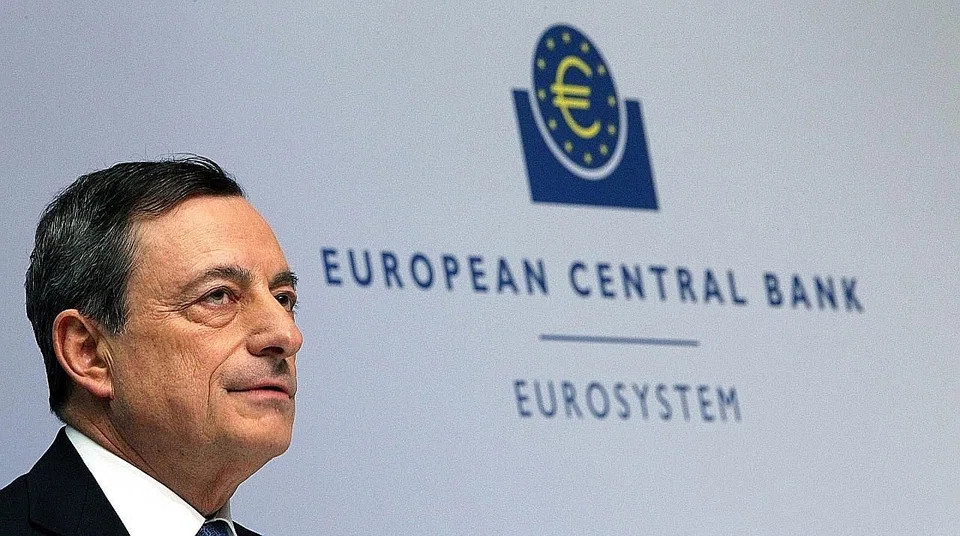


THIS WEEK'S TOPIC: How effective will the European Central Bank's quantitative easing be in boosting the eurozone economy? What will be the impact, if any, for Singapore business?
William Knottenbelt
Senior Managing Director, International
CME Group
The question running through everyone's mind is whether the newly announced asset purchases by the European Central Bank (ECB) will do much to help growth. And that growth question is not just one for the eurozone as a whole, but also for individual regions. Rather than the ECB buying government bonds and other assets directly, it will instead give its member central banks funds with which to buy their own countries' bonds.
This mechanism will limit the exposure of each country to another country's debt, so the world will be watching if the whole of Europe benefits as well as or in contrast to its member nations.
Importantly, we also know that the various regional financial regulatory regimes are still uncertain, which also impacts financial systems' ability to spur investment in both Europe and Asia. Managing these risks will be central in 2015.
Yash Mishra
Managing Director
Taurus Wealth Advisors
THE European Central Bank (ECB) has committed to inject around one trillion euros from a balance sheet of about 2.5 trillion euros into the European economies. Opinions on the effectiveness of the impact of European quantitative easing (QE) are divided, but most would agree that it is not an alternative to necessary economic restructuring, which remains necessary.
QE is considered the "easy" way out of the economic malaise and growing deflationary pressures, but it is not a substitute for political hard choices. Short-term gains have included record-high European equities and an 11-year low of the euro, but most of the upside has already been priced in to the market.
In our opinion, the main impact of European QE will be increased risk across global financial markets, albeit with a very limited impact on the Singapore domestic economy. We assist clients in understanding the real impact on their individual portfolios and help them mitigate these risks.
Leon Perera
Chief Executive Officer
Spire Research & Consulting Group
THE quantitative easing (QE) programme of the European Central Bank (ECB) will turn out to be too little - but it is not too late. It will deliver a small bump in economic growth by countering deflationary expectations. To sustain and lift this bump, the ECB will have to raise the stimulus beyond what has been announced, as past experience suggests that QE takes time to be effective.
By resorting to QE, the ECB could be accused of trading short-term quantity for long-term quality of growth, since QE reduces the pressure for governments to set their fiscal and competitive house in order, as the Germans rightly maintain. But whatever the perils of QE, it is far better than entrenched deflation.
Recent events have shown how economic weakness fuels the Far Right and Far Left in politics, as seen in the victory of Syriza in Greece and the rise of Rightist parties in Continental Europe. QE is a necessary but not sufficient condition of salvaging and strengthening the eurozone project.
Guy Harvey-Samuel
Group General Manager and Chief Executive Officer
HSBC
THE ECB's decision is likely to generate further euro weakness, and we believe this is the main channel through which QE could support growth. While global growth is arguably the most important driver of export growth, a weaker euro will certainly provide a boost as well. However, it is clear that QE in the eurozone will not be as effective as it was in the US and the UK.
Asia's economic performance will be most impacted by factors close to home. In recent months, China's economy has softened and this could pose a challenge for the rest of Asia's exports. On the flip side, lower oil prices should help investment and consumption, as should monetary easing by several central banks.
Infrastructure outlays may increase, a welcome development for Asean and South Asia. We remain cautious on the growth outlook for Singapore, and expect headwinds from the soft external outlook.
The more moderate currency appreciation stance recently adopted by the Monetary Authority of Singapore (MAS) will have only a limited impact on growth. Given this outlook, HSBC has been active in assisting our clients with hedging currency risk, as well as helping them secure funding through the capital markets.
Manraj S Sekhon
Chief Executive & Chief Investment Officer
Fullerton Fund Management
THE ECB's announced QE programme was striking not just in terms of its size and duration but also in its stated objective. That is to continue the programme indefinitely until inflation is on track to reach the bank's 2 per cent medium-term target. In boosting global liquidity and demonstrating its determination to contain deflation risks, the ECB is helping to boost investor sentiment and kindle "animal spirits".
The main channels of transmission will be through reflation of asset prices in the eurozone and depressing the value of the euro. In addition, the worst-case scenarios of a debt crisis in the periphery will be contained as QE will keep yields suppressed for longer.
In the real economy, credit growth remains muted with uncertainty over the sustainability of demand and falling inflation expectations. The process of de-leveraging and recapitalisation is incomplete and new regulatory requirements forcing banks to strengthen their balance sheets have slowed the appetite for lending. Unlike in the US and UK economies, the eurozone banks still account for the majority of loans and credit markets are less developed. This means that the transmission mechanism of QE in Europe will be less effective.
For Singapore businesses, the weaker euro renders Singapore exporters less competitive. But it will also result in stronger demand for higher yielding Asian assets. Crucially though, the ECB action puts in sharp focus the risks to the world from a low growth and deflationary global economy.
Ranjit Khanna
Head of South Asia and Global NRI
Coutts
THE ECB's action should improve the eurozone's economic recovery prospects via increased liquidity. Spain and Italy particularly would benefit from the stimulus support while a weaker euro will be positive for export-oriented Germany. Overall, there is potential for better earnings recovery in Europe and in terms of opportunities, this gives investors a chance to consider a market which is attractively valued.
With a possible weaker euro and a strong dollar environment expected in 2015, Singapore businesses will need to be mindful of the impact a strong US dollar would have on the Singapore dollar. Nevertheless, if the ECB's QE succeeds in boosting European demand, this could help to improve the current flat global trade cycle and benefit the export businesses in Singapore and Asia as a whole.
Toby Koh
Group Managing Director
Ademco Security Group Pte Ltd
THE ECB's move will stimulate the European economy. The decline of the euro is likely to encourage foreign investment into Europe. This will create opportunities over the next 12 months. In the case of Ademco, we do purchase a fair amount from Europe and the weaker euro will help our bottomline directly. We have also been eyeing some investments in Europe within our industry. This development has created a more compelling case for us and we are studying it closely at this time. Singapore companies may wish to look towards Europe for the opportunities that can enhance their business, be they direct investment or purchase of intellectual property. There is no better time than now to explore.
Goh Yang Chye
Managing Director
GYC Financial Advisory
THE ECB's QE will serve to weaken the euro and drive eurozone bond yields to extremely low levels. The weak currency benefits large European multinationals as they derive nearly half their revenues from outside Europe. The eurozone is due for earnings upgrades and positive surprises, and QE will help both investor and business sentiment. From an investment management perspective, QE creates asset reflation and boosts risk-taking, and we see European stocks as the winners from this. As a trade partner, the eurozone has ceded top spot to China since 2012 at the height of the eurozone crisis. The stronger Singapore dollar and euro rate is likely to reduce our competitiveness but could be offset by increasing trade with China and the United States.
Rajesh Yohannan
Managing Director and CEO
OANDA Asia Pacific
THE ECB's QE programme is a deflation-fighting measure. It is aimed squarely at lifting the eurozone's inflation target back towards a desired 2 per cent.
The programme has just been officially launched. If successful over time, the ECB's QE could help boost inflation, stimulate demand for bank loans and improve the region's dreadful unemployment picture. Meanwhile, recent economic indicators would suggest that the eurozone economy is gaining momentum, albeit gradually. For now, the plunge in the price of oil has been a greater contributor to the region's mild recovery.
For Singaporean businesses, lower global interest rates and a lower euro means that Singdollar-denominated goods will be more expensive relative to the common currency. That doesn't bode well for Singapore's export-driven economy. Moreover, it could prompt Europe's businesses to scale back on their investments in Asia, in turn decreasing Chinese demand for Singaporean goods as Europeans consume less.
Christophe Duchatellier
CEO
Adecco Asia
MOST economists think QE helped keep the US and the other countries that used it - Japan and the UK - from tumbling into depression. But QE becomes another challenge for Europe - a 19-nation area - which would need to overcome both practical and political challenges. The ECB provides funding to banks that need it in its regular operations to help prop up economic growth in the eurozone. The QE programme could give a lift to eurozone consumption and help to drive Singapore's external demand in 2015. The euro is already at its lowest level against the Singapore dollar since late-2000.
The general purpose of this quantitative easing in the euro area is to stimulate the demand of the eurozone economy so it can grow at a faster rate. Given that, European imports from Singapore might increase and there will be more export demand for Singapore. That could be beneficial for Singapore manufacturers.
Nonetheless, there is a risk that the euro could extend its downside against the US dollar (perhaps even to parity). As Singapore's economy is closely linked to that of the United States, where the Federal Reserve is tightening its policy, the prospect of the euro-Singdollar hitting its 2000 low, at about 1.45, cannot be discounted. This would probably mean that consumers would have less disposable income in their pockets, as when there are higher interest rates in Singapore's rate structure, mortgage payments increase and the amount of disposable income for households' decreases.
Ronald Lee
Managing Director
PrimeStaff Management Services Pte Ltd
WHILE the Federal Reserve's QE programme is widely seen as a success in pulling the US out of recession, there are many detractors who argue that the programme had boosted the financial markets but failed to lift the real economy and improve the lives of ordinary citizens. It is the hope that the ECB's QE initiative will indeed boost economic growth, revive domestic demand and ward off deflatiolation. However, unlike in the US, the situation in Europe is compounded by another variable - the eurozone comprises 19 nations, each with its own set of domestic challenges. The sluggish growth in Europe has been largely attributed to high levels of debt and a lack of competitiveness in some individual countries.
Thus, one of the main concerns is that expanding the supply of money will reduce the incentives for eurozone governments to stop overspending and instead find ways to make their economies more competitive. In particular, it would take reform pressures off Italy and France, for example. It will also fuel asset bubbles as money flows into stocks and other assets instead of benefiting companies and households, as evidenced by the spike in European share prices immediately following the announcement.
In another juxtaposition of the ECB's QE against the US's, we see that US companies rely more on capital markets for financing and so central bank purchases can have a much more direct impact there than in an economy financed more by banks, which is generally the case for eurozone countries. Thus, the ECB's QE may not be as effective as the US's. Expanding the money supply most certainly leads to a fall in currency valuations. We have already witnessed how the euro has fallen following the ECB's announcement. This development will be a boon for Singapore businesses that import from the eurozone and a bane for those that export to eurozone countries.
Mark Hall
Vice-President and Managing Director
Kelly Services Singapore
THERE are many variables to consider in recovering the eurozone economy, and the ECB's QE replicates a strategy which seems to have worked for the US. As the EU is Singapore's third largest trading partner for merchandise and the largest trading partner for services, a strategy such as this can only be seen as positive for Singapore.
This should provide immediate short to mid-term confidence for businesses in Singapore dealing with the eurozone. QE will allay previous fears that the weak growth and persistent low inflation (especially in Germany and France) would lead the eurozone economy into a deflationary spiral. We may now indeed see increased confidence, especially with external oriented sectors such as manufacturing, wholesale trade, finance and insurance.
Yeoh Oon Jin
Executive Chairman
PwC Singapore
THE ECB's recent announcement of a QE programme was widely expected; therefore, and given it is more modest in relative size, it is unlikely to have the "shock and awe" impact experienced immediately post the financial crisis in the US and the UK. Against the broad backdrop of the multi-faceted economic and political challenges in a very diverse eurozone, history may write that this political compromise is "too little, too late?" - Europe may well go down a Japanese-trodden path of deflation and anaemic growth.
While US QE flowed freely through the capital markets, structurally, in Europe, the likely mechanism for the injection of new money is through the banks. Consequently, capital rules will impede any significant economic adrenaline rush. At best, QE is a signal of intent on inflation levels (avoiding debilitating deflation) and improved export competitiveness via a depreciated exchange rate. It is unlikely to drive a significant increase in demand in the eurozone or encourage the vital structural reforms needed in many individual eurozone countries to escape from economic (and social) malaise. With the compounding effect of the Greek election result over the weekend, the eurozone, and the euro, is mired in uncertainty. The world economy, including Singapore, needs a revitalised Europe. Perhaps all that QE will bring is more of the same, albeit with a short-term boost to equity prices.
Joshua Yim
CEO
Achieve Group
INDEED, market watchers are divided over this phenomenon. I personally feel that the ECB's QE programme may send the wrong signal to countries in the eurozone (such as Greece) that are still grappling with a lot of economic turmoil. We should go back to basics: will beleaguered countries such as Spain, Italy and Greece be able to curb expenditure while raising productivity? This is still a question mark and the concern is that the QE may provide these countries with a "false sense of security" and negate their commitment to seek and implement systemic changes to their economies. The QE is touted as ECB president Mario Draghi's last resort in monetary policy options and is obviously intended to save the whole eurozone from being in dire straits. I believe it will help in the short term but I'm not sure if it will save the EU in the long run.
That is the question on everybody's mind right now. How will these affect Singapore? As a very small country, we are very susceptible to the fluctuations in international economic and monetary policies. According to statistics from the European Commission, imports between the EU and Singapore stood at 17.6 billion euros in 2013 while exports amounted to 29.2 billion euros. With the drop in the valuation of the euro, imports will become cheaper and this will benefit businesses dealing with imported goods from the eurozone. However, it will become more financially challenging for businesses that export to the eurozone, which appears to make up a larger proportion of the market based on the aforementioned statistics. Thus, this is not so positive for the Singapore economy.
Mark Newman
CEO
ING Commercial Banking Asia
SINGAPORE can expect a higher level of business activity with the eurozone as the lower interest rates and weaker euro exchange rate should improve the eurozone's competitiveness. This is good news for banks such as ING that call Europe a home market, as we support both local and international clients tapping the liquidity there.
The QE might be ECB's last trump card to boost growth in the eurozone. The series of activities prior to QE, such as the negative deposit rates and TLTROs (targeted longer-term refinancing operations), saw limited impact on growth. Sustainable economic growth in the eurozone, backed by domestic consumption and corporate investment activities, is ECB's ultimate goal. For that to happen, further structural reforms might be needed.
Todd Arthur
Managing Director for Asia Pacific
HRS
IN the global economy, the ECB's initiative is welcomed by investors, businesses and tourists alike. The monetary stimulus will help growth on the continent and that will have a positive long-term impact both at home as well as overseas - including our operations here.
As a result of the stimulus, companies will have the confidence to support their travel and expense budgets to further facilitate global growth. The challenge, however, is to opt for smarter, strategic and more culturally relevant solutions that help further business objectives.
As an organisation responsible for better managing the travel requirements of more than 40,000 clients around the world, we appreciate the initiative and will continue to support the needs of our global customers by driving savings and compliance, enabling them to achieve their business goals more sustainably.
David Leong
Managing Director
PeopleWorldwide Consulting Pte Ltd.
THE ECB's QE is an adrenaline shot that is meant to spur growth. It is a much anticipated action but it's uncertain if it will be enough to jumpstart the depressed eurozone economy. The EU's fragmentation and disunity is cause for concern, with a few larger members threatening to break away from the bloc. The best case scenario will be growth arising from increased investments and expansion, leading to more job creation within Europe. The worst case scenario is a weakened euro where it becomes increasingly expensive for Europeans to import, decreasing demand for Asian goods. Singapore businesses with dealings in Europe will see falling demand. However, it will become cheaper for Singapore companies to import technology and buy assets in Europe. At the very least, this QE by ECB has lifted the global mood and optimism, and lets us look forward to probably better days ahead.
Lim Soon Hock
Managing Director
PLAN-B ICAG Pte Ltd
THE ECB has no choice but to introduce quantitative easing. This has taken more urgency as a result of the sudden decision by the Swiss National Bank to allow unfettered appreciation of the Swiss franc. The US QE has also shown that it has worked so far, in turning the economy around. Although the ECB's QE will put further pressure on the euro, especially with the Fed likely to raise rates in the US, it should provide support to growth and inflation expectations in the eurozone. However, a sustained economic recovery would only be possible if each individual member plays their part via implementating structural reforms to help boost growth and cut fiscal deficits in each of their individual states. Unlike the US, which is one homogenous entity, the eurozone is a heterogenous union.
As seen before, implementing these tough structural reforms is therefore not an easy matter. There is a risk where many governments usually delay these or pursue their own national agendas. ECB's QE would probably support eurozone consumption, and help give a lift to Singapore's external demand. This would be beneficial to Singaporean manufacturers and exporters in the future.
Han Kwee Juan
Chief Executive Officer
Citibank Singapore Ltd
THE ECB's QE exceeds our expectations both in terms of the overall volume of asset purchases and the purchases' open-ended time horizon if inflation prospects remain low.
The disinflation (currently deflation) occurring in the eurozone is causing tremendous pressure and requires sustained and large stimulus as a response. We expect the ECB's efforts to increase inflation expectations over the next few quarters and have a positive impact on the financial conditions.
The year 2014 could possibly mark the low point for nominal GDP growth in the eurozone and from a modestly higher 1.5 per cent this year, nominal GDP growth is likely to rise above 3 per cent in 2016.
The European Union is one of Singapore's largest trading partners. Although a weaker euro could have some negative impact on Singapore's export competitiveness, it will help the eurozone economies in the longer term. Singapore's exports of goods and services will benefit when the demand in Europe recovers.
Annie Yap
Managing Director
AYP Associates Pte Ltd
SINCE 2010, the ECB has been trying to tighten its belt through austerity measures with limited results. Thus there seemed to be no other effective choice to resolve the euro crisis. The ECB's QE moves can be compared to that of the US. But the political challenge Europe faces is that it is a combination of many countries and will not be able to act on a unified front as the US does, limiting the power and potential of the QE transmission mechanism. Nonetheless, there will still be a substantial boost as export prices will be reduced significantly. At the same time, Europe becomes a more attractive place for tourism, enabling businesses to expand. Europe is the third largest market for Singapore; thus there would definitely be a trickle-down effect on most Singapore companies. Moreover, European companies based here will also be expected to increase their business.
Robin C Lee
Group COO
Bok Seng Group
NOT too long ago, as news of the end of United States' QE3 was just breaking, the Bank of Japan (BOJ) made headlines with its own monetary stimulus. The BOJ's seemingly bold move out of the blue sent stocks surging - and weakened the yen. As anticipated, the ECB too got lured into the dangerous game of money-printing, in the hope of boosting their frail economy and quash deflation. Going by the US's QE stunt, this could possibly turn out well for ECB, but the converse is a possibility as well. Only time can tell. A more affordable euro will definitely have far-ranging impacts such as boosting consumer spending and European exporters' prospects while, at the same time, imposing higher costs for importers.
Fortunately for us, Singaporean importers of European products would enjoy a nice "rebate" as the Singapore dollar has strengthened as much as 10 per cent against the euro in the past six months. After pulling off such a bold move, it would be really interesting to see what happens when the monetary stimulus dries up. It would be foolish to predict as we know that in the global economy arena, anything can happen.






