

Ensuring reliable nuclear fuel supplies
IAEA and Kazakhstan sign agreement to locate the world's first bank of low-enriched uranium in the Central Asian republic.
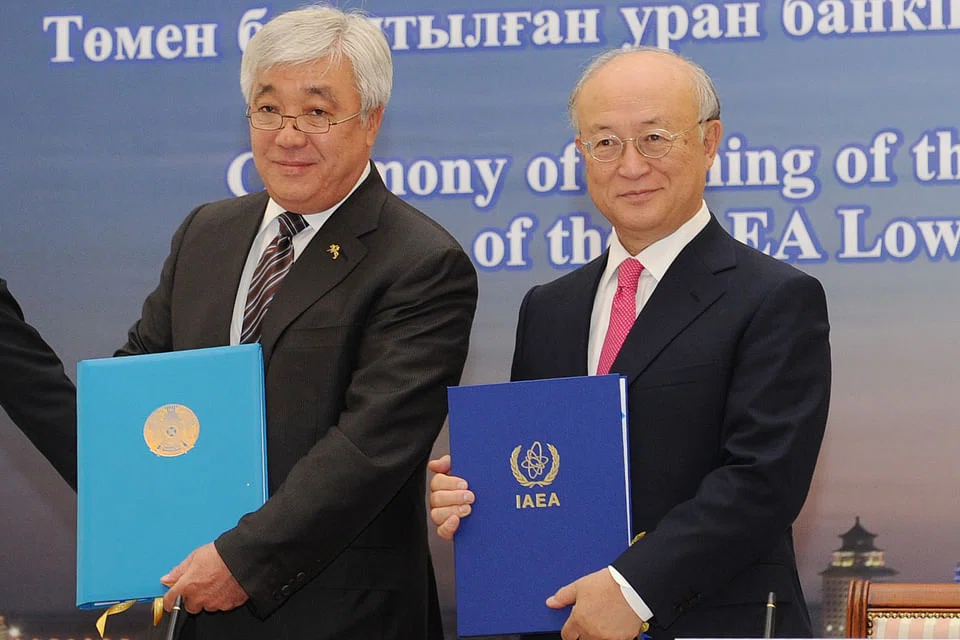
ALMOST five years of hard work and planning came to fruition last week when the International Atomic Energy Agency (IAEA) and Kazakhstan signed an agreement to locate the world's first bank of low-enriched uranium (LEU) in the Central Asian republic to ensure fuel supplies for power stations and prevent nuclear proliferation.
The storage facility is scheduled to become fully operational in 2017, and is meant to provide IAEA member states with confidence in a steady and predictable supply of fuel even if other routes are disrupted.
"In many ways, it is fitting that the IAEA LEU Bank should find its home here. Kazakhstan has an exemplary record of contribution to non-proliferation," said IAEA director-general Yukiya Amano.
He noted how under President Nursultan Nazarbayev, Kazakhstan voluntarily renounced the nuclear weapons which it inherited from the Soviet Union, closed the Semipalatinsk Nuclear Test Site, and joined the Nuclear Non-Proliferation Treaty as a non-nuclear-weapon state, and signed a comprehensive safeguards agreement and additional protocol with the IAEA while also playing a leading role in the creation of a nuclear-weapons-free zone in Central Asia in 2009.
"The establishment of the Bank is a major milestone in the history of nuclear energy, non-proliferation and global security. The Bank will facilitate the peaceful development of nuclear energy and make a significant contribution to strengthening the global nuclear security," said Kazakhstan's Foreign Minister Erlan Idrissov.
"The establishment of the LEU Bank will undoubtedly reduce the risks of proliferation of sensitive technologies of the nuclear fuel cycle," he added.
"Ever since the idea to create an LEU Bank was born, President Nazarbayev, strongly supported the initiative to establish it in Kazakhstan," noted Mr Idrissov. "We are honoured to be entrusted by the IAEA with the responsibility of hosting the LEU bank in our territory and are grateful that Kazakhstan has been recognised as a responsible and a reliable international partner," he said.
Setting up the bank also showcases Kazakhstan's efforts as it bids for a seat on the United Nations Security Council.
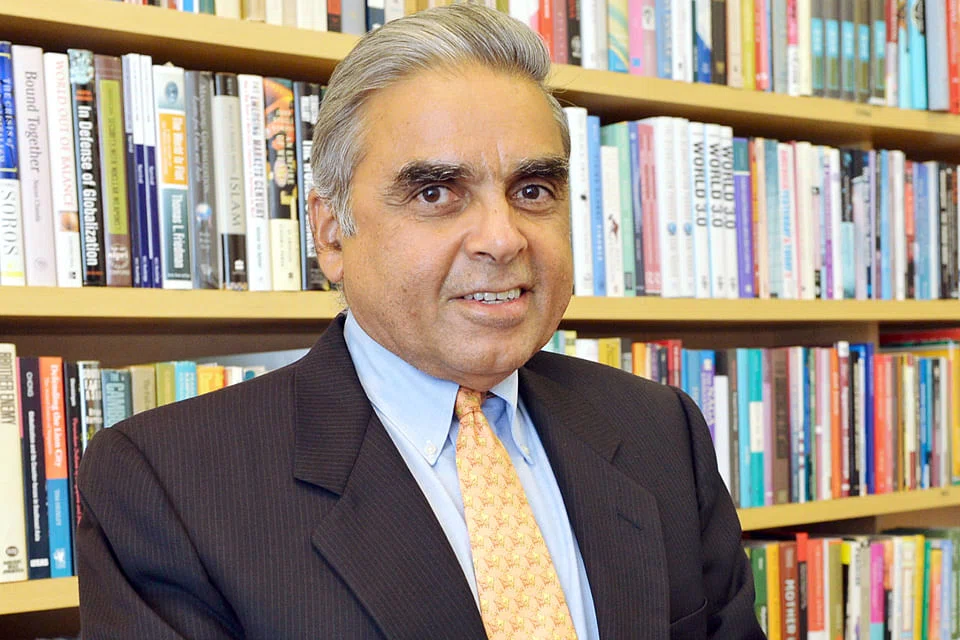
"Kazakhstan has been a role model for the world in the field of nuclear non-proliferation. . . The latest initiative to establish the IAEA LEU Bank is another example of the moral and political leadership that Kazakhstan has been providing in this field. The world should commend President Nazarbayev for this leadership. If more countries were to emulate Kazakhstan, the world would be a much safer place," said Kishore Mahbubani, Dean of the Lee Kuan Yew School of Public Policy at the National University of Singapore, and the author of The Great Convergence: Asia, the West and the Logic of One World.
"Hosting the IAEA LEU Bank is the latest and very important contribution by Kazakhstan to international nuclear cooperation. I offer my gratitude to President Nazarbayev as well as the government and people of Kazakhstan," concluded Mr Amano.
After getting the green light from the IAEA Board of Governors in December 2010 to establish the bank, Kazakhstan, which has six decades of experience in the safe and secure storage, handling and supply of civilian nuclear material, volunteered to host the IAEA LEU Bank.
The agreement to establish and host the bank along with related technical accords, came after three years of constructive negotiations, including legal and technical work and was signed by Mr Amano and Mr Idrissov and Energy Minister Vladimir Shkolnik.
These agreements complete the legal framework and will launch full-scale implementation of the project. The bank will be governed by Kazakhstan's laws but fully managed and operated by the IAEA.
The ceremony was attended by representatives of the UN Security Council member-states including the United Kingdom, Russia, the US, China and France, representatives of donor countries of the project - the EU, Norway, the United Arab Emirates and Kuwait.
PEACEFUL USES
"This IAEA fuel bank will enable and encourage peaceful uses of nuclear energy, while reducing the risks of proliferation and reducing the risks of catastrophic terrorism," former US Senator Sam Nunn said.
He is co-chairman and chief executive officer of Nuclear Threat Initiative (NTI), a non-profit and non-partisan organisation with a mission to assist the fulfilment of the Non-Proliferation Treaty's goals.
NTI played a key role in establishing the fuel bank, with one of NTI's supporters, billionaire investor Warren Buffett contributing US$50 million to "jumpstart" the project.
The IAEA estimates the cost of the bank at US$150 million, which includes the procurement of LEU and its work for the first 10 years. The bank will contain up to 90 metric tons of the nuclear material, sufficient to run a 1,000 MW light-water reactor, the IAEA said.
VOLUNTARY CONTRIBUTIONS
"Funding has been provided entirely by voluntary contributions. I am grateful to the donors who have furnished a total of US$150 million, including US$400,000 as well as in-kind contributions from Kazakhstan, to establish the IAEA LEU Bank and operate it for at least a decade," Mr Amano said.
With expertise developed over decades, Kazakhstan, the world's largest producer of uranium and holder of more than 15 per cent of global uranium reserves, is well suited to host the IAEA LEU Bank.
The bank will be located at the Ulba Metallurgical Plant in the northeastern industrial city of Ust-Kamenogorsk.
The plant has handled and stored nuclear material, including LEU, safely and securely for more than 60 years.
After the collapse of the Soviet Union, Kazakhstan voluntarily gave up its nuclear arsenal, the world's fourth-largest at the time.
It was also one of the prime movers behind the adoption of the International Day against Nuclear Tests on Aug 29. Other initiatives Kazakhstan has pushed forward include The ATOM Project, aimed at ending nuclear weapons testing and eliminating the world's nuclear arsenals.
TRENDING NOW

World’s largest offshore wind platform by Seatrium consortium on track to be completed by 2028

Is stamp collecting enjoying an analogue revival or are its best days over?

GovTech retrenches another 38 staff in second round of layoffs

MBS adjusted property Ebitda falls 20.6% in Q3 with fewer high-roller visits, weaker hold

