

Exchanges of mutual benefit
A message from Thomas Kupfer, Switzerland's ambassador to Singapore
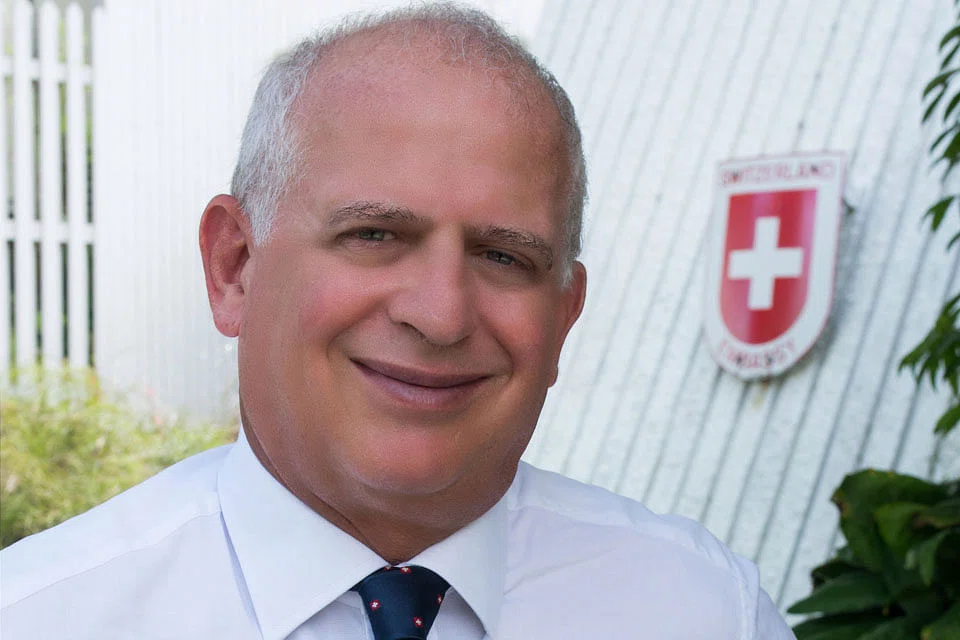
BUILDING on the already excellent relations between the two countries, this year has been marked by many exchanges between Switzerland and Singapore.
These have been coloured primarily with an education and vocational training flavour as the respective sides seek to leverage on their mutual advantages. There have, however, also been a fair number of official visits and delegations from Switzerland to maintain and deepen the excellent relationship with Singapore.
These include the official visit of the Swiss Finance Minister, Federal Councillor Evelyn Widmer-Schlumpf, in February to deepen the relations between Singapore and Switzerland in the field of finance and on tax issues. She met with her counterpart, Deputy Prime Minister and Minister for Finance Tharman Shanmugaratnam. During her visit, Mrs Widmer-Schlumpf also paid a courtesy call on President Tony Tan Keng Yam. She also met with representatives from the Swiss finance industry and, at the Swiss Club, with the larger Swiss business community.
The longstanding solid ties in foreign affairs, security and defence relations also received a boost with the visit of Swiss Minister of Foreign Affairs, Federal Councillor Didier Burkhalter, on the occasion of the 14th Shangri-La Dialogue 2015 at the end of May. This was a significant development as it was the first official participation of Switzerland at this important Asia Security Summit.
Speaking during the special session themed "Avoiding Military Competition and Arms-Racing in Asia", Mr Burkhalter emphasised the importance of confidence-building measures as well as the need for further development in multilateral cooperation to help address the issue of rising tensions in Asia.
Among other things he emphasised the preventive measures used in counter-terrorism efforts. Switzerland is supporting the Geneva-based Global Community Engagement and Resilience Fund (GCERF) for local initiatives to prevent violent extremism among groups at risk.
Other highlights of the trip included a courtesy call on Prime Minister Lee Hsien Loong and a meeting with Mr Burkhalter's counterpart, Minister for Foreign Affairs and Law K Shanmugam. Both meetings focused on the first specific outcomes of the Declaration of Enhanced Partnership between Singapore and Switzerland, signed in 2014 during President Tan's visit to Switzerland. This declaration is significant as it resulted in the establishment of a regular dialogue on financial issues as well as the inclusion of Switzerland in the Singapore Work Holiday Programme, which facilitates access to internships in Singapore for students from Swiss universities.
In addition, a dialogue on security policy matters was also suggested as another potential area for enhanced cooperation, besides the already existing exchanges on economy, finance, research and education. Finally, Switzerland's application to become a development partner of Asean was also discussed.
All these topics will be further discussed during the next meeting between the two foreign ministers in Switzerland next year, with the invitation to Mr Shanmugam by his counterpart Federal Councillor Burkhalter.
And most recently, in early July, Minister for Infrastructure (Environment, Transport, Energy and Communications), Federal Councillor Doris Leuthard, visited Singapore to deepen the cooperation in research and clean and environmental technologies.
During her visit, Mrs Leuthard met with Environment and Water Resources Minister Vivian Balakrishnan, Second Minister for Home Affairs and Second Minister for Trade and Industry S Iswaran as well as Minister for Transport Lui Tuck Yew. She also gave a speech at the Singapore ETH Centre (SEC) on the topic of smart cities, ICT, energy and mobility where she emphasised the importance of cooperation between Singapore and Switzerland in those fields moving forward.
In the sphere of education, several delegations from both countries have visited their partners' country. Various representatives from Swiss universities of applied sciences have been to the Republic throughout the year.
Switzerland's professional apprenticeship scheme is considered a valuable example for Singapore, and Swiss institutions as well as Swiss companies with possible pilot projects are willing to support Singapore's Ministry of Education (MOE) to reach its objectives of enhancing vocational training and promoting lifelong learning.
It should also be noted that the interest in exchanges and collaborations has been in both directions; a delegation of 22 directors and professors from Swiss universities of applied sciences and universities of teacher education visited Singapore educational and research institutions in October 2014.
The study trip, part of the "Higher Education Management" programme organised by the Rectors' Conference of the Swiss Universities of Applied Sciences and the Swiss Conference of Rectors of Universities of Teacher Education, was intended to understand and discuss with local institutions cross-cutting issues on the challenges of research and higher education in Singapore.
From the Singapore side, meanwhile, a delegation from MOE travelled to Switzerland in January. The study trip aimed to understand in-depth the educational and career guidance systems in Switzerland, as well as the coordination between industry needs and education strategies.
Switzerland has strong cantonal and independent career guidance centres with their own mission, strategy and budget. During its visit, the delegation visited different institutions and career counselling centres.
Singapore's Institute of Technical Education (ITE) also visited a few vocational schools in Switzerland to identify schools with whom they can partner to offer new diploma-level courses.
ITE plans to offer five new "place-and-train" diploma programmes for fresh graduates, with overseas partners, starting from 2016.
Most importantly, Deputy Prime Minister Tharman led a delegation in his role as chairman of the SkillsFuture Secretariat, a recently launched initiative focusing on life-long learning and skills-based education. The high-level delegation, consisting of several members of Parliament and government officials, visited Switzerland in May to study the models used in promoting continuing education and industry-relevant training.
Switzerland has a long history of a successful vocational education and apprenticeship, so Singapore is looking at studying the partnership between education providers and industries. The Singapore delegation was particularly keen on understanding how this traditional and successful Swiss apprenticeship scheme ensures a very practice-oriented vocational training of the students, producing young professionals with high professional know-how.
Another important aspect was to get some insights on how Switzerland creates a more flexible and fluid system of education and training for adults in the workforce, in order to further improve the quality of adult education in Singapore.
During his visit to Switzerland, Mr Tharman also attended the 45th St Gallen Symposium, a major gathering of international political and business leaders, where he gave a remarkable interview to BBC journalist Stephen Sackur during the forum. The interview, rightly titled "Hard Talk on Singapore's 50 years", later produced more than 250,000 hits on YouTube. The St Gallen Symposium has two unique characteristics: firstly, 200 " Young Leaders of Tomorrow" from all over the world are gathered every year, in which Singaporean students and young professionals are well represented as their number is around 10-15 every year.
Secondly, the St Gallen Symposium is uniquely characterised by its organisation, which is undertaken exclusively by students from the St Gallen University, a leading European business school. For one year, 25 students take leave from their studies and work together to make this event happen. The yearly-renewed International Students Organising Committee prepares the concept, programme, speakers' list, sponsoring, logistics, etc, for this conference. It is then assisted by around 300 regular students to ensure the smooth running of the conference during the symposium.
Taking a year off from her studies, Barbara Wögerbauer, co-president of this year's organising committee, says, the event was " ... the best life and work experience I have had, I never imagined I could learn that much in taking this responsibility, a perfect addition to my learning experience as a student. I was also very lucky during my various preparatory trips to Singapore to learn directly so much about the reality and challenges in Asia and in Singapore".
In the field of culture, this year saw several successful Swiss events in Singapore, including some cutting-edge ones. For example, the awards-winning Swiss film Der Kreis (The Circle) by Stefan Haupt, screened in May at the European Film Festival (EUFF), was a great success in view of the context and content of the movie. This docu-fiction is about the Swiss underground organisation called "Der Kreis", the first European gay association of its kind in the 1950s, and a pioneer of the gay movement in Europe.
A special culture project is the longstanding collaboration between the Yong Siew Toh Conservatory of Music at the National University of Singapore and the two music schools of Lausanne and Geneva. Some 90 young musicians from the three schools performed together as the "Orchestre des Continents", conducted by the esteemed Swiss conductor Thierry Fischer, and featuring Swiss-Chinese pianist Louis Schwizgebel on July 22 at the Esplanade, Theatres by the Bay, in Singapore and then a few days later in front of 15,000 enthusiastic listeners at the Paleo Open Air Festival in Nyon, Switzerland.
Relations between Switzerland and Singapore are excellent and growing - in the fields of politics, economy, trade, finances, science and education, culture, tourism as well as in the many people-to-people daily contacts. Approximately 5,000 Swiss people live and work here in Singapore; more than 350 Swiss companies are based in the island-state, from where they conduct business in Southeast Asia or even in the whole Asia-Pacific region.
Singapore and Switzerland share today many of the same challenges of highly developed economies and regional hubs, among them the questions of foreign labour force, infrastructure, aging population, professional education and protection of the environment in the light of climate change.
Singapore and Switzerland can learn from each other to handle all these challenges in the best possible way. There are so many similarities between the two countries, even the two National Days are very close to each other: The Swiss community and friends of Switzerland will celebrate National Day, Aug 1, tomorrow in the well-known Swiss Club with the traditional Swiss cheese raclette and sausages, Swiss wine and music and some speeches.
And then on Aug 9, the Singapore SG50 festivities will culminate in a fantastic National Day celebration.
Congratulations to Singapore and Switzerland on their respective National Days!
TRENDING NOW
Simba admits exceeding spectrum limits amid failed M1 deal; full-year profits surge 277%
Temasek’s Wan Chee Foong to helm PIL, Lars Kastrup to be board adviser

He built the Vingroup empire. Now South-east Asia’s richest man is handing some key roles to his sons
One-third of Singapore-listed firms at risk in severe AI downturn: MAS

