

ExxonMobil Asia Pacific a winner of the Best Practices award
 Add BT as a preferred source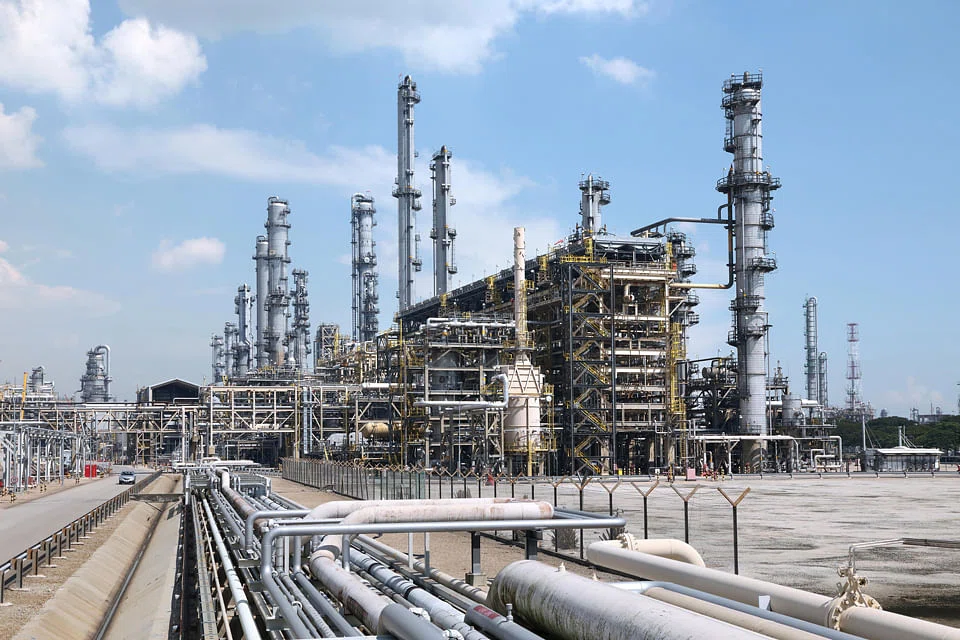
SINGAPORE-BASED ExxonMobil Asia Pacific Pte Ltd has been given the Best Practices award at this year's Energy Efficiency National Partnership (EENP) awards for its process condensate blowdown modifications project which promotes energy efficiency.
Steam cracking operations at the company's chemical plant here involves the use of dilution steam that has been generated from a portion of the process condensate, which is subsequently topped up with on-purpose make-up steam to meet the needs of the unit in question.
"We leveraged ExxonMobil's Global Energy Management System (GEMS) to continuously identify and evaluate opportunities to improve energy efficiency and reduce emissions," says Raymen Chee, technical director at the Singapore Chemical Plant of ExxonMobil Asia Pacific.
Through this project, an optimal amount of process condensate is bypassed and sent to the treatment unit so as to maximise heat recovery for dilution steam generation, resulting in less make-up steam and reduced load on the cooling water system. As a result, less energy is consumed.
"ExxonMobil is proud to receive this award for the fifth time, adding to previous wins in 2013, 2016, 2017 and 2019. As a leader in energy efficiency, we remain focused on improving energy efficiency at our Singapore manufacturing facilities, and have been making significant investments to improve efficiency and reduce emissions, as we strive to operate responsibly in a way that minimises our impact on the environment, says Mr Chee.
"The company is committed to providing affordable energy for modern life and improving living standards around the world - while minimising impacts on the environment, including doing our part to reduce the risks of climate change. Providing affordable energy to support progress while reducing environmental impacts, including the risks of climate change, is our industry's dual challenge. This dual challenge is one of the most important issues facing society and our industry."
Overall, ExxonMobil as a corporation has invested more than US$10 billion in energy efficiency and low-emission technologies such as carbon capture and next-generation biofuels.
"Being energy efficient allows for ExxonMobil's commitment to promoting and supporting long-term and sustainable growth. We have invested in Singapore for the long term and by deploying energy efficiency technologies, we can remain competitive by maximising the value of every molecule we produce, refine or manufacture.
"Concurrently, we work to implement policies and practices that are sustainable to ensure that future generations are not compromised by actions taken today. The continued energy efficiency push in our day-to-day operations comes even as the Singapore complex looks towards deploying new technology to create cleaner fuels and lubricant base stocks.
"These cleaner, high-performing products will help customers reduce their emissions footprint and environmental impact," says Mr Chee.
He adds that ExxonMobil has a disciplined approach to managing energy efficiency through its Global Energy Management System (GEMS). For GEMS the company won the EENP Award for Excellence in Energy Management in 2017.
Through ongoing efforts, ExxonMobil remains focused on improving energy efficiency at its Singapore manufacturing facilities. It has been making significant investments to improve efficiency and reduce emissions in Singapore. GEMS provides a framework to create energy efficiency improvements through operational best practices and using new technology across ExxonMobil's refineries and chemical plants worldwide.
"We have implemented a series of initiatives from 2002 till 2019 that have led to gains in energy efficiency of more than 25 per cent. These have resulted in the avoidance of carbon dioxide emissions equivalent to taking more than 600,000 cars off Singapore's roads over this period," says Mr Chee.
Another recent energy efficiency initiative is the ExxonMobil Singapore Refinery Preheater Exchanger Bundle upgrade project. This project explored the potential redesign and upgrade of existing preheater exchangers and deployed the latest design technology. This resulted in lower fouling leads and an increase in energy efficiency during the heat transfer, allowing for reduced carbon dioxide and other greenhouse gas emissions.
Another example of energy efficiency initiatives at ExxonMobil is the use of cogeneration, which is the simultaneous production of electricity and steam from a single fuel source. ExxonMobil now has a total of more than 440 megawatts of capacity in Singapore.
Its latest unit that came online in Jurong in 2017 added to the existing 360-megawatt of cogeneration capacity at ExxonMobil's integrated refining and petrochemical complex, which currently meets most of its own power and steam needs on Jurong Island.
"Our plans go beyond the energy efficiency realm to research and development. Through the Singapore Energy Center, ExxonMobil is partnering with Singapore universities (NTU and NUS) to focus on energy innovation and lower-emissions technologies that could improve energy production, and enhance energy efficiency and other efforts to mitigate the risk of climate change,'' says Mr Chee.
The Singapore Energy Center partnership was launched in 2019 to focus on new discoveries and significant improvements in technologies. ExxonMobil signed a memorandum of understanding with Nanyang Technological University and National University of Singapore to become a founding member of the proposed centre - the company's first such research and development partnership outside the United States.
The Singapore Energy Center is progressing well with research projects, including finding novel carbon dioxide capture materials, exploring pathways on how hydrogen can be a potential fuel source and discovering novel, durable biological materials for new environmentally sustainable products, adds Mr Chee.
ExxonMobil has been in Singapore for over 125 years, and is one of the largest foreign manufacturing investors here with fixed assets of more than S$25 billion. Its integrated refining and petrochemical complex here is the company's largest in the world.
The company says that it provides safe and reliable supply of fuels, lubricants and chemical products to enable progress in the industry and communities to improve the quality and standard of living.
Decoding Asia newsletter: your guide to navigating Asia in a new global order. Sign up here to get Decoding Asia newsletter. Delivered to your inbox. Free.
Share with us your feedback on BT's products and services
TRENDING NOW

Singdollar hits 10-month high against ringgit as investors take refuge in traditional safe haven

Apple joins foldable phone race with US$1,999 passport-shaped iPhone Duo

Commodity-finance risks back in focus amid Radiant World scrutiny

Sim Lian kicks off Q4 launches with Amberwood at Holland, priced from S$2.6 million

