Fed flags October end to bond buying
More hawkish tone prompts traders to switch out of Treasury bonds into dollars
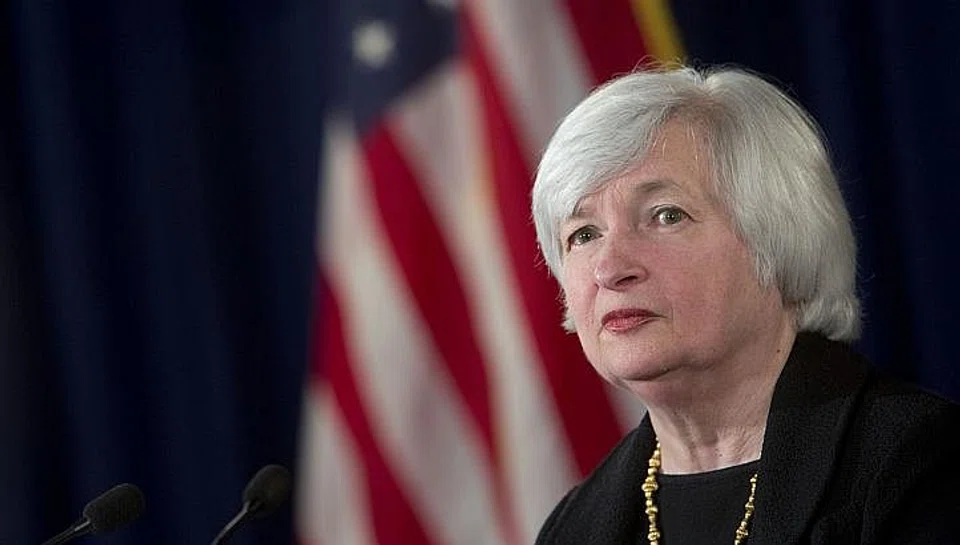
FOR the Federal Reserve, this was the point of no return: an extraordinary half-decade of stimulus and rate cuts has almost certainly come to an end.
In her latest policy statement and press conference, Janet Yellen, the chairwoman of the central bank, said the Fed's monetary stimulus will end with the purchase of a final US$15 billion of bonds in October, adding that most Fed members now expect to hike rates some time in 2015.
While the Fed once again promised that rates would remain at extraordinarily low levels for a "considerable time", two of the ten voting board members - Dallas Fed president Richard Fisher and Philadelphia Fed president Charles Plosser - dissented on the rate decision largely because they didn't want to make that promise.
Even though the "tapering" of bond purchases was effectively a nine-month, slow-motion change in policy, the realisation that the Fed's mighty ship had now completed its volte-face caused fixed-income traders to buy dollars and sell Treasury bonds in the wake of the statement. Rising rates drag down the value of Treasury bonds but they increase the relative value of the US dollar, particularly when other nations - including those in the eurozone, Japan and China - are printing money to pump into their economies. The same day Ms Yellen described the end of the Fed's stimulus era, China reportedly started pumping billions of yuan into its commercial banks while October would be the first month of a bond buying programme by the European Central Bank.
"It's a slightly more hawkish tone than at the last meeting," said Matt Whitbread, investment manager at Barings Asset Management. "I do think currency markets have reacted to the fact that the Fed is likely to be among the first (central banks) to start hiking rates, and also the fact that the growth rate differentials are pretty wide... the US has better growth dynamics."
In its statement, the Fed concluded that the US economy's expansion has continued since its last meeting in July. In what was likely a nod to the surprisingly weak August jobs report, however, Ms Yellen reiterated concerns about "underutilisation" of labour, one of the chairwoman's main reservations about the outlook for growth.
One indication that the Fed is now more hawkish - or leaning toward rate hikes - than dovish - or leaning toward rate cuts - was the change in the Fed board members' own rate projections, Mr Whitbread said. The central bank now predicts the rate it charges commercial banks when it lends them money will move from zero currently to 3.75 per cent by the end of 2017.
But Mr Whitbread and others say the fact that parts of the statement were unchanged from July reflected Ms Yellen's gradualist approach to Fed policy. While outlining more details of the Fed's "exit strategy", she explicitly stated that the plans were not tantamount to a change in policy.
The Fed is certainly not being rushed into hiking rates by inflation data: the Labour Department reported that consumer prices fell in August for the first time this year.
"We haven't seen enough bad stuff or really, really good stuff for the Fed to really change their policy," said Oliver Pursche, president of money manager Gary Goldberg Financial Services.
This time, the Fed is acting like a parent who tiptoes out of the room to avoid triggering a child's separation anxiety at bedtime. This is the third time the Fed has attempted to wean markets off monetary stimulus since 2008; when the other programmes were cut short abruptly, markets threw tantrums and the central bank was forced to relent.
With all the care the central bank has taken with the tapering programme and the gradual change in policy statements, it would take an extreme reaction on bond and stock markets for the Fed to offer "QE4."
US stocks initially bounced in the wake of the statement, with the broad Standard & Poor's 500 index nearing record highs. Gains were led by the financial sector, where lenders benefit from a gradual increase in rates.
However, the gains moderated as traders hedged against the damaging effects of a possible spike in rates for sectors such as utilities. Power plants often carry heavy debt loads and also compete with bonds for the dollars of dividend-seeking investors.
Brokerage Credit Suisse boosted its target for the US stock market on Tuesday, but warned that the effects of rate hikes could return to haunt the S&P 500 in the second half of 2015, when they become a reality.