

Growing pains
Notable Award winners, whose businesses stand out for being innovative and different, share how they keep ahead of the pack.
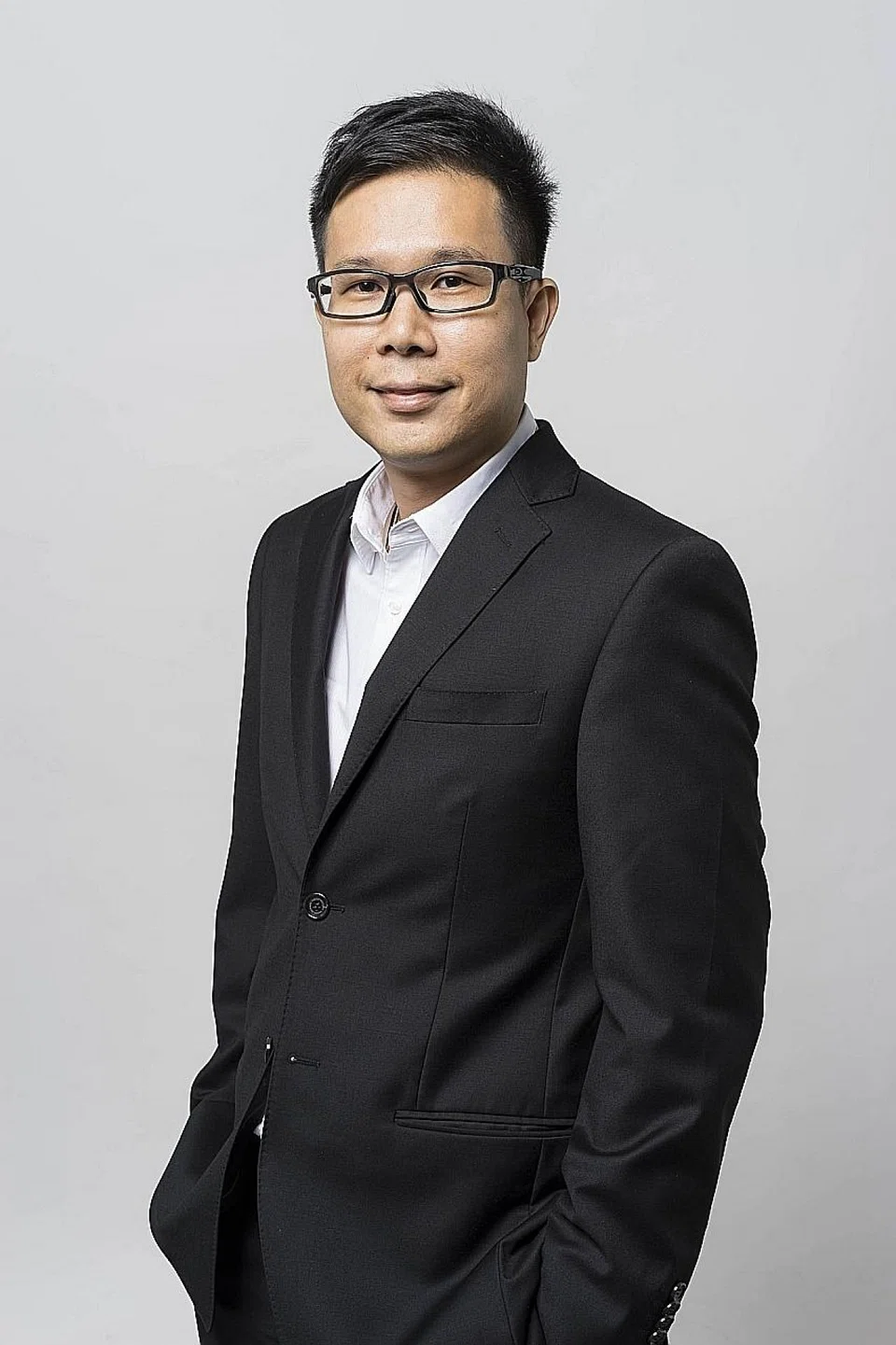
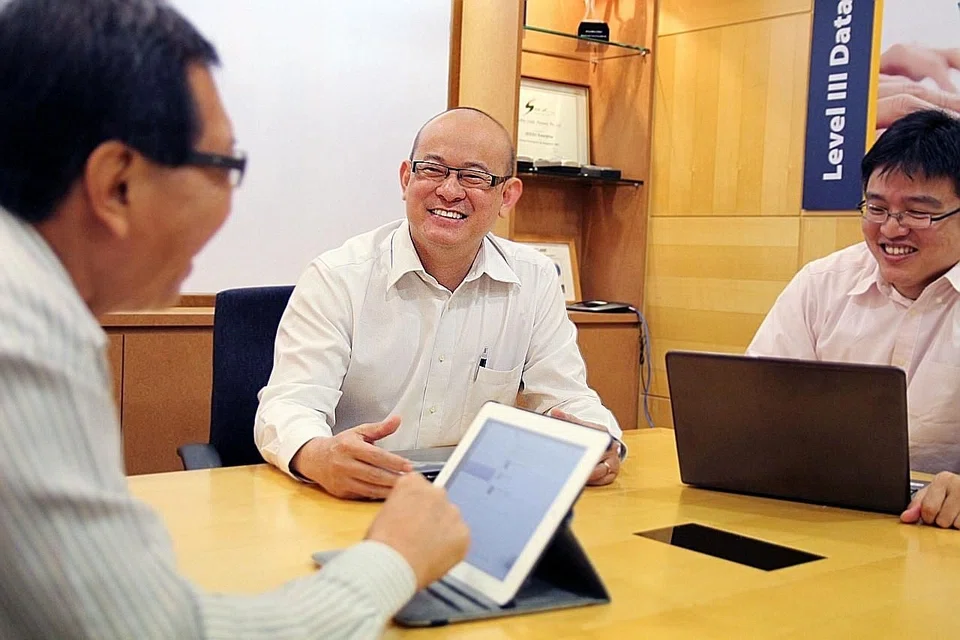

AVON SERVICES
Avon Services started in 2008 with only three staff, operating from a small home office. It offered ancillary services to Singapore's growing aviation industry.
In its first year, it was awarded its first contract with a Singapore-based ground handler to manage the preparation and dishing of airline meals.
Since then, Avon Services has grown to provide a complete range of services such as baggage handling, passenger handling, aircraft handling, dishing, packing and logistics services.
The company is only going to grow bigger. Co-founder Tai Kwang Kit said that it is currently exploring expansion opportunities in the region where he expects air travel will continue to grow over the next two decades.
Avon Services is part of Avon Group, which started as a carpet cleaning specialist in 1999. Over the years, it has evolved into a group of companies, with a staff strength of about 1,500. It provides a full scope of services ranging from general and specialised contract cleaning and maintenance for commercial buildings, hotels, public transport to aviation support facilities.
To operate in such a labour-intensive industry, Mr Tai, who is executive director of Avon Group, said: "The key competitiveness lies in the availability of our workforce to support ground operations. We have been constantly seeking ways to employ technologies, both software and hardware automation, to increase productivity; to reduce our reliance on labour."
As Singapore's population ages, the company also finds it increasingly difficult to recruit younger employees who typically shun such manual labour.
"While automation or technology can reduce the number of workers required to perform certain tasks, it cannot replace the workforce altogether," said Mr Tai. "Despite this, we continue to strive to reinvent the business in hopes that we can overcome or mitigate these challenges."
Very soon, Avon Services will be exploring robotics opportunities with a Singapore university to improve its work flow execution.
It is also currently working with another company to implement a workforce management system to manage, track and improve its execution capability.
MOBILE CREDIT PAYMENT
When you make an electronic payment in a taxi, restaurant or shop, chances are, you could be using the payment platform of Mobile Credit Payment, or MCPayment.
Set up in 2005, MCPayment is an electronic transaction processing company that offers, among other things, mobile and wireless payment solutions. Headquartered in Singapore, the company has expanded into some of Asia's fastest-growing markets with offices in Hong Kong and Malaysia.
With operations located throughout the Asian region, MCPayment serves merchants and consumers, organisations and government agencies. Its clients include leading Fortune 100 companies, regional banks, telecommunication providers, insurance and major logistic companies.
On how the company keeps one step ahead of its competitors, founder and group chief executive officer Anthony Koh said one key product is its integrated payment engine that supports multiple modes of payment methods such as the mobile point-of-sale "Ffastpay" - a product leader in Asia.
"First, it serves as an economic alternative to the traditional point of sale system. Secondly, its flexibility for integration with industrial solutions completes that missing link that is currently lacking in most of such solutions' ecosystem," said Mr Koh.
The company will continue to introduce new products, he said, given that technological innovations will mean constantly changing e-commerce trends such as a convergence of the online and offline modes of transactions. "Consumers expect a secure and simpler way of payment. Businesses too, will have to adopt new technology to make electronic payments more seamless in order to stay relevant," he said.
As for expansion plans, he said the company plans to leverage on the strengths of its existing international partners for growth in regional markets. But it requires having different growth strategies as Asia-Pacific has a mix of developed and emerging economies. "The pace of electronic payment adoption is generally not uniform," he said. "We have to customise payment solutions that cater to each respective country's local payment needs."
MIND STRETCHER EDUCATION
Tuition is big business in Singapore, but Mind Stretcher Education looks beyond the potential profits with a nobler aim of providing good education and enrichment for students.
"We never entered this industry to make a pot of gold. We entered this industry because we wanted to make a meaningful difference to the lives of our students and to the community at large," said principal founder Kristie Lim.
"Education is a great leveller and hopefully, at the end of the day, we can look back and say that we have indeed fulfilled what we had set out to do."
Mind Stretcher's programmes cover a wide spectrum, ranging from academic to non-academic programmes to help students develop more holistically. These include public speaking workshops, courses to stimulate creativity like Cranium Crackers and other fun programmes such as drama and creative writing camps.
It currently has 21 centres across Singapore, all located within the heartlands, and one in Shenyang, China. Each centre has a few hundred students per centre.
The reason why the centres are in the heartlands, explained Ms Lim, is its belief that education is for the masses. "Our philosophy all along has been dictated by the principle that enrichment should not only be confined to the affluent and the elite, but rather it is for everybody," she said.
That said, there are only so many spots in the heartlands in Singapore for expansion. "Singapore is a small market and we are constrained by space, high costs and many restrictions in our service offerings," she said, adding that the company plans to expand in the region.
But tuition is not an easy business.
"Singapore is a tough and extremely competitive market. With ever-rising rentals, manpower costs and increasingly demanding parents, this is not the money-spinning industry which many people have erroneously perceived it to be," she shared candidly.
"The only way to survive...is to continue innovating, improving our service, enhancing our curriculum and recruiting the best talent to help us deliver. That is something which we will never take for granted."
TRENDING NOW

He built the Vingroup empire. Now South-east Asia’s richest man is handing some key roles to his sons

US dollar falters after Iran’s offer to reopen Hormuz sends oil lower

Temasek’s Wan Chee Foong to helm PIL, Lars Kastrup to be board adviser

Despite the de-dollarisation debate, demand for dollar liquidity in Asia is growing

