

Growing with Singapore
UOB has built its business on the spirit of a handshake and will continue to do what is right for customers
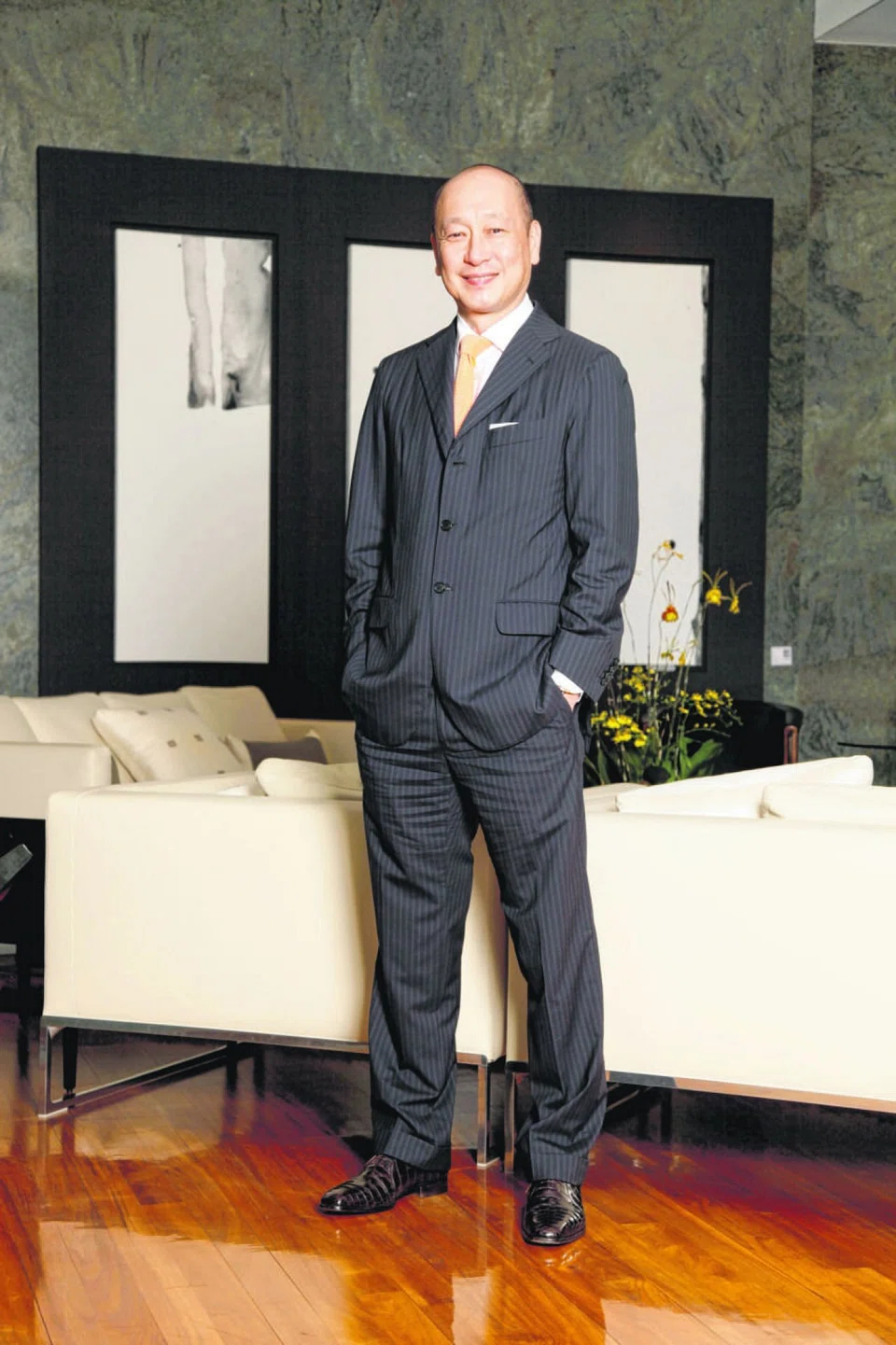
IN 1971, United Overseas Bank (UOB) was still a relatively small player in Singapore. That year, it acquired a stake in Chung Khiaw Bank and was soon on a path of regional expansion to become the Singapore icon it is today. "Back then, just as it was for Singapore, we knew that our success hinged on our ability to be relevant in the region," says Wee Ee Cheong, deputy chairman and CEO of UOB Group. "We decided that for UOB to grow and to compete more effectively in the long run, we needed to expand beyond our home base."
UOB began as United Chinese Bank in 1935. Mr Wee's grandfather Wee Kheng Chiang, who was born in Kuching, set up the bank with six other Chinese businessmen in Sarawak, focusing mainly on financing trade between Sarawak and Singapore.
In 1965, United Chinese Bank was renamed UOB. Over the years, UOB has been expanding across Asia organically and through acquisitions. This included Chung Khiaw Bank in 1971 and Lee Wah Bank in 1973 from the family of philanthropist Eu Tong Sen. Then came Far Eastern Bank in 1984, the Industrial & Commercial Bank in 1987, Thailand's Radanasin Bank in 1999, Bank of Asia in 2004 and Indonesia's Bank Buana in 2005.
However, it was the industry-changing S$10-billion takeover of Overseas Union Bank in 2001 that is the most widely remembered in Singapore. From lending out S$30 billion in 2000, UOB's total loans have grown to almost S$200 billion in 2014.
As it supports a broad range of businesses and households across geographies, UOB ensures the quality of its loans by focusing on selected industries, stringent credit assessment, conducting stress tests and carrying out regular credit reviews. "We planted the seeds and now have 530 offices globally. But building a regional branch network such as UOB's has not been an easy task," says Mr Wee. "It has taken strength of purpose to integrate a collection of banks into one seamless operation. It is a painstaking process that takes time to get right."
UOB's regional network stretches from China across to the Asean countries. In July 2015, UOB officially opened its Yangon branch in Myanmar. Mr Wee says the bank's broad and deep South-east Asian presence places it in good stead to tap on rising incomes and increasing trade within the region.
"Our focus is to provide a consistent and distinct UOB service. This involves optimising our talent, our systems and our in-depth knowledge to ensure that our globally connected customers are able to bank with us wherever they do business, live and work," he says.
Throughout its growth, UOB has remained true to its Asian values and heritage, even as it automates and digitises its 500 branches across South-east Asia - the largest network among Singapore's three local banks - to serve customers better.
Its customer service has distinguished itself, with the bank receiving Singapore's top industry award for three years running. In 2014, UOB employees took home 947 Excellent Service Awards, or almost a quarter of the 4,000 awards given out across 12 participating financial institutions by the Association of Banks in Singapore. The bank was also awarded the Singapore Quality Award for its outstanding performance in enhancing customer experience at its branches.
Ultimately, UOB understands that every banking engagement is still a personal one, Mr Wee says. "We have focused on building and maintaining trust in each market, taking the time to understand the local customs and regulations and ensuring we have the right local talent on the ground.
"The Asian values of prudence and hard work have been instrumental to establishing a network in South-east Asia that is unrivalled in respect of its reach and depth," Mr Wee says.
UOB's network, capabilities and expertise have positioned it best to help Singapore companies expand into the region and to help more individuals, enterprises and economies benefit from the opportunities created by Asia's economic growth, he says.
An example was how UOB was the first bank to set up a Foreign Direct Investment Advisory Unit to help businesses identify the right regional expansion opportunities. UOB has established nine such units since 2011 that have helped more than 600 companies expand their businesses across the region. This in turn helps regional economies grow. Through its newly opened Myanmar branch, for instance, UOB is supporting its corporate clients in US$300 million of investments to help the country's industrialisation and urbanisation needs over the next 12 months.
Safeguarding the long-term interests of the retail consumer is another area of focus. To help consumers deal with the pressures of declining returns on their savings and the rising cost of living, UOB introduced a back-to-basics investment solution called the UOB Income Builder. The solution relies on time-tested investment principles to help customers achieve a regular income stream to help meet their financial goals.
Mr Wee also sees that it is the responsibility of banks to uphold the robust reputation of Singapore's financial industry. "The banking world is changing fast. We know it took Singapore 50 years to make it to where we are today, a vibrant global financial centre. But it may not even take the next five years for the industry to be radically transformed as it adjusts to the forces we are witnessing," says Mr Wee, who is also the current chairman of the Association of Banks in Singapore.
Meanwhile, other trends are the increasing connectivity among countries both physically and digitally, the rise of China, India's economic transformation, and the Asean Economic Community trade bloc taking shape at the end of 2015.
Looking ahead, Singapore needs to uphold the fundamental principles that contributed to its success, Mr Wee says. He believes that first, it has to be far-sighted to build its capabilities to ride on major technology and consumer trends, while remaining open to attract the best ideas, talent and capital from the world.
Second, regulations need to allow room for experimentation and risk-taking, even as they ensure the system stays robust and accountable. But he believes that good governance should not hamper enterprise and innovation, which are at the heart of vibrant, sustainable businesses.
Finally, banks have to do what is right for the long term and uphold Singapore's reputation as an international finance centre, he says. "At the end of the day, I would like to see UOB continue to make Singapore proud and do well in the region," Mr Wee says. "Our brand has been built on that spirit of the handshake; it is a promise that customers can rely on us to do what is right, now and in the future."
TRENDING NOW

Indonesia’s coal tycoon Low Tuck Kwong replaced as Bayan Resources president-director

OCBC names Ang Eng Siong as global corporate banking head in rejig of wholesale banking business

Consider lowering homeownership barriers for some non-resident foreigners

DBS opens flagship investment strategy to retail investors with new fund

