

Investing early in Singapore's future
UBS, the biggest wealth manager in the world, is nurturing local financial talent to compete with the world
NEARLY 50 years ago, the expansionary ambitions of Switzerland's largest bank brought it to Singapore. The Swiss Bank Corporation, a predecessor of today's UBS, was the first Swiss bank to invest here. It said then that it liked the city-state's strategic location and potential as a banking and finance centre. Today, the vision of Singapore as one of the top wealth management hubs in the world has materialised with UBS at the heart of it.
More than 4,000 people in Singapore work for the bank, which is the largest wealth manager globally and also the top private bank in Asia by assets under management and client advisers headcount. UBS occupies over 500,000 square feet of office space and has one of the largest trading floors in Singapore.
The city is also the headquarters for its investment banking business in South-east Asia. Singapore is also UBS' trading hub in Asia for foreign exchange, rates, and credit. It is also a risk management centre, and a major IT and operations centre.
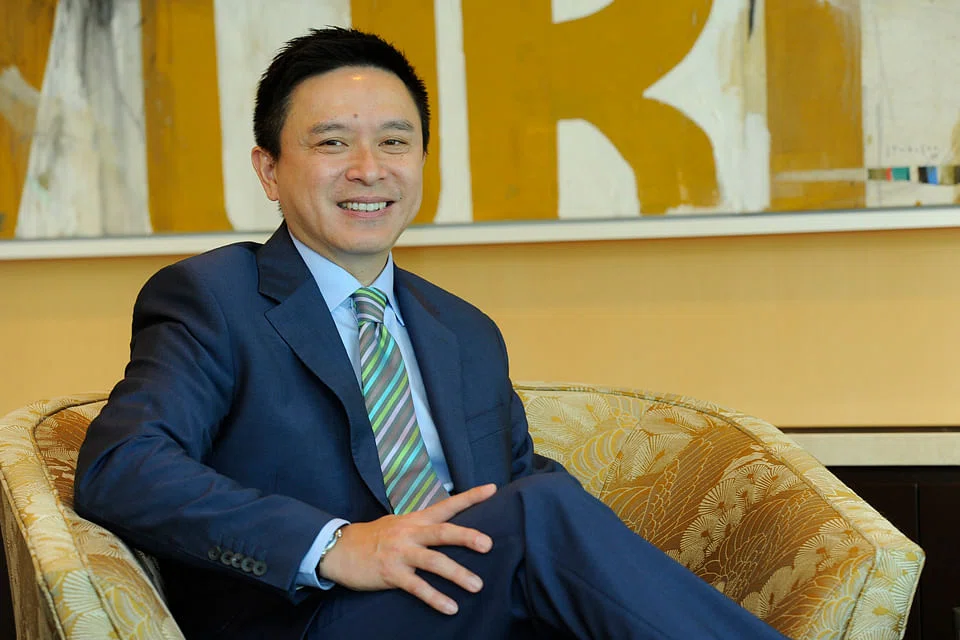
"UBS' journey during the last 50 years has been, in many cases, the story of Asia, and the story of Singapore," says Edmund Koh, country head of Singapore and head of wealth management of South-east Asia and Asia Pacific Hub.
"We have been privileged to have a front-row seat during the emergence of Singapore and other Asian cities as global financial centres," says Mr Koh, a veteran banker who joined UBS in 2011 after key leadership roles in different top banks across the region.
The Swiss Bank Corporation's setting up of an office here was quickly followed by the next two largest Swiss banks. The period was also a time when top European banks were coming to Singapore. The Swiss Bank Corporation itself, meanwhile, merged with the Union Bank of Switzerland in 1998 to form UBS.
Today, Singapore and Asia has delivered upon their promise of growth, Mr Koh says. During the first quarter of 2015, UBS Wealth Management Asia Pacific saw net new money inflows of 8.2 billion Swiss francs (S$11.7 billion). Invested assets rose to 276 billion Swiss francs. "Asia-Pacific continues to be one of the fastest-growing regions in the world for UBS Wealth Management as well as for the UBS Group," he says.
Today, UBS is present in all major financial centres in the world, with over 60,000 employees and offices in more than 50 countries. Its core businesses are wealth management, investment banking and asset management.
"Our ambition is to remain as the best and the biggest wealth manager in the region. We want to be the trusted wealth manager for individuals and business families over the generations. Our leading global investment banking and global asset management capabilities provide our clients with access through a single platform for their personal, business and investment needs," Mr Koh says.
The global nature of the bank means advisers can help clients take advantage of opportunities in a more connected world, he says. The bank is supported by a team of more than 900 economists, research analysts and strategists who monitor all key markets and asset classes on a daily basis. Their views are reflected in the Chief Investment Office (CIO) House View, which helps clients understand market risks and opportunities.
Apart from its research, UBS also taps on its strengths in its investment banking, wealth and asset management teams to provide holistic solutions, Mr Koh says. This has helped the bank strengthen its relationships with clients, he says.
"Compared to Europe and US, a higher portion of wealthy individuals in Asia are first or second generation entrepreneurs," Mr Koh says. "Their wealth is tied to their businesses and therefore they require not only personal investment advice but also investment banking and asset management services."
Other competitive advantages include the strength of the UBS brand, its track record serving Asian clients, an extensive product platform, and a network of many tens of thousands of clients, he says.
The bank continues investing in Singapore. UBS set up its flagship Asia-Pacific wealth management training campus UBS Business University in Singapore in 2007. The location for the campus was the historic Command House building along Kheam Hock Road, which used to be the residence of British military officers.
"Just like Singapore, UBS constantly strives to ensure its pipeline of financial talent stays competent and competitive," Mr Koh says. "While we promote a diverse multi-national and multi-cultural workforce, we have always placed a strong focus on grooming local talent and promoting mobility and international experience by staff from Singapore."
The bank has also launched landmark events here like the UBS Family Office Summit and the UBS Global Philanthropy Forum, bringing in influential thought leaders around the world to share best practices and innovative ideas to the top business families, entrepreneurs, family offices and philanthropists around the world.
In 2014, to celebrate its 50 years in Asia, UBS Singapore launched the UBS Singapore Youth Academy to develop financial talent among 50 top students in local pre-tertiary institutions. It also launched the UBS CampVision Youth Leadership Academy to mentor at-risk youths.
The bank also helps local artists motivate children and youth with special needs, runs counselling programmes for students, distributes food hampers to needy families and supports the ACE football league, which uses football to impart life skills.
UBS also launched the UBS Philanthropy Compass in Singapore recently, which is a practical guide to help philanthropists and social entrepreneurs structure their philanthropic journeys.
"I am extremely proud of our record in shaping the philanthropic landscape in the region. Everywhere in the world, UBS is an integral part of the communities which we serve, but here in Asia, we take philanthropy, and particularly employee volunteering, to a different level," Mr Koh says.
Looking ahead, he is optimistic about Singapore's future, noting few other countries in the world are as well-connected in its infrastructure. Political and economic stability, transparency in governance, and sound regulation will stand Singapore in good stead in an evolving business landscape, he says.
"My wish is to cultivate more home-grown Singapore talent who can stand shoulder-to-shoulder with the best in the world. They will be the ones to further develop Singapore into a global financial centre of the future."






