

Laying a strong foundation to do good
More families and individuals are setting up foundations to further their philanthropic ambitions.

IN trying to make a social impact in his home country of Indonesia, Victor Hartono believes in appealing to all aspects of human nature, even the baser ones such as greed and fear.
He employs this unorthodox philosophy in the running of Djarum Foundation, the philanthropic arm of PT Djarum, one of Indonesia's leading kretek (clove) cigarette makers. His father and uncle founded the company in 1986, although his family's charitable activities began as far back as 1951.
Mr Hartono, who is the president director of the foundation, said that if there were five schools in a particular area competing for funds for charity, he would choose the one with the most ambition rather than spread his donations among all five.
"Choose the one that has a plan, and has the drive to make it happen. When the other schools see the help they are getting, they will be motivated to improve," said Mr Hartono at the Credit Suisse Philanthropists Forum 2014 in Singapore on Thursday. He was speaking at a panel session on philanthropy's evolving role in Asia.
PT Djarum is one of a growing number of philanthropic foundations in Asia that are making a difference in improving the lives of millions of people across the region.
Many philanthropists like Mr Hartono, who is also the chief operating officer of PT Djarum, are leveraging their business network to ensure superior outcomes from their charitable efforts.
A few months ago, for instance, a German manufacturer donated machines to a polytechnic to which the foundation had provided funding. Djarum also regularly partners leading state-owned banks to co-donate cash for school facilities.
Reflecting the growing sophistication of these organisations, Djarum Foundation uses Web and mobile technology to communicate information about its programmes, flag special events and advertise for recruiting academic scholarship students and athletic scholarship recipients.
He also advised other foundations to "think and rethink what you really want to accomplish and find your true sense of purpose".
"For us, helping Indonesia become a strong leader in the Muslim world is very important," he said. In that vein, one of the foundation's initiatives is to unite the country through sports by helping train future Indonesian badminton champions.
There has been growing interest among wealthy families in Asia to set up personal and corporate foundations as a means to give back to society, said Francesco de Ferrari, Credit Suisse's head of private banking in the Asia-Pacific.
He noted that the bank's SymAsia Foundation - which allows clients to establish "sub-foundations" within the framework - has seen the number of client foundations grow steadily to almost 30 since its launch in 2011. These foundations have disbursed more than S$60 million in funding to around 250 charities worldwide.
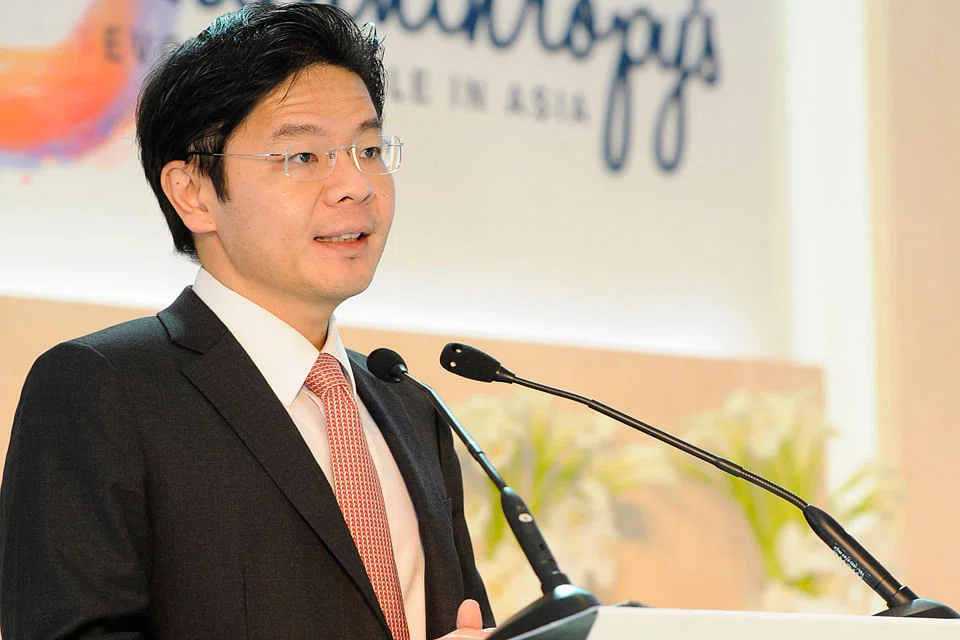
In his opening address at the forum, Lawrence Wong, Minister for Culture, Community and Youth, noted that philanthropy has the potential to mitigate inequality and "soften the hard edges of the free market".
"It provides a mechanism to dismantle the accumulated wealth tied to the past, and reinvest it to strengthen the entrepreneurial potential of the future," said Mr Wong, who is also the Second Minister for Communications and Information.
Trying to do that is Regina Lopez, chairman of ABS-CBN Lingkod Kapamilya Foundation Inc, which is linked to the Philippines' largest media company, ABS-CBN.
Among the foundation's many activities is an ambitious effort to clean up the Pasig River and help the many poor communities that live around its tributaries. "We cleaned up one of the (tributaries) connected to the river. We did one and did it well and there was a 40 per cent reduction in crime and savings in healthcare costs," Ms Lopez noted.
However, she said that the biggest challenge was getting the poor communities living along the river to change their mindset and take ownership of the project.
Bringing a personal tone to the discussions was Jennifer Yeo, the founder and chairman of Viva Foundation for Children with Cancer. The lawyer was inspired to set up the foundation for young cancer sufferers after her harrowing experience of having her youngest son diagnosed with leukaemia at an early age.
His eventual cure, after a bone marrow transplant following years of chemotherapy and two relapses, was due to a large extent to the work and care of St Jude Children's Research Hospital in Memphis, Tennessee. Today, her son has fully recovered and is a first-year medical student in London.
The foundation's aim is to raise the survival rate in the region to a level similar to St Jude's, which cures 94 per cent of its childhood leukaemia patients.
Viva organises an annual forum on paediatric oncology that brings in doctors from the famed US hospital as well as the rest of the region. Said Ms Yeo: "St Jude is such an institution of kindness that it shares with the rest of the world what it learns. Working closely with St Jude, we want to raise the cure rate in Singapore, and then in the whole region."

TRENDING NOW

He built the Vingroup empire. Now South-east Asia’s richest man is handing some key roles to his sons

Seatrium allocates S$200 million for new share buyback programme

32 companies, 6 individuals bag accolades at Singapore Corporate Awards 2026

Stocks to watch: Mapletree Logistics Trust, Seatrium, Keppel DC Reit, Food Empire

