Shareholders should stay on their toes
Corporate veteran JY Pillay says investors should not hesitate to take firms to task to achieve better corporate governance.
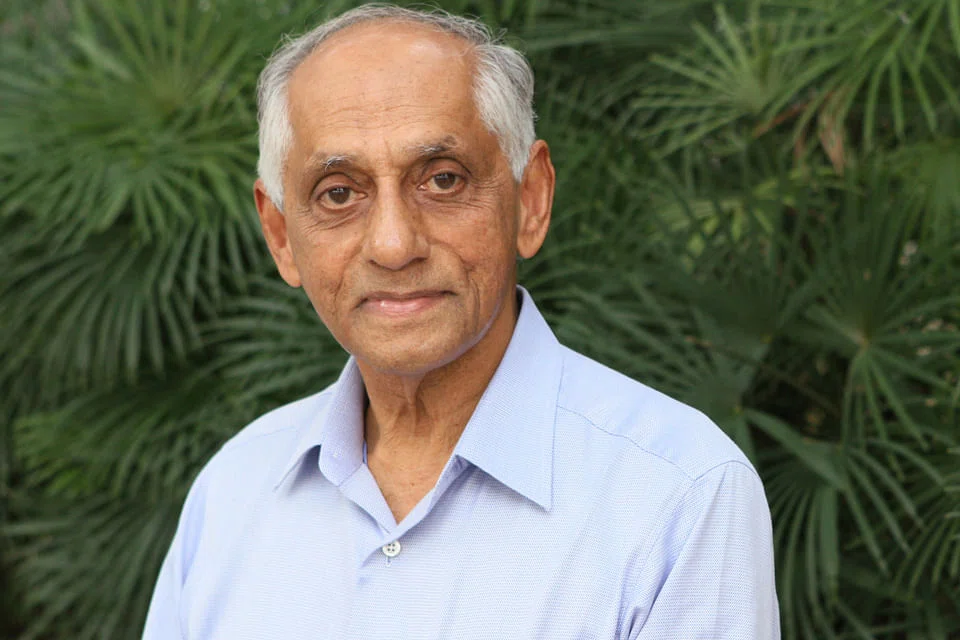
RETIREMENT might typically be a time to kick back and relax but corporate veteran JY Pillay has kept on his feet - quite literally. The 81-year-old founding chairman of Singapore Airlines does his work standing up in his office at the National University of Singapore where he is an adjunct professor at the Lee Kuan Yew School of Public Policy.
He is also still a keen champion of good corporate governance in Singapore, where he says there is still some work to be done. Issues that have yet to be fully resolved, for instance, include fee disclosure and independence of directors.
"There are certain elements of the Corporate Governance Code that keep popping up such as disclosure of remuneration of directors and of senior executives on a named basis," he says in an interview at his office.
"Another issue is the independence of directors who are connected to major shareholders. It was an issue that cropped up when I was in the CCDG (Council on Corporate Disclosure and Governance) and may still be there today."
Mr Pillay, who was appointed chairman of the council in 2002, also points out that there seems to be an "increasing disparity in income" for chief executives of listed companies. "The big numbers hit the headlines, but not all CEOs receive that sort of compensation. Most CEOs have extremely challenging tasks. Some CEOs command very large sums presumably because their organisations are thriving and can afford to reward the top execs well. As well, these corporations say they have to keep up with the market for talent."
He certainly knows what he is talking about. Apart from having been chairman of SIA, he also chaired Temasek Holdings, DBS, Singapore Technologies, the Singapore Exchange and Tiger Airways.
The main way to get companies to improve their corporate governance is through shareholder vigilance and education, he says. "Shareholders must be alive to their responsibilities. They need to be aware and active in holding the companies to account. Shareholders should make a noise, especially institutional shareholders who have bigger clout. The final authority in a company is the shareholder. In the US, shareholders are acquiring more power. Singapore is not there yet but it may come in time."
Shareholder education and a growing recognition of the importance of diversity can help in areas such as improving board gender ratios, he adds.
"A key issue here is whether there should be some mandatory gender quota. My sense is that it's not necessarily the most productive of way of proceeding. Once you legislate gender diversity, then you open Pandora's box. The best way is shareholder education - we can only proceed as fast as society moves."
One thing to be optimistic about is that while Singapore may be lagging behind its regional peers in terms of boardroom gender diversity - "it's probably crusty old curmudgeons like me finding it difficult to change", he jokes - Mr Pillay also points out that among newer companies the ratio of female directors tends to be higher, adding that he hopes that good governance will be "respected more diligently in all segments of society" in 10 years' time. "It's a whole ecosystem that governs the behaviour of corporate bigwigs. It must be in our culture, in our DNA. The corporate sector is only one part of society. Society as a whole has to evolve. It should be a cultural evolution, not a traumatic displacement."
Mr Pillay won the Distinguished Contribution to Corporate Governance award at the Singapore Corporate Awards 2015.
Willie Cheng, chairman of the Singapore Institute of Directors, said in a statement: "Among the many award judging panels I have been on, this was the easiest. Mr Pillay's contribution and record stood head and shoulders above all others so much so that it was clear to all of us that we should give the award to him and him only even though we have flexibility to have multiple recipients for the award."