

Staying the course across generations
The head of Ayala Corporation, Jaime Augusto Zobel de Ayala, shares his secret for keeping one of Asia's most respected family businesses moving forward.
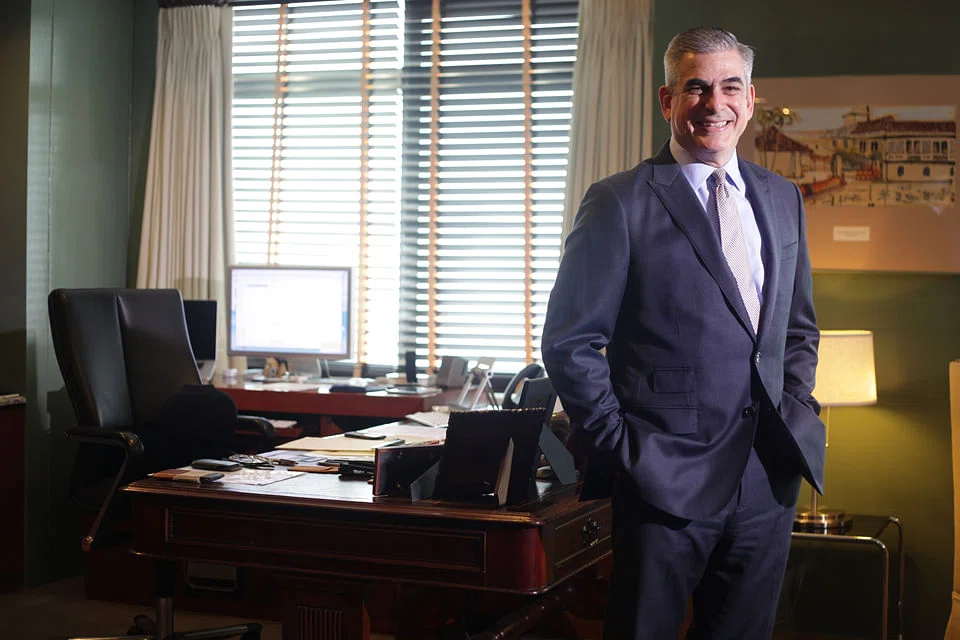
WHEN it comes to the challenge of sustaining a family business for future generations, one could learn from the experience of the Ayala clan of the Philippines.
With a business empire that spans telecommunications, real estate, banking and infrastructure, the 180-year old Ayala Corporation is currently run by the eighth generation of the family.
Just last month, the publicly listed group was awarded the 19th Annual IMD-Lombard Odier Global Family Business Award, an honour that recognises the way in which multi-generational families separately manage the interests of their families and businesses. IMD, a top-ranked global business school based in Switzerland, and private bank Lombard Odier, give out the award.
Currently holding the reins of one of the Philippines' oldest and most respected business groups is its Chairman and Chief Executive Officer, Jaime Augusto Zobel de Ayala.
He joined the family business in 1981 at the age of 21 straight after receiving his Bachelor of Arts degree from Harvard University, where he majored in Economics and graduated Cum Laude. He later earned his MBA from Harvard Business School, and in 2007 received the Harvard Business School Alumni Achievement Award, the school's highest recognition.
Despite carrying the weight of seven generations of history on his shoulders, Mr Zobel looks at the issue of family and business with the dispassionate eye of a Harvard-trained professional CEO. One key advantage of a family-run business is its ability to look far beyond the immediate horizon, he tells The Business Times in an interview.
"Family firms tend to have a longer-term strategic focus within the controlling shareholders and management, instead of an operational focus on trying to surpass quarterly results. In addition, families tend to live under the principle of stewardship as opposed to ownership," says Mr Zobel, 54, who is commonly known as Jaza.
He also believes that family businesses tend to focus on resilience more than performance, and are prepared to forgo the excess returns available during good times in order to increase their odds of survival during the bad ones.
"A CEO of a family-controlled firm may have financial incentives similar to those of chief executives of non-family firms, but the familial obligation he or she feels will lead to very different strategic choices."
Studies show that family firms are mature businesses in at least the third generation of family ownership, he notes, which suggests that the more embedded the family business culture and values, the more they are likely to be thriving in difficult times.
However, the challenge for family enterprises is to be able to attract sufficient executive talent as the business grows. "If a proper balance of governance and executive drive is achieved between family and non-family members, then one can hopefully have the best of both worlds," he says.
"We follow global governance standards and take pride in being recognised for these standards by independent, respected institutions. We remain committed to trying to get the best of both worlds."
Asiamoneyrecognised Ayala as Best Overall for Corporate Governance in the Philippines in its 2012 Corporate Governance Poll. Euromoney also named it the Best Managed Company among conglomerates in the Philippines.
Remarking on the group winning the family business award last month, IMD president Dominique Turpin said: "Over seven generations, this company has provided numerous lessons for other family businesses to learn from, in particular, the importance of long-term vision, a broader social awareness and an ability to adapt."
A steady rise to the top
Mr Zobel started his career as an analyst at Purefoods, then a unit of the group engaged in food manufacturing. Over the next four years he rose to head the company's export division, which consisted mainly of running a tuna-canning operation in the south of the Philippines. The young executive was responsible for running the raw material, processing and canning operations and then finding buyers in the global market for the product.
In 1985, he left to pursue his graduate studies before returning two years later to head the strategic planning and development team at Ayala. From that point on, it was a steady ascension of the ranks to the office of the Chairman that he currently resides in. He is assisted by his brother Fernando, who is the group's President and Chief Operating Officer.
He chairs the boards of many of the group's subsidiaries, most notably Globe Telecom - a joint-venture with Singapore Telecommunications (SingTel) - and Bank of the Philippine Islands, one of the country's largest financial institutions. He is also vice-chairman of Ayala Land and co-chairman of the group's philanthropic enterprise, Ayala Foundation.
Mr Zobel cites Ayala's work in public infrastructure in the Philippines - and specifically the establishment of Globe Telecom and Manila Water - as particularly challenging.
"There are always challenges for any business and assessing and managing risk is part and parcel of our daily lives," he says.
"However, in the spirit of developing new business opportunities, and aligning ourselves to new national development agendas, we opted to allocate significant capital to public infrastructure that was heavily regulated; namely water distribution and telecommunications. These had significant challenges."
In the late 1980s, the group was faced with the decision of whether to sell its minority stake in a telex company called Globe Mackay, after the major shareholder ATT had decided to do so.
Ayala decided to restructure the business instead and partnered SingTel to grow the company that is now called Globe Telecom into one of the country's leading telecommunications players.
"We opted to chart a path for ourselves in this industry. The liberalisation of the industry, and our entry as a new investor, disrupted the existing telecom monopoly at that time and resulted in strong investment growth in the country's telecom industry," he says.
The growth of Globe also gave more customers access to telecom services in the Philippines. Phone penetration has surged from just 1 per cent before the sector opened up to nearly 100 per cent today. Globe services over 40 million customers.
In the case of Manila Water, Ayala participated in the privatisation of a public utility despite being aware of the regulatory challenges in entering this space. The group believed it could add significant value by solving inefficiencies, modernising the infrastructure and professionalising management.
"Over half of our customers are from lower-income groups and they used to queue up for vended water that cost significantly higher than the piped water of today. The poorest customers now pay a fraction of what they used to pay to middlemen," says Mr Zobel.
The group also gives back in other ways, in particular, through the Ayala Foundation's programmes that cover education, art and culture, entrepreneurship, the environment and sustainable development.
"We are all part of a larger, integrated ecosystem and we all stand to benefit from a society that grows progressively. Businesses simply cannot succeed in a country where infrastructure is weak and degraded or where poverty is so pervasive that it leaves the majority of the population disempowered."
Mr Zobel received the Presidential Medal of Merit in 2009, and the Philippine Legion of Honor (with rank of Grand Commander) in 2010. Both were awarded by the President of the Philippines to recognise his outstanding public service.
Keeping it in the family
To ensure that the family remains cohesive over the years, it has followed a few core principles that guide its actions, reveals Mr Zobel. These principles include the stewardship of a family legacy, a strong and values-driven work ethic, a desire to contribute to the country's national development agenda and a focus on preserving unity.
A Family Council was set up to promote unity among family members and support a long-term family commitment to the business, with a constitution that defines its values and beliefs and sets the goals for both family and the business.
"We take these measures today in the hope that the next generation of leaders will run the business in a manner consistent with the family's long-held values," says Mr Zobel, who is married with four children.
"The challenge, of course, is to maintain the same kind of governance and trust as we move on to the next generation of family leaders and executives."

TRENDING NOW

South-east Asia has lost Nvidia’s best salesman

Demand, tech capabilities position Apac and AI as Skyscanner’s next growth frontiers: CEO Bryan Batista
Peter Kwee’s Ridley Park bungalow on the market with S$100 million asking price

Beyond the greenback, Vietnam’s big borrowers turn to Asian-currency bonds

