Suga takes the baton
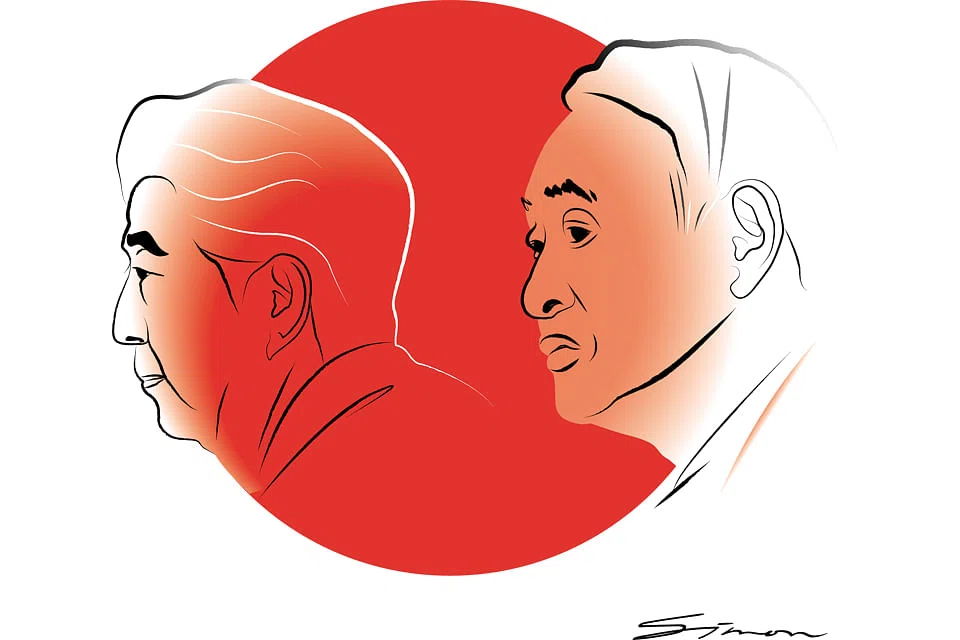
THIS WEEK'S TOPIC: As a business leader, what policy changes - if any - do you expect or hope to see in Japan, under its new prime minister?
THIS WEEK'S TOPIC: As a business leader, what policy changes - if any - do you expect or hope to see in Japan, under its new prime minister?
Lawrence Loh Director, Centre for Governance, Institutions and Organisations NUS Business School
As a top three economic power in the world, Japan plays an even more critical role amid the tension between the two biggest global economies. Instead of joining in the fray, Japan can be a moderating influence to promote harmony in the international economic setting. This will be a much-needed stabiliser in a hyper-turbulent business environment. Abenomics has focused on internal reforms for very good reasons and achieved some results. Suganomics should be more externally-oriented and take on a global economic stance. This is especially crucial with the downward-spiralling economic declines in many countries due to the pandemic. Suganomics can indeed promulgate a new brand of CSR - Country Social Responsibility.
Charles Reed Chief Executive Officer Royal Greyhound
I have a personal interest in this subject, having been born in Japan to a Japanese mother and worked for the flagship Japanese telecommunications company NTT for over 10 years. The new Prime Minister Suga-san must battle against Covid-19 as his first priority. As part of this effort, he will seek to support small and medium-sized companies. Expect significant reorganisation in the Japanese business framework too, which will bring easier methods of working and less bureaucracy. We will also see a new Ministry of Digital Affairs to accelerate digitalisation. There are still elements of Japanese life such as the use of personal seals and storing of personal health information that can be digitised. And all this with a welcome 40 per cent discount on mobile phone tariffs to help stimulate the whole economy. This is one of the reasons NTT will acquire DOCOMO in what could be the most expensive acquisition in Japanese history.
Takehiko Ryu Managing Director Panasonic Asia Pacific Pte. Ltd.
Beyond the most immediate task of getting the pandemic under control by implementing countermeasures for the transport industry and office workspaces, we hope to see the leadership take clear steps to accelerate the rate of digitalisation across the public and private sectors to improve service quality; redefine organisational culture; and shift public attitudes to embrace remote working. At the same time, a shift in economic policy is also crucial to rejuvenate Japan's economy to boost the country's competitiveness on the world stage.
Miyuki Suzuki President, Asia Pacific, Japan and Greater China Cisco
As a business leader who hails from the country, I would like Japan's new prime minster to focus on digital transformation, which is now more important than ever before. As Japan tackled the Covid-19 outbreak, many businesses struggled to adapt, due to a lack of critical IT infrastructure.
Even as we come out of the lockdown, we are starting to see some major trends evolving such as the move towards a hybrid future of work, where employees shift between working remotely and in the office. At the same time, customer journeys are becoming increasingly digital, and business leaders are looking to build resilient enterprises that can better withstand future shocks. This requires Japanese businesses to build agile IT infrastructures to meet changing customer and employee expectations, as well as recalibrate when needed. To fully leverage potential, businesses will seek to adopt technologies such as cloud, analytics and big data, automation, and cyber security.
Yoshihide Suga was previously seen as the man behind the scenes who got things done. He now has the opportunity to lead from the front by driving digital transformation and making an impact that will last for decades to come.
Edmund Lee Managing Director Singapore TMF Group
Businesses are most looking forward to seeing the new administration achieve its key policy objectives around digital transformation, and regulatory and tax reform. For example, the digitalisation of administrative work will greatly improve public sector efficiency and ensure that businesses are supported in a timely manner during economic recovery efforts; they are often hindered by antiquated processes such as the ink seal stamping system.
The new administration should also confront its challenges of a declining population and labour shortage, and consider refreshing its restrictive employee protectionist stance to attract foreign talent. We also hope that efforts will continue to achieve the goal of more female representation on director boards of major companies.
Sudhir Agarwal Chief Executive Officer Everise
As a business entering Japan and one that is actively recruiting remote workers, we hope to see greater progress in policy development that supports flexible and remote work. We also wish to see greater respect for inclusiveness and diversity in the workplace. These are important attributes in any culture, so we support any policy development initiatives under these pillars that a new prime minister may initiate.
Lex Lee Chief Strategy Officer TOP International Holding
Japan is well-loved by many for its food, culture, products and engineering prowess. These are Japan's value propositions to the world, as a country and as a business. However, even as the world's third largest economy in nominal GDP, it only ranks 29th in terms of ease of doing business (Doing Business Report 2020 by World Bank), which is just behind Russia.
Imagine how much more Japan can achieve if it were to establish an investor-friendly environment, an efficient administrative system and be more welcoming of external talents.
To do this while maintaining the uniqueness of Japan calls for strong leadership, bold measures and the guts to break down many walls which are in the way.
Charles H Ferguson General Manager, Asia Pacific Globalization Partners
Prime Minister Yoshihide Suga has a proven track record as a problem solver and a consensus builder in Japan. I am confident that he will line up programmes that will future-proof Japan's economy and bolster its overall stability.
It is my hope that Mr Suga will revisit Japan's immigration policies to explore further loosening of visa allocation for unskilled workers to help with growing labour needs, as well as bring healthcare workers from abroad into Japan to further assist in the care of the population. A soft diplomatic effort akin to Germany's Goethe Institute to help enable foreigners to better grasp Japanese culture and language would facilitate better integration should they decide to immigrate or work in the country.
As Japan is one of the driving forces in boosting stability and prosperity in the region, I am excited at the prospects of the country's increased investments into South-east Asia, similar to China's One Belt, One Road foreign direct investment campaign.
Chia Ngiang Hong President Real Estate Developers' Association of Singapore (REDAS)
I hope Prime Minister Yoshihide Suga will continue to support cooperative practices; expand bilateral, regional and multilateral cooperation; promote free trade; and endorse the various multinational ongoing trade agreement negotiations.
From the real estate perspective, I would like to see more bilateral direct investments and the promotion of real estate collaborations between Singapore and Japan.
He should continue to push for foreign investments as a key plank in the country's revitalisation strategy and actively create the best possible environment for overseas investors through its pro-growth Suga-Abenomics policy.
Though the Covid-19 pandemic has affected the already fragile Japanese economy, sentiment in the country's real estate sector is reported to remain positive which is a good start.
Mario Singh Chief Executive Officer Fullerton Markets
Japan's Prime Minister Yoshihide Suga has declared that he would not be deviating from his predecessor's economic policies - centred on expansive monetary policy to tackle deflation; flexible fiscal policy to restrain public debt; and structural reform to promote investments, revive productivity and lift growth.
By and large, Abenomics has worked. During Shinzo Abe's term, the Japanese economy fared better than in previous years with low inflation and low unemployment. There are three specific policies I would like to see Mr Suga do well on.
Firstly, a more targeted fiscal policy to bring down Japan's high public debt, which is currently over one quadrillion yen or about 240 per cent of GDP. Secondly, stronger structural reforms to digitalise the economy and remove excessive bureaucracy. Finally, exhibiting a more congenial personality on the global stage. Mr Abe repeatedly visited the controversial Yasukuni shrine that commemorates Class-A war criminals.
Joanne Wong VP, International Markets LogRhythm
As Japan transitions under its new leadership, one of its key focuses will be to fortify its cyber strategy and cyber defence capabilities. After all, to maintain its position as a technological powerhouse and safeguard their operations and infrastructure in the bid to roll out 5G, assessing threats in a timely manner and being agile in their response is key.
By leveraging machine learning and artificial intelligence, as well as proactively sharing intelligence, they can not only minimise loss and assert their competitiveness, but also help to build resilience in the society. This is especially crucial amid an ever-evolving cyber threat landscape, and where the global pandemic has only amplified the threat vectors.
Lim Soon Hock Managing Director PLAN-B ICAG
Japan should pivot more towards Asia, especially China, South Korea, and perhaps India, while maintaining its current relationship with the United States, which is somewhat tepid in any case. It will serve as a counterbalance against the threat to globalisation caused by the trade protectionism initiated by the US.
Japan is among the top globally for almost all sectors of an economy from consumer to automobiles, to engineering and manufacturing, to construction to finance, and many more. Japan can leverage this edge to stake its future with Asia while allowing Asia to benefit from it.
The US has a choice but decided not to seize this opportunity. In particular, a closer relationship between Japan and China, while allowing historical deeds to be bygones, would provide the turbo engine to fuel Asia's growth and dynamism. This will inevitably benefit Singapore.
Henry Tan Group CEO Nexia TS Group
With the new prime minister having declared that he will continue with Abenomics - which has been helpful to Japan in the last few years - I look forward to seeing a continuation of these policies so that the country can continue to improve.
With the vacuum created by the United States as it became less involved, it is important that a country like Japan plays a bigger role in regional politics besides China. This will help to continue the balance of power in the region.
Besides this, I hope Japan will be able to work closer with Singapore especially in the digitalisation journey as it is a smart nation specialising in robotics while Singapore is a smart nation with digitalisation - there are a lot of areas for collaboration.
Maren Schweizer Chief Executive Officer Schweizer World
Former prime minister Shinzo Abe - like many Japanese Cabinet members - was born into a family of politicians and bound by ideologically charged political theory. On the other hand, Yoshihide Suga, born the son of strawberry farmers, is a well-experienced self-made politician and corporate employee. Therefore, I expect him to provide more specific and practicable policies.
Japanese leaders are not expected to be alpha leaders. The ideal Japanese leader is a consensus-builder. In this sense, Suga-san is a consensus-builder with experience in politics as the longest Chief Cabinet Secretary, as well as a career in the business world.
Seamus Phan Chief Content and Technology Officer McGallen & Bolden
Japan has been slowly increasing its intake of foreign labour in several sectors, including construction, healthcare, and computing. It is also opening up through initiatives such as Startup Fukuoka which welcomes investors and entrepreneurs to set up shop there with relative ease.
The nation can do more by easing the business incorporation procedures and requirements, as well as encouraging a culture that welcomes integration with diversity into its society to be more comparable with key regional competitors such as Singapore.
Being a rather homogeneous society, Japan is slowly warming up to English as a working language, but more can be done to encourage more English in the business arena.
David Leong Managing Director PeopleWorldwide Consulting Pte Ltd
Suganomics is almost alike Abenomics in substance with a continuation of Shinzo Abe's agenda. Prime Minister Yoshihide Suga is steering a fragile economy that requires a sensitive balancing act of spurring economic recovery amidst debilitating measures to limit the spread of the coronavirus. He is using this time to push bold regulatory and administrative reforms with an emphasis for reforms, especially in the area of digitalisation of the public sector. All said, Mr Suga is focusing inwards domestically.
Japan is not undergoing major shifts in its geopolitical positioning, posturing and projection, nor in its economic plans. And if Mr Suga follows the same pathway advocated by Mr Abe, its neighbours and friends should remain relatively safe, in the near to mid term.
Zaheer Merchant Regional Director (Singapore & Europe) QI Group of Companies
I would like to see a fresh Suganomics policy of economic leadership as opposed to a continuation of Abenomics. Japan's policies at this juncture must all be economically related (despite Mr Abe's legacy in defence spending and final decree towards pre-emptive military action).
For Mr Suga to stamp his authority, I hope to see banking reforms, lending to financial prudence over loose cash, job creation and retention, reviving economic growth and enhancing domestic consumption. These will stimulate at least the very basics internally within Japan.
On Japan's external policies, unquestionably dialogue and cooperation with China is critical (despite the recent Quad's China-bashing); reinspiring prudent offshore investments along the likes of Masayoshi Son's vision; and reinstating Japanese manufacturing structurally. The overall impact will be a twin-pronged policy to jumpstart the Japanese economy as much as benefiting all cooperating countries.
Annie Yap Chief Executive Officer AYP Group
As Japan grapples with work reforms, I do hope that more policies that promote a better work-life balance will be put into place. For decades, workers in Japan have put in long hours and remained stuck in a rigid and demanding work schedule. Having shorter working hours and a better life balance will greatly benefit the physical and emotional health of workers in Japan. A greater work-life balance needs to be normalised in Japan. and I believe actions are already being taken towards this. Nonetheless, I do hope that more policies to limit overtime and enforce time-off will be put in place by the new prime minister.
Edward Senju Regional CEO Sansan Global Pte Ltd
As a Japan-founded company, we want to support Japan's movement towards digital transformation. Aimed at facilitating post-pandemic economic growth, this nationwide digitalisation effort will decrease reliance on paperwork across the country. According to the Japan Research Institute, less than 12 per cent of administrative work in the country is conducted online.
The days of young bureaucrats running around with a pile of documents seeking bosses' seals for approval will soon be over. One of Sansan's offerings is focused on digitalising paper contracts for companies, which though niche for now, is expected to grow as the digitalisation wave slowly sweeps across Japan. Another business practice deeply set in Japan's business culture is the exchange of paper business cards. The impact of the decrease in the number of business cards exchanged is estimated to be an average annual economic loss of some 2.15 billion yen per company, according to a recent Sansan survey. Moreover, about 77 per cent have suffered from a loss of business opportunities in online business negotiations. Given the telework boom and a national push, we are taking the exchange of business cards online, to ensure all opportunities are captured within a company after e-meetings.
Dora Hoan Chief Executive Offier Best World International Ltd
As an international organisation upholding our vision of ''World at its Best'', we are desperately hoping for nothing but peace. Economic stability and peace are closely entwined. Indeed, most businesses suffer during conflicts.
Japan-US ties are strong; even the US considers Japan to be one of its closest partners and allies. But even as the Japan-US alliance is a key plank of the country's foreign policy, Japan must pivot towards dealing with the emerging geoeconomic power, China. Stronger Japan-China diplomatic relations could perhaps also help ease US-China tensions, and overall boost global peace and build a more sustainable economic recovery. We also hope to see Japan strengthen cooperation with China in medical services as part of its strategies against Covid-19.