

Sustaining success
Building sustainable organisations has become a key goal for many organisations.
Question: How do you promote sustainability at your organisation?
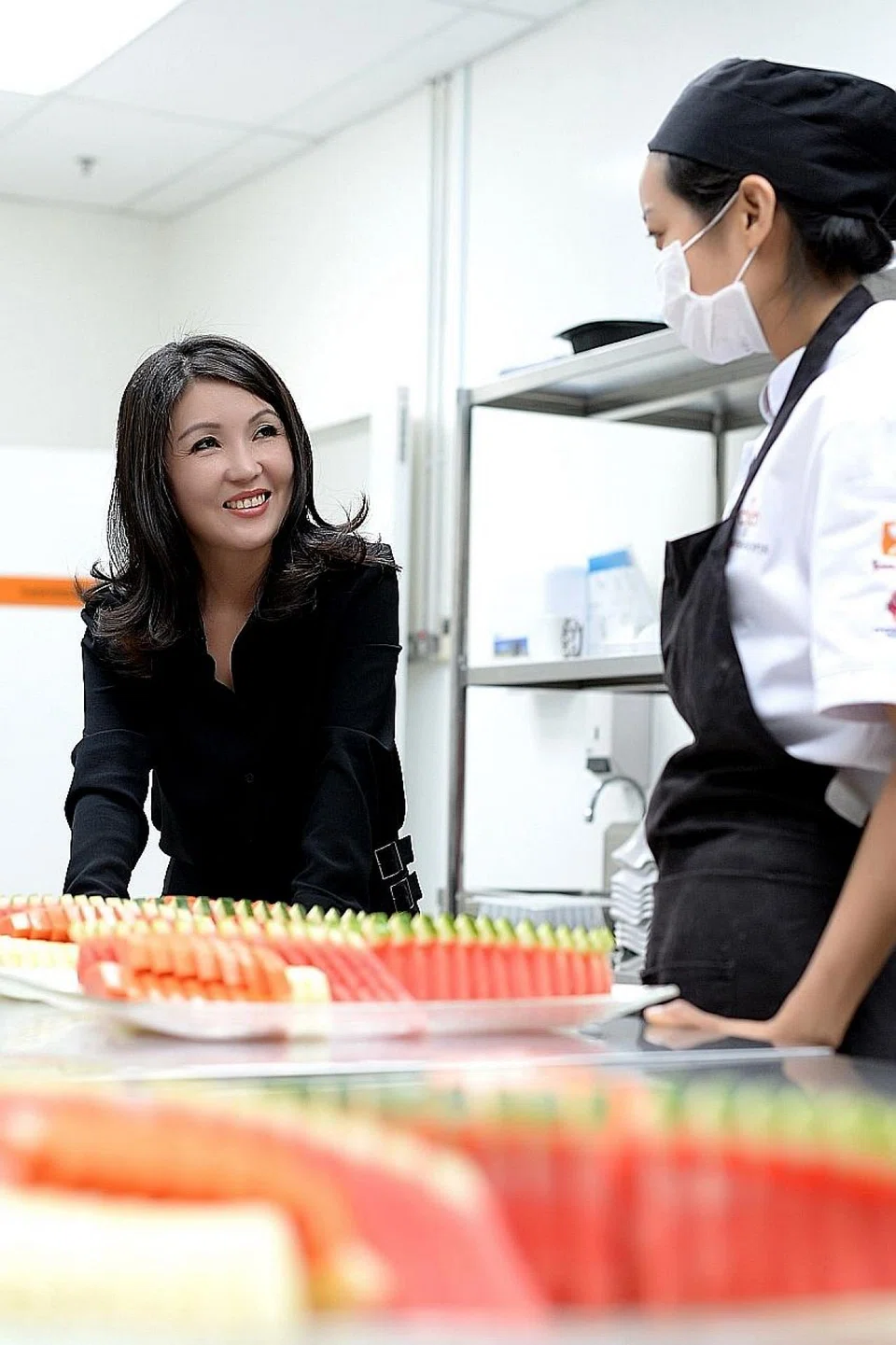
Selin Chuan: As a restaurant, we want to improve health and safety at work, and prevent both physical and psycho-social working environment problems. This may involve reducing monotonous, repetitive work and stress, while at the same time promoting job satisfaction and employee participation at the workplace. We also seek to improve the natural environment by exploiting energy and materials more efficiently. For instance, we use more environmentally friendly materials in our production, and manufacture products that use less energy, or that are easier to recycle.
Samuel Kik: Being in the business of dealing with natural stones, it has always been our mission focus to educate our employees on managing our stone wastes effectively and efficiently. Our employees recognise that the better we manage our waste, the better our margins will be.
Yap Yoon Sian: Sustainability in business generally relates to productivity, customer loyalty, business growth, and profitability. We aim to sharpen the vision of the company to ensure constant growth, as well as enhance the standard of service, standardise our workflow for efficiency, and encourage staff suggestions on ideas to improve the business.
Q: What have been the challenges of doing so?
Chuan: The biggest challenge is the lack of consistency necessary to carry out and maintain sustainability practices in the workplace. The unfortunate fact is that everyone in the workplace, whether it's the CEO, executives or kitchen staff, is busy. Implementing such practices is seen as "adding more things to their plate", which makes it seem unfeasible.
However, if we are able to incorporate these practices and structure them in a practical way, these will become a normal part of their work routine and daily lives, which they will eventually learn to accept and practise.
Kik: Certain design requirements from our clients may result in high stone wastes, and in such cases, we try to educate our clients on alternative designs that may result in more savings for them. Alternatively, we create decorative walkways for our clients using the stone wastes.
Yap: We have staff from seven Asian countries with varied cultural backgrounds, so it is not easy to execute sustainability policies. By creating a fair and conducive workplace, we establish good grounds to establish our Innocom culture. We encourage everyone to team up based on his or her job responsibilities, capabilities and personality types to ensure business sustainability.
Bosses and mid-level managers will also need to play their part in this area. An SME boss needs to be decisive, have foresight on market trends to remain relevant, and be pumped with the spirit to venture.
Meanwhile, mid-level managers are also important in achieving business growth and continuity. They are responsible for maintaining high levels of customer satisfaction.
Q: What are the benefits of being a sustainable organisation to stakeholders?
Chuan: With improved processes and systems in place, internal management and decision-making processes can be examined and improved, leading to cost reductions by measuring and monitoring issues such as energy consumption, materials use and waste.
Measuring sustainability performance can help us meet regulatory requirements effectively, avoid costly breaches, and gather necessary data in a more efficient and cost-effective way.
We can also drive greater innovation through our businesses and products to create a competitive advantage in the market. With this, there will be better risk management and our brand value and reputation with customers and partners will be enhanced.
Kik: Our clients and staff know that by maximising the usage of stone wastes, they are rewarded with more competitive pricing and better incentives. However, more importantly, being in the natural stones business, it is our business responsibility to ensure our ecological system is properly protected and efficiently managed. Each slab of natural stone is precious down to the last inch.
Yap: A sustainable organisation is tougher, more vigorous, more cohesive and structurally better organised. A sustainable company is well managed and more likely to succeed in expanding business networks and achieving higher growth.
Innocom's HR team reviews the KPIs of every staff based on leadership, responsibility, productivity & loyalty, to plan and develop their career. This ensures a low staff turnover. The company will excel better with skilled and experienced staff to keep business growth steady. We balance giving out rewards to our staff and investors, while making sure there are sufficient reserve funds for future investments.
Q: How do you foster a sustainable mindset among your employees?
Chuan: It is important to establish a code of conduct on sustainability covering my employees. I have set firm rules stating that anyone who does not adhere to our code of conduct does not belong in the company. I also have a mixed committee of executives and non-executives who review and evaluate integrated environmental, social and ethical policies, and ensure that responsibility and sustainability are taken into account during any strategy formulation process.
Kik: Our staff are rewarded with incentives when they maximise the total usable area within any given slab of stone. They are also incentivised to create new decorative products with our stone wastes.
Yap: My message to my staff is to "work hard and play hard". Our staff understand their roles and responsibilities when they join the company, and we implement our own policies and culture to treat each other respectfully and fairly. We also put in place penalties and rewards so staff can practise the dos and don'ts of the company.
Q: What other sustainability projects are in the pipeline?
Chuan: I have plans to hold a workshop for all staff, including our executives, non-executives and even our drivers and cleaners, to address the importance of sustainability and incorporate sustainability in our business practices.
A key goal is to help our employees recognise connections between their field and sustainability. During the workshop, we may also discuss basic principles of systems thinking and sustainability, and brainstorm field-specific connections to sustainability and other potential activities.
Kik: We are in the advanced stages of research to ensure that our stone wastes can be transformed into useful construction materials. This is our commitment to a green environment.
Yap: Continued business sustainability requires persistence. We intend to review the business regularly. For now, we are exploring the move to offer company shares in a bid to retain staff and maintain an experienced workforce amid company growth. We will also work on our branding and image, and look to strengthen our core business within local and overseas markets.
Roundtable participants:
TRENDING NOW

He built the Vingroup empire. Now South-east Asia’s richest man is handing some key roles to his sons

Despite the de-dollarisation debate, demand for dollar liquidity in Asia is growing

Can a first-time homebuyer couple earning S$18,000 a month afford a new EC unit?

Asia needs new energy security architecture

