

Taking green steps forward
2015 is an important year for sustainable development and climate change solutions, as world leaders will meet in September to approve the Sustainable Development Goals to guide national and global policies to 2030. In December, leaders will also assemble in Paris to adopt a global agreement on the growing dangers of human-induced climate change.
While Singapore is fortunate enough not to have witnessed extreme weather events, we are not spared from climate change. Just last month, Singapore submitted its Intended Nationally Determined Contribution to the United Nations Framework Convention on Climate Change Secretariat, stating its intention to reduce its Emissions Intensity by 36 per cent from 2005 levels by 2030, and to stabilise emissions with the aim of peaking around 2030.
According to the Second National Climate Change Study published in April this year, Singapore will become a lot hotter and wetter by the turn of the century if no action is taken to reduce greenhouse gas emissions. In a worst-case scenario, daily temperatures could spike and sea levels could rise by more than a metre. As a low-lying island, the rise in sea levels poses the most immediate threat to Singapore.
There is, thus, an urgent need to mitigate climate change. Against this backdrop, calls for greater actions and transparency from global corporations have intensified. Consumers are also increasingly demanding that companies operate in a more responsible manner.
CHANGING LANDSCAPES
For years, such environmental concerns were far from the minds of business leaders. Fortunately, much progress has been made over the past decade. Companies now are more in tune with the balanced triple bottom line, maintaining profits while taking into consideration environmental and social concerns. But we need to accelerate the pace of change if we want to secure a truly sustainable future.
Singapore underwent its transformation from a Third World nation to a bustling First World city state, with a population of more than five million in a short span of 50 years. With limited land and no natural resources, the country has greatly benefited from foreign investments in the years following its independence. Today, Singapore enjoys one of the highest per-capita gross domestic products in the world and has been ranked as one of the least corrupt economies globally.
Against this backdrop of an open economy highly dependent on global trade, it is crucial for Singapore companies and foreign investors to instill responsible business practices to safeguard investments and ultimately grow their business.
Organisations are expected to embrace best practices in their long-term vision and everyday operations, along with unprecedented levels of accountability and transparency.
Studies have shown that social responsibility and profitability are, in fact, complementary. Companies with high sustainability scores have better operational performance and are seen to have less risk. Likewise, investment strategies that incorporate Environmental, Social and Governance (ESG) issues can outperform comparable non-ESG strategies.
Responsible businesses are better positioned to seize new market opportunities in our ever-changing business landscape and ultimately create value for companies and investors. Simply put, incorporating sustainability considerations in decision-making would strengthen corporate performance, enhance financial returns and stimulate innovation for today and tomorrow.
THE COMPACT'S ROLE
2015 marks 10 years since the Singapore Compact was formed out of the National Tripartite Initiative for Corporate Social Responsibility (CSR) founded by the National Trades Union Congress and Singapore National Employers Federation.
Since its inception, the Compact has been at the forefront of growing the CSR agenda by promoting sustainability thought leadership and providing avenues for companies and practitioners to embark on their CSR journey. Through initiatives such as publications, training programmes, knowledge sharing and networking sessions, as well as the annual International CSR Summit which began in 2009, the Compact has been empowering Singapore-based companies in integrating sustainability into their business operations.
The Compact has had a decade of experience in promoting CSR and sustainability in Singapore and it is timely to review the long-term value that it can bring to its members as well as to the growth of the CSR landscape here. This is why the society rebranded itself this year, formally adopting the name Global Compact Network Singapore in June 2015.
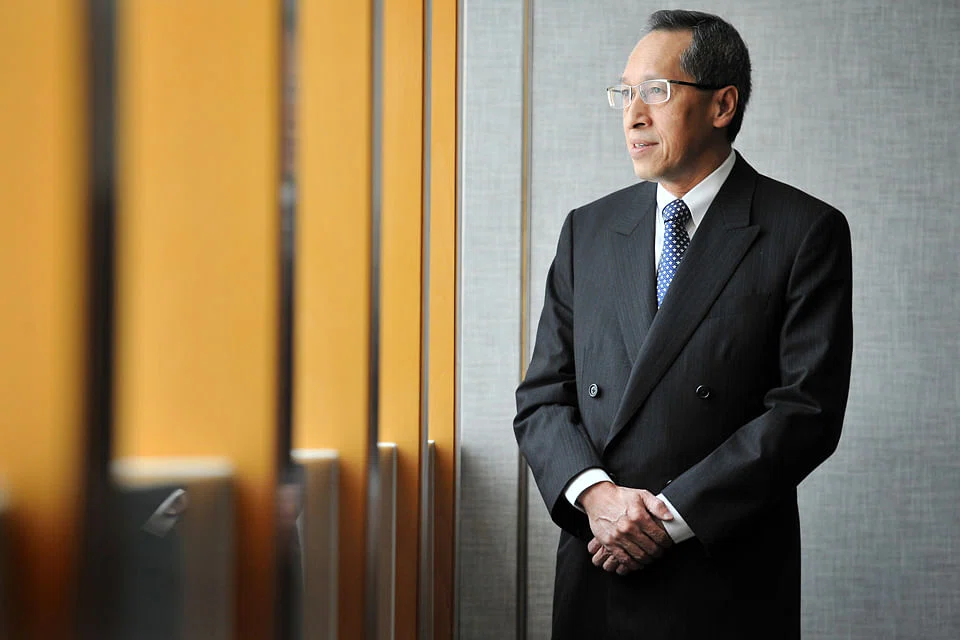
Kwek Leng Joo, deputy chairman of City Developments Ltd (CDL), who was re-elected for another three-year term as president of Global Compact Network Singapore in June 2015, says: "While we currently have about 500 members, this number is still relatively small compared to the total number of businesses in Singapore. There is certainly a need to evolve our approach of promoting CSR adoption. In order for us to create a multiplier effect on the entire business community, we need a critical mass to drive the adoption of CSR and sustainability. Only with a larger membership base will we be able to dedicate greater resources to provide better services to our members, and drive the growth of CSR in Singapore to greater heights."
Mr Kwek explains the rationale behind the rebranding: "It is significant as it reflects our commitment to strengthen our ties with the United Nations Global Compact (UNGC) and our adherence to its 10 principles of responsible business. This move will help Global Compact Network Singapore leverage on the UNGC's stronger brand name and allow us to tap on its global network, thought leadership and resources."
With this name change, the Compact will become a Formal Network of the UNGC.
At the same time, the Compact is also making the Singapore Business Federation (SBF) a Principal Member of the society. This allows the Compact to tap on SBF's database of members and resources to achieve its mission of promoting the CSR agenda more effectively.
Victor Tay, chief operating officer of SBF, who is also vice president of the Compact, comments on this collaboration: "Increasingly, the business community cannot ignore the importance of being a good corporate citizen. It is with this essential principle in mind that SBF decided to play a greater role at the Compact, evolving the organisation with a greater and broader mandate aligned to the principles of the UNGC."
ENGAGING YOUTHS
When Mr Kwek first joined the Compact as president in 2012, one of his goals was to increase the level of awareness in CSR among youths in tertiary institutions so that they will be able to champion CSR and responsible business practices once they enter the workforce. As such, a youth membership was launched in September 2012. Today, the Compact has more than 400 youth members.
Another youth outreach programme is the CDL-Singapore Compact Young CSR Leaders Award. Now into its fifth year, the Award provides students with an opportunity to work on the CSR strategies for real-life business cases. In the past four editions of this Award, students were tasked to work on SME cases. This year, the Compact scaled up the Award and challenged students by featuring large organisations such as Singtel, Swire Pacific Offshore, OCBC Bank, Wilmar International, StarHub, Holcim, Birdlife International and Shangri-La Hotel as company cases. Despite the greater challenge, the Award received record high participation since its inception.
A strong advocate of youth development, Mr Kwek says: "Youths hold the key to the future. The Compact recognises that while it is impossible to solve many of the world's crises in this generation, it can and must equip the next generation with the necessary skill sets to do so."
LOOKING AHEAD
While advancements have been made in the sustainability space over the past decade, there is a pressing need to do a lot more, and a lot faster. Companies must understand that responsible business practices will not only deliver a better financial bottom line, but also strong social and environmental performance that will help lay the foundation for long-term sustainability.
Although financial viability of incorporating sustainability into a company's business operations is often seen from a long-term perspective, the returns on a sustainability investment are manifold.
Holistic sustainability is a global trend that has proven to help some leading businesses achieve better performance, brand and product differentiation and most importantly, ensure long-term sustainability of the business. With time, the value of sustainability to both the company and the society at large will become even more evident.
In the drive for a sustainable, inclusive global economy, companies must constantly challenge themselves to do things differently and at the same time, reduce their operations' environmental footprint. Businesses must continuously evaluate and evolve, as well as seek green innovations, sustainable solutions and a more efficient use of resources.
Today, Singapore has experienced five decades of rapid development and has become one of the most developed economies in the world. As we move to the next stage of economic growth, the need to conserve the environment becomes even more critical.
Sustainability is fundamental for the continued development of any country, for without a healthy planet, there will not be any businesses or people. As UN Secretary-General Ban Ki-moon notes: "Sustainable development is the pathway to the future we want for all."
READ MORE:
TRENDING NOW

Good Class Bungalow market activity picks up pace on ‘realistic’ pricing
Indonesia imposes US$116 million in fines over manipulation of Sinar Mas, Prajogo-linked stocks

Singapore identifies 7 firms responsible for haze fires, notices issued urging action: Grace Fu

Once staunchly pro-China, Malaysian Chinese businesses are now distancing themselves from Beijing

