Teamwork wins
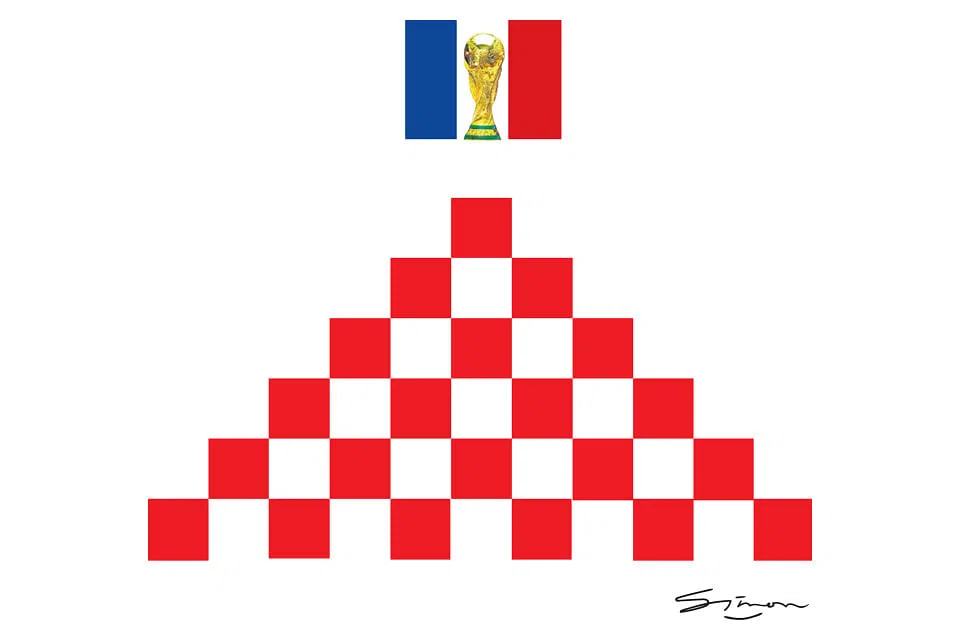
THIS WEEK'S TOPIC: What were the highlights of the 2018 FIFA World Cup for you? Are there lessons for building successful teams?
Pascal Lambert Chief Country Officer, Singapore Head of South East Asia and India Societe Generale
BEING French, I will naturally highlight the success of the French team. It did not always play the most brilliant football but demonstrated resilience and serenity.
This is due in great part to the quality of the coaching by the manager, focusing on teamwork more than individual stardom, and pushing individuals beyond their natural "expertise", as demonstrated in particular by the goals scored by defenders and the defensive role played by strikers.
This young team is also a perfect example of cultural diversity at its best, another great value that companies like Societe Generale strongly encourage.
Damien Dhellemmes Country President, Singapore Schneider Electric
ALLEZ les Bleus! It has been a joy to watch France win the World Cup after 19 years. This win has inspired me both as a French citizen and as a leader.
Despite having star players, the team has shown the importance of teamwork and having the guidance of a strong coach.
Schneider Electric embodies the same philosophy as a company. We may have separate departments and offices but are committed to growing the business together with strong leadership as well as internal and external partnerships. We also believe in nurturing our employees, inculcating a strong sense of teamwork and knowledge exchange.
Philip Yuen Chief Executive Officer Deloitte Southeast Asia and Singapore
I LOVED how open the tournament was - it was almost impossible to predict the winner, and many of the established footballing nations departed early. We saw shocks, great football, and most importantly - lots of goals!
Pre-tournament, all the talk was about Messi versus Ronaldo, and Neymar's return. But their teams - and others that heavily depended on one player - were ultimately not successful and instead, we saw the power of teamwork. In tournament football, with games every three to four days, you need squad depth to allow for fatigue, injuries and suspensions. The teams that are successful are those that work together, have good team spirit and can rely on everyone in the squad to step in and do their job.
While the four semi-finalists possessed marvellous individual talents such as Mbappe, Modric, Hazard and Kane, they succeeded because they found the right blend of youth and experience, of attack and defence, and of flair and resilience.
Martin Mackay President and General Manager for Asia Pacific & Japan CA Technologies
AS an Englishman, the highlight for me was England making it into the semi-finals. Although they did not clinch the title, their performance did not disappoint, and there were brilliant moments aplenty, such as the dramatic penalty shootout against Colombia in the round of 16.
That was a classic example of the team performing under immense pressure. Throughout the games, I have observed that the most successful teams are the ones that demonstrated T-CUP (thinking correctly under pressure). Resilience, fearlessness and confidence (from practice) are invaluable attributes, whether in sports or business, allowing the team to respond with grit in the face of adversity and find ways to turn the situation around. That is why being resilient is enshrined in our company's DNA.
Another DNA principle of CA Technologies is collaboration. A valuable lesson that we learnt from the World Cup is that teams which are dominated by a single star player did not fare as well as those that displayed a high level of teamwork to deliver consistent results. France, the newly crowned champion, is a stellar example of a team that overcame individualism and succeeded through collaborative expertise.
Arsh Chaudhry CEO Space Matrix
THIS year's World Cup will remain etched in my memory for a while - there were so many wonderful matches. The Spain-Portugal game was brilliant as was Croatia versus England. Belgium had an amazing run throughout the tournament.
Neymar was a disappointment with his exaggerated falls despite having brilliant footwork, strategy and speed, especially in the game against Mexico. Be brilliant at what you do but always play fair!
While a Ronaldo or a Messi might be brilliant at the game, the entire team needs to work as a unit to win. Croatia, England and France clearly demonstrated this.
Correlating this to the corporate world, this highlights that individual brilliance will lead to success and growth up to a point, but only a team can make a business sustainable and take the organisation all the way to Gold. A high performance organisation needs to have a bunch of highly committed and capable people bound together with a common purpose and commitment, guided by a humble leader with a clear vision.
Victor Mills Chief Executive Singapore International Chamber of Commerce
THE fact that the tournament passed off peacefully for the hosts and the fans was a major positive. Predictably, the video assistant referee (VAR), which most experts had called for, was controversial in action. Many now see it as disturbing the flow of the game, never mind the decisions that it produced.
The England team coach Gareth Southgate was the leader to watch. His sportsman-like attitude to victory and defeat were a welcome change for a sport where boorish behaviour is too often the norm. His approach to team building also teaches us something. Many of the England side had benefited from his coaching when they were in the England under-21 team. It takes time to build good teams. It takes longer for good teams to become great.
Sandie Overtveld Vice president, APAC Zendesk
APART from the personal highlight of seeing France win (Allez les Blues!), there were so many lessons to take in from this World Cup for building successful teams. Looking at the games through a customer service lens, I was reminded of the saying "there's no 'i' in 'team'." It is a team that wins the World Cup, not just one player - each person has a crucial role to play, and every effort counts. It is the same in customer service - ensure that you draft the best possible players, and galvanise them to work towards a common goal.
I was also reminded of how even when we lose, we can still win - it is all about mindset. Croatia may have lost the final, but their manager Zlatko Dalic summed it up best in the post-match press conference when he said: "On our bus is the slogan 'Little country, big dreams'. It's a good message to all. Work hard. Have good players. Get the results. And believe that it is possible. One day, maybe it will come true. In football, or in life in general. Never give up." Again, that is true in business and in the world of customer service.
Bicky Bhangu President British Chamber of Commerce Singapore
THE World Cup continues to evoke national pride and competition across the generations. Those that reached the final stages of the tournament did so with a clear team dynamic and strategy, coupled with a healthy dose of passion and stamina.
Businesses have much to learn from managers who lead teams of players who do not compete together on a regular basis, yet still deliver when it matters the most.
My parting words are of course for our fantastic England team, who exceeded all expectations this summer and reached the semi-finals. England fans cannot wait for 2022!
Albert Phuay Yong Hen Chairman and Group CEO Excelpoint Technology Ltd
THIS year's World Cup was brilliant, and had all the necessary elements of an intriguing storyline - from being well-organised, favourites' unexpected exits and underdogs rising to the occasion, to the embrace of diversity, outstanding quality football and how technology (VAR) played a key role in helping referees make correct decisions. The month-long event was truly an entertaining and compelling experience for me.
There were many valuable lessons which I gleaned from the World Cup that I could relate and apply to Excelpoint. One team, in particular, left an indelible impression on me - Croatia. Their indefatigable attitude, resilience, positivity, strong inner belief, collective team work and commitment to a shared objective kept them pressing on to make their dream come alive. I believe these are the invaluable qualities that can help build successful teams, which are the cornerstone of successful organisations and leadership. It is always about inculcating the right mindset, and the next step is to build a foundation as solid as possible. The team will shine eventually.
Vivek Kuruvila Managing Director and Singapore Head Swiss Re
THE final certainly was a highlight. A high-scoring match that had drama throughout, right up until the final whistle. Even the referee played a crucial role after he awarded the penalty to France on review. But the one match that really stood out for me was the Round of 16 match between Belgium and Japan which came down to the last kick of the ball.
My takeaways:
1) Talent is everywhere. The two finalists, France and Croatia, had several members of their team born beyond their borders. Half of the French team had African ancestry, as did Belgium's. In the search for talent, you cannot rely on one particular source, and must be willing to embrace diversity to get the best.
2) Team stars. Even if there were, the ones who work as a team, as a unit, emerged on top. Japan had no notable stars, and pushed Belgium all the way while Russia proved that working together makes all the difference to a team. That's how I would like to see Swiss Re work. We also saw French teenager Kylian Mbappe star at this World Cup, and Egyptian goalkeeper Essam el-Hadary set the mark for the oldest to ever play in the World Cup finals - and that lesson for us would be that talent comes in many shapes or forms, and we should never box ourselves in when considering who we hire.
3) Past results don't count. Germany, Argentina, Brazil and Spain came into the World Cup as favourites - and left early. Reputation and past results count for little against determined opponents. For us, the lesson is never to be complacent and to always be ready for the future.
4) Never give up. Belgium personified this type of fighting spirit even though they were down 0-2 to Japan. At what was virtually the last kick of the game, they scored. That type of spirit is infectious.
5) Small doesn't mean insignificant. Croatia and Panama, small countries with small populations, proved that you can make a difference with determination, belief and team spirit.
Leon Perera CEO Spire Research and Consulting
THE 2018 FIFA World Cup lived up to the promise of the beautiful game, thanks to famous upsets, spectacular saves and breathtaking goals aplenty. The outcome was a triumph of teamwork over merely individual superstar talent.
But other factors came into play. In Didier Deschamps, France had a coach who had captained the French team to victory in 1998, which says something about the value of leaders who have started from the ground floor, with a track record of fighting and winning on the frontline.
France also fielded a young team, which speaks to the importance of building a robust talent pipeline. And ultimately, the teams that did well - such as France and Croatia - were not overly defensive but showed a relentless fighting spirit and a willingness to take risks in order to score. These are vital qualities for every successful business.
Joel Ko Hyun Sik Co-founder and CEO Marvelstone Ventures
GERMANY'S disqualification in the early stages of the FIFA World Cup 2018 was a big shock to everyone. On paper, the Germans had the perfect team. The lesson, for me, was not so much around team building as artificial intelligence (AI) modelling - and its limitations.
Swiss bank UBS ran 10,000 simulations ahead of the tournament, leveraging the best models that its machine learning algorithms could muster. But the prediction failed spectacularly, and Germany was instead defeated by South Korea. A proud moment for my kinsmen; a humbling moment for AI - exposing what the technology can and cannot do in 2018.
Chris Burton Managing Director for Singapore and Malaysia Vistra Group
THIS was the best World Cup that I can remember. Lots of surprise results, great quality football (hardly any 0-0 games), fewer bad refereeing decisions (due to VAR), and excitement in extra time and penalty shootouts. The success of my own country (England) was to a very significant extent due to the manager's contribution.
Gareth Southgate came across as a smartly-dressed, dignified, composed figure who seemed to understand the team's strengths and weaknesses. Clearly, he had respect and affection for his team and managed to keep the task focused on the next challenge and prevented them getting too far ahead of themselves (although the English fans were far more excitable). As a result, the fans feel that the team fully vindicated themselves and were proud of the team's progression. Perhaps a lesson there in setting reachable staged objectives and being satisfied where a team outperforms its expectations, despite not reaching its ultimate goal.
Mark Micallef Vice President, APAC Cloudera
THE 2018 FIFA World Cup captivated viewers worldwide with twists and surprises, and my favourite moments were when Iceland held powerhouse Argentina to a draw and Croatia made the finals. No individual star players stole the limelight this year. It was teamwork, courage and humility that did. A successful team is one in which every member works towards achieving a clear, common goal, while having the determination to push through in uncertain times.
It was also a reminder for all of us to stay humble, respect others and surrender one's own interest for the common good, so that we have the courage to strive for excellence or stand in the face of adversity, whatever the circumstances may be.
Tony Ang General Manager, Southeast Asia Crestron Electronics
I HAVE been an ardent football fan for as long as I remember, and whenever the World Cup comes around, I am reminded why it does such a great job of bringing people together - it is a resounding testament to the fact that at the heart of every great team is each individual member's willingness to collaborate to achieve a shared goal.
Watching everyday collaboration in action, such as the Japanese fans who worked together to clean up after themselves at the stadium following a particularly exciting game, were personal standout moments for myself this year.
Success takes time, sweat, and tears. On a stage as big as the 2018 FIFA World Cup, it is every single moment, both off and on the field, that clearly demonstrates what advantages a truly cohesive team can bring to the table.
Luca Dotti Managing Partner NOON Capital
WORLD Cup 2018 was the perfect representation of what international football wants to be: pride for the nation, team spirit and defiance of the odds.
France and England made their fortunes on set pieces, demonstrating that tactics are more important than individual performances.
The introduction of VAR was important, making the referee's decisions less subjective, though according to Marca that analysed every assisted call, it made no difference to the 16 teams that qualified to the knockout stage.
Finally, some beautiful personal stories such as Croatia's Luka Modric, who grew up as a refugee and took the country to an historical final.
The tournament had it all. Waiting four years for the next one will be long.
Jaheer Abbas Senior Director, SEA & India Limelight Networks
FROM Video Assistant Referees to live streaming, the highlight was seeing technology play an integral role in the 2018 FIFA World Cup. Technology has quite literally levelled the playing field, reiterating the importance in ensuring transparency and making the real-time fan experience possible. Off the field, technology such as Content Delivery Networks also helped provide consistent, high-quality content as close to real time to fans all over the world, regardless of device, helping reduce buffer rates and instances of streaming glitches.
One can see a parallel between those characteristics and the values and qualities that help build successful teams - fostering an open and transparent culture that places importance on employee experience, bolstered by digital technologies.
Another key takeaway is that successful teams are built on effective strategies. This takes consistent effort and commitment, key attributes which can be applied in all trades.
Charles Tidswell Vice President, JAPAC Socialbakers
THROUGH the 2018 FIFA World Cup, we have seen so many examples of how social media has changed the way that we interact with the game, adding a new dimension to the experience.
England entering the quarter finals was a personal highlight, as it demonstrated the power of social media to bring an entire country together online. In our analysis of how teams were performing on social media, we found that England continually rose in rankings during each round, with #ItsComingHome trending on platforms like Twitter.
The English side surprised everyone by making it to the semi-finals as a young team with a new manager. The lesson here is that we can always benefit from a fresh perspective both on and off the pitch, which contributes to the development of stronger, more unified and productive teams.
Jean Drouffe CEO AXA Insurance
JULY 15 was a very proud moment for me: Beyond my national team lifting the trophy, I was very impressed by the spirit of this young French team. Of course there is the fact that they were the youngest team of the tournament, and that the coach was able to create a team out of very diverse young prodigies playing in many prominent European clubs.
But what impressed me the most was their focus: they were clearly on a mission, they knew their goal, and did everything they could to reach their aim. They put their individual agendas aside to contribute to the group, ignored critics about the way they played, and lifted their spirit when it was needed. There are certainly many parallels we can draw from the French team with management, where focus is paramount in this fast new digital world.
Jayajyoti Sengupta Head, Asia Pacific Cognizant
THIS year's FIFA World Cup was exciting and uniquely unpredictable. What stood out to me was the great sportsmanship, collaboration and leadership, both on and off the field. There is much to learn from the beautiful game, as these traits are crucial to building great teams in the workplace too. Success is achieved when everyone plays for the team - individuals must leverage their strengths, while complementing and supporting their teammates.
Didier Deschamps' formula of combining winning strategy with his own experience as a World Cup-
winning captain is a lesson for all corporate managers to lead from the front and inspire their teams. What also stood out for me was the enthusiastic support and leadership of heads of state whose exemplary off-field statesmanship made the World Cup a triumph of soft diplomacy.
Kunal Chatterjee Country Manager for Singapore & Brunei Visa
THE series of ups and downs faced by each team at FIFA World Cup Russia mimics life and its uncertainties. We see players on the field adopting a great attitude and a "can-do" mentality. This is a value that my team and I strongly believe in and bring to our workplace.
This World Cup in Russia is even more special to us since Visa is an official FIFA sponsor. We see opportunities to cultivate and communicate our values while creating seamless payment experiences for our merchants and cardholders. Through this event, we implemented innovative payment solutions to fans in Russia, while advancing our business in the market.
Nicholas Fang Managing Director Black Dot Pte Ltd
BESIDES France, the 2018 World Cup in Russia had one resounding winner when it comes to public relations - hosts Russia. Beset by a raft of accusations ranging from cyber attacks, human rights infringements, meddling in foreign elections, and attempted assassinations abroad, Russia put on a very different face during the month-long tournament. And from accounts of spectators and players alike, the country succeeded in putting on a world-class event devoid of fan violence, with top-notch stadia and facilities, and a welcoming and friendly local populace. It is a shining example of how sports can help a country improve its reputation on the global stage. North Korea should take note.
Andrew J Calvert Managing Director APAC AchieveForum
YOU are only as good as your team: Despite having arguably the best player in the world, Lionel Messi, Argentina remains unable to advance deep into international tournaments.
Resilience gets results: Belgium's remarkable comeback to beat Japan in the final seconds of a game they were expected to win.
Plan, coach and adapt: Germany finished bottom of their group and failed to advance. The continuum of plan, coach, adapt is imperative to thrive in a world where nothing around you stands still.
Kevin Chow Country Director and CEO Thales in Singapore
WITH Thales having its headquarters in France, the jubilation at the French team's spectacular win was warmly felt here and across the globe in our group.
Personally, my takeaway from the 2018 World Cup is that teamwork and diversity are key to winning. Some teams had superstar players but did not make it to the finals. Other teams such as France and Croatia showed us how the game can be played with pizazz, through leveraging the strengths of everyone, rather than focusing on a few individuals. In those teams, players could be at their best because they had teammates who leveraged their strengths and made up for their weaknesses.
Another obvious feature in many of the top contenders was the strong diversity in their teams - players of different backgrounds and playing styles came together to deliver stunning performances. Strong lessons for us in business - we succeed because of collective effort and not only because of a few superstars. A heterogeneous team comprising a mix of gender, cultures, ages and backgrounds provides a wealth of perspectives and knowledge that can contribute to success.
Thales in Singapore boasts close to 30 nationalities in our workforce, and we are proud to encourage an environment of diversity and inclusion that enables our people to succeed as a team.
Magnus Grimeland Founder and CEO Antler
THE ability of small nations such as Iceland (population a few hundred thousand) to get to the World Cup and Croatia (a few million) to get to the final is incredible. Highly skilled individuals organised in strong teams with strong leadership will always outperform large chaotic organisations. Look at what Whatsapp did with 38 engineers - they revolutionised the communication industry.
Tan Mui Huat President and CEO, Asia International SOS
FRANCE'S 2018 World Cup squad is a shining example of togetherness as they embraced and harnessed the talents of players from varied backgrounds. Kudos to Deschamps, their coach, who was able to create a united team that took on the world and won. Likewise, in organisations, diversity should be embraced and harnessed for success.
The most striking lesson to me is that organisations can learn from Croatia - a team from a small country of four million people, who fought their way to the top. I believe that their winning spirit came from having immense passion, confidence and self-belief and working towards a common goal that not only brought them to the top but also won the hearts of many.
Wong Heng Chew Country President Fujitsu Singapore
AS people often say, a football is round and anything can happen in a match. This year's World Cup has been exceptional in delivering surprises to the teams and fans alike. The agility, resilience and skills of young teams, instead of just individual star players, from lesser-known countries, who took on traditional football powerhouses, has impressed and taken the world by storm.
In the fast-paced IT landscape, we too are seeing the rise of new players who thrive with similar values that has helped leading companies stay on top - experience, agility, pursuit of innovation and most importantly, a tenacity to strive for excellence.
The pervasive use of technology, such as the VAR that aided the referees, provided opportunities for decisions on the field to be verified. The use of human-centric technology, which Fujitsu strongly believes in, has shown its potential to empower decisions outside the boardroom, but the way that we use and interpret the data will continue to be even more critical to enable truly better insights and better decision-making.
Abhishek Bhatia Chief Executive Officer FWD Singapore and Group Chief Officer, New Business Models
IT was exciting to witness the success of teams that exceeded expectations - such as Croatia and Russia. I can see strong parallels to challenger brands like FWD. These teams showed us how to stay focused on a common end-goal. In winning teams, each member has a role to play. When ego takes a backseat, the team's performance is maximised. In the World Cup, past reputation mattered little. It was the performance on the day and passion for the cause that made all the difference.
I see a lot of synergy with FWD. We are a fast-growing company with functional teams and individual expertise, but we identify as one team. What unites us is our passion and our shared goal of changing the way people feel about insurance.
Toby Koh Group Managing Director Ademco Security Group
THIS World Cup's major takeaway is the power of teamwork. Croatia's journey to the finals hold so many lessons for us. Croatia does not have a super star player like Neymar, Messi or Ronaldo, who were expected to live up to their billings as best in the world. Superstars who can on their day singlehandedly change the outcome of any match. They all had an early vacation.
Croatia, on the other hand, relied on pure teamwork; industrious labour covering every blade of grass and closing down on the opponent tenaciously; and mental strength, to come back in three extra-time matches to win and advance. Croatia also understood that it was vital to have a team of one spirit and sent the sole dissenter home rather than risk damaging team morale.
Similarly, in any business organisation, teamwork is often more powerful and sustainable than relying on a few key players. This is also why Ademco invests substantial resources in team-building and company overseas bonding trips. It is clear that cohesive strength in our team always contributes positively to our business.
Amit Saberwal Founder RedDoorz
THIS is the FIFA World Cup of the underdogs that outshone the big-name teams. This throws a sweet surprise that we should not underestimate each other. All talents may not be born equal, but with an equal stage and equal opportunity, they can compete equally.
The winning team, France, has half of its team members originating from Africa or underprivileged corners of France, but were handpicked to play professionally for the tournament. This is a lesson that talent stems from the deepest and unknown corners, and we should have a keen eye and appreciation for talents.
The world also saw that smaller country teams too could rise to the top fast and aggressively. The same goes for country economics. Countries like Singapore have shown furious growth in the last 50 years and set the stage for companies to grow global at a fast pace.
Mark Foo Director, Product and Technology FastJobs
THE importance of team diversity - clearly displayed by the French team - was one key highlight of the 2018 FIFA World Cup. Players with varying backgrounds and experiences enabled the coach to be innovative yet strategic, eventually leading to France's triumph. The team has proved that even the most solid defence cannot counter flair and creativity.
A key learning for businesses is that a diverse workforce brings different ideas and new ways of thinking to the table, which can lead to business growth.
At FastJobs, we cultivate diversity by providing team members with the opportunity to grow beyond their job scopes. Developers are actively encouraged to support on-ground marketing events, and marketing interns have the liberty to work on product development and design. This practice has allowed us to draw on a diverse pool of talent and experiences, creating a team that is cohesive, creative and innovative.
G Rathakrishnan CEO London School of Business and Finance
WHAT came out very clearly at the World Cup is that football is a team sport, and therefore no one "star" can make the difference. One reason I believe why England was able to progress into the semi-finals is the apparent absence of "stars". The young team was free to play their brand of football.
Belgium and Croatia showed the world that population size has no bearing in football talent. There is a lesson for Singapore in nurturing young footballers. Indeed, managing a winning team requires multiple supporting factors: government support, quality of sport management and leadership, and youth programmes aligned to national objectives. We must also understand that there are no shortcuts to success.
Kevin Fitzgerald Regional Director - Asia Xero
AT Xero, we believe that it is the people who are at the core of the business. Leaders should pledge time towards employee development. Give them the support they need to be the best versions of themselves.
Of course, it is not enough to have all the star players on your team - they need to play together as well. Each person has to be inspired by your company's vision and want to contribute to it. Winning team chemistry comes from individuals who play together with a greater purpose in mind. That is what really drives the business forward.
Vincent Sim General Manager, Singapore Karcher Singapore Private Limited
IN my view, this is one of the best World Cup in recent history. The 2018 World Cup will be best remembered for the passing of the baton for football superstardom. A 19-year-old French teenager, Kylian Mbappe, came of age and took the mantle from established stars like Lionel Messi and Cristiano Ronaldo, culminating in World Cup victory for his team.
The success of the French team illustrates the significance of succession planning and crucially, of maintaining a balance between experience and youth within any organisation.
It was also interesting to see some similarities between the finalists. Both France and Croatia played to their strengths to nullify their opponents and relied on teamwork rather than individual talents. The passion, camaraderie and desire of both teams were clear to see throughout the entire course of the tournament.
The adaptability of the French team is another excellent lesson for businesses. The coach, Didier Deschamp, tailored his team strategies to perfection, to achieve the desired results. His tactics were carefully designed following astute analysis of their opponents, with nothing left to chance. While we congratulate the French football team for their success, a lot can be learned from them.
Jayaprakash Jagateesan Chief Executive Officer RHT Holdings Pte Ltd
WATCHING one of the world's biggest sporting events hosted in the world's largest country, what really struck me most was the passion and will to win shown by teams of smaller nations on the pitch. The gap has significantly narrowed between the usual masters and perennial whipping boys.
Iceland, the smallest nation ever to compete at the World Cup, had part-timers as key members of the team. But their exemplary team spirit - backed by their ambition, fans and talent that flourished in better leagues abroad - enabled them to thrive. Croatia's run to the finals also showed how a small country can reach great heights.
These examples would hopefully inspire and spur Team Singapore to continue to stay ahead of the curve and rise further on the global stage.
Dolly Goh CEO Singapore National Co-operative Federation
MANY would agree that this year's World Cup was full of shocks and surprises that led to many unexpected match results.
One of my personal highlights is the unwavering sense of solidarity shown by teams and their fans on and off the pitch. It was fascinating to see the camaraderie among Mexican and South Korean fans, and the clean-up efforts by the Japanese team and fans.
In football, individual talent is important as matches are often decided on a single goal, but championship is won through teamwork. Football is a team sport that is built on the principles of mutual respect, support and trust. Self-help, cooperation and mutual help are the fundamentals in building successful teams. And as this year's World Cup has shown, it can lead to surprising results.
Olive Tai Co-founder and Managing Director beautiful.me and Synagie.com
FOOTBALL players must work together as a team in order to win. They must be so well coordinated that they can anticipate each other's moves and where the ball goes, there always must be a team member on hand to receive it. Teamwork is the secret sauce behind a winning team, I believe.
In my two organisations, as the chief executive, I try and lead by example; teamwork really starts with me. I hate the idea of bosses dictating to their staff. Instead, I try and foster a work environment where the bosses and the managers "huddle" together and brainstorm strategy. One of the best benefits of successful teams is having staff themselves come up with the best ideas and feedback on how we can better run the company.
One other key lesson from the World Cup: Don't assume that just because one has a winning track record, success will always continue. Never feel self-entitled and don't assume that the prize is yours. Which is why my team and I work very hard to ensure that we never get complacent.
John Lee Country CEO Maybank Singapore
THE World Cup 2018 final was indeed a memorable game due to the high scoring, but more important was the determination of the Croatian team. It was clear that a successful team is one that plays and works together.
In Maybank's corporate values of "T.I.G.E.R.", the "T" stands for teamwork. I have always reminded everyone that we cannot work in silos, and have to collaborate with each other.
I remember World Cup 1958, where the Brazilian team, under the leadership of Pelé, deviated from the Europeans' refined footwork and scored victory with their own ginga football style. Hence, it is important that we stay true to ourselves as well as embrace and respect differences among our team members. When we connect with each other and play in unity, every challenge that we face can be overcome.
Hari V Krishnan CEO PropertyGuru Group
I AM a big football fan, and this World Cup was a delight to watch with its unexpected results at every stage. Companies can learn a lot from this sport, especially about hiring the right team mix, the importance of being purpose-driven and creating the right culture.
Hiring right: the mix of youthful energy and skills matched with experience makes a winning combination. Always hire some people on your team who have superior skills. Aside from the obvious positive benefit to your team, it also instils fear in opposition and creates opportunities for other team players - France's victory is a testament to all this.
Company purpose: the game is very clearly about winning by scoring goals. The goal is the purpose in corporate world - have a clear purpose and create a culture where all work towards the same goal. Never lose sight of the goal. Score a lot, and you will tend to win. Sounds obvious, but many focus more on protecting their own goal and forget the importance of attacking.
Creating the right culture: Croatia's performance is an excellent example of sheer grit, determination and a never give up attitude, which make up for a lot when working with finite resources. This is exactly the spirit that sets apart successful startups, especially in South-east Asia.
Benjamin Low Vice President, Asia Pacific Milestone Systems
ON July 15, football saw a milestone in its history when referee Nestor Pitana used the video assistant referee (VAR) for the first time in a World Cup final, awarding France a penalty as they took on Croatia for the trophy.
However, while the use of VAR was significant, the technology used is relatively old. In fact, teams are now using much more advanced video technology to improve performance.
For instance, recent advances in artificial intelligence and machine learning now allow video to recognise people, actions and objects. This means that video has the potential to provide detailed information on player performance which will help coaches to optimise training and inform team selection.
Video technology has moved far beyond the instant replay, and teams - both in sport and in business - which embrace its potential will be able to find a competitive edge.
Helen Ng Chief Executive Officer General Storage Company Pte. Ltd
AMID the rising tide of populism in Europe, a team comprising largely of players of immigrant origin fought against all odds to lift the World Cup. The key to success, be it in the world of sports or in the corporate world, is to build a well-rounded and diverse team. Companies with a diverse workforce tend to be at the forefront of creativity and innovation.
Vaughan Woods Regional Vice President Akamai
THE FIFA World Cup always had its fair share of surprises and thrilling moments, and it was no different this year. Apart from the fact that Germany did not even make it to the quarter finals, what was interesting for me was that the 2018 World Cup in Russia saw record numbers of soccer fans tuning in on a variety of devices. We have been live video streaming 2018 World Cup content for more than 50 rights holders in more than 100 countries. When we collated data from early in the tournament, it showed that the live streaming created unprecedented amounts of traffic. This shows you the consequences if people miss even three or our seconds of their favourite match because of glitches in streaming - it is something that OTT providers need to seriously consider before they lose their audience.
What we have learnt from this World Cup is that the most successful teams are not always the ones with the most resources. The tournament shows us how tactically varied some of the teams were. From France, we learnt that working smart is sometimes better than working hard. From Croatia, we learnt that sheer grit and hard work can make you beat the odds, no matter how hard they are. And from Belgium, we learnt that creativity, rather than mere strategy, can sometimes work wonders.
Maren Schweizer Director Schweizer World Pte Ltd
THERE are many similarities between athletes and high performance teams (HPT).
Sense of purpose: In HPT everyone is committed to the same purpose.
You're not always going to win: Athletes know this, and know how to move on. Not everything goes as planned.
Hard work combined with effective work: Time, energy and enthusiasm equals success if a team looks for better, faster, and quicker ways to get their work done.
If you don't take a chance, you won't fail ... or win: You lose some, you win some, but what is most important is that you try.
Success is sweetest when there are others to share it with - your team or employees.
Lim Soon Hock Manging Director Plan-B ICAG Pte Ltd
THIS edition of the FIFA World Cup was spectacular, thrilling and extraordinary for several reasons. It was the best so far, compared to the last few ones. Few expected the former world champions to be knocked out before the quarter finals. We also witnessed more spectacular goals and unusual mistakes, and younger players making their mark on the tournament. It was entertaining to say the least.
One important lesson from the tournament: It is not about individual skills, but the ability to operate as one team, ie not be selfish for personal glory or achievement, but have the willingness and spontaneity to tap intothe collective skills and talents of all to operate as one formidable team. It is easier said than done, but although Croatia (which I rated as the better team to France) lost, they epitomised this extremely well. If Croatia can make it to the finals of the World Cup, Team Singapore too can aspire to be there, by deepening and honing on our football talents and operate as one.
Karl Hamann Chief Executive Officer QBE Insurance (Singapore) Pte Ltd
THE introduction of new technology was a defining aspect of the 2018 FIFA World Cup. The Video Assistant Referee (VAR) system had a direct impact on several important moments, including in the final. VAR leverages technology to complement human decision-making and enhance the final result. It creates a platform for informed decisions and minimises error. These principles can be taken into account when assembling teams.
As an insurer, technology complements human reporting to help make risk assessments even more accurate. For example, wehave used drones to supplement human surveyors in dangerous earthquake situations.
The use of technology at the World Cup, then, offers a key lesson in how firms put their workforce in a position to deliver even better results.
Ian Lee Regional Head, Asia Pacific The Adecco Group
FOR me, one of the highlights of the World Cup was the spirited performance of Croatia which showed us what a country or team- no matter how small- can achieve with the right talent, the right attitude and hard work.
Singapore too, albeit a small country, continues to transform itself and make tremendous global achievements through sheer determination.
There are numerous other business and life lessons to be learnt from sports including passion, persistence and flexibility.
In terms of building successful teams, an important lesson is to have people with diverse but complementary skill setsin a team and then for these people, including "star" performers, to come together as a unit which the French players did well.
Dora Hoan Group CEO Best World International Ltd
THE 2018 FIFA World Cup has drawn to a successful close. In terms of sheer size, the ability to unite nations and the ability to focus billions of eyes on one event, the World Cup is still without equal.
There were many highlights in this World Cup: a breathless six-goal thriller of a final; the elimination of four-time winner Germany in a shock loss to South Korea; and England producing their best performance in their generation in spite of a squad regarded as weak.
In this World Cup, "the strong team is not strong" is a prominent phenomenon. The tournament taught us the importance of teamwork. To win a match, you cannot rely on just a few star players. Teamwork helped Belgium, Croatia and Japan to outperform both their rankings and previous tournament pedigree. Teamwork makes the dream work.
Sheena Chin Country Director, Singapore Veritas
AS always, a World Cup leaves memorable goals and nerve-racking surprises. The stunning rise of 19-year-old Kylian Mbappe; the amazing disciplinary attitude of the Japanese team that left a spotless dressing room and thank-you note despite their defeat; the tenacity of the Croatian team and diversity in the victorious French team were some of the key highlights of the 2018 World Cup.
Croatia inspired small countries everywhere by advancing to the final, and demonstrated that winning is possible with strong motivation, with success breeding success. The early departures of feted favourites underscores the importance of having a superstar team with everyone coming together for a common goal, and not just a team with one or two superstar players.
Thrills aside, these are interesting lessonsthat will go a long way in building successful teams - not just in sports but in corporate organisations too.
Yu Poh Leng Senior VP Ruder Finn Asia
THE highlight of the recently concluded World Cup in Russia has to be the strong performance put up by Croatia, which beat traditional giants such as Argentina and England on the way to the final.
Although Croatia lost, the team won many hearts through their gritty displays, which helped them defeat more celebrated rivals on several occasions. Its success sends the message that countries with a small population can overcome bigger rivals through a combination of hard work, teamwork and a never-say-die attitude.
Similarly, this applies to the business world - where diligence, teamwork and the right motivation are keys to success.
Zaheer K Merchant Regional Director (Singapore & Europe) QI Group of Companies
THE highlights include the underperformance of Germany; the strong showing by Belgium;and the resurgence of England.The 2018 World Cup final came a day after France celebrated Bastille Day, and remarkably Didier Deschamps - captain of the victorious French World Cup team in 1998 - again helped clinched the trophy, this time as coach.
If there is one takeaway from the World Cup in the context of building successful teams, it is never to put individual above team - think Neymar for Brazil, Messi for Argentina and Zlatan for Sweden. While an individual may possess star qualities, he/she may hijack the combined effort of the team as a whole in a bid for personal glory, or worse as the "star" to be pandered to. This would be untenable and ultimately unsustainable.
Cooperative effort will always have a multiplying effect - and this is adequately summarised by the adage "the whole is greater than the sum of its parts".
David Leong Managing Director PeopleWorldwide Consulting Pte Ltd
EACH World Cup tells a story - in this case that the biggest country or the team with the most star players do not always win. The underdog can have its day. And most importantly, the sum is always greater than the total of its parts.
Croatia is a small nation, an underdog that was certainly not a pre-tournament favourite but one that gained its respect from the way that it fought to the final with resilience and grit. Its match against Argentina was also notable.
Argentina had Messi, Agueros, Higuain, Dybalas but the combination of football stars did not add up to a definitive win. Croatia defeated Argentina's team of star players.
It is not the football greats that actually count - not the parts, however big or powerful, but the sum of the parts - parts that can work cooperatively and in tandem - that will make the difference.
Allan Tan Managing Partner Ying Communications
CROATIA is the smallest nation in 68 years - and the lowest-ranked team ever - to reach the World Cup finals. This is no mean feat. And certainly, talent wasn't the factor: Germany and Spain had plenty yet were knocked out in the group stages.
Coach Zlatko DaIic's principled leadership was the main reason for Croatia's oversized results despite having less than eight months to prepare. He made sure that his players lived, played and died for one another. When a star player was insubordinate, Dalic made the hard choice: the team must always come first.
It is a lesson worth learning for those of us running businesses. Work hard, play niceis one of the best strategies there is if you want to build a tight teamthat is ready and able to write its own destiny.
Juliana Mamoni Founder & CEO JMAMONI Lifestyle & Etiquette Institute of Singapore
"WEAKNESS of attitude becomes weakness of character." -Albert Einstein.
I think the beauty of a competitive sport like football is that it both demonstrates and teaches the value of good attitude: overcoming differences to work together as a team; love and respect for fellow teammates and even the opposing players; being hungry and working hard to achieve success for yourself and not riding on the coat-tails of others. These are all factors that contributes to building successful teams in business as well.
Nick Waters CEO Dentsu Aegis Network Asia Pacific
IT was exciting to see technology play a bigger role in how we experience sports. The 2018 FIFA World Cup was also testament to the growing global importance of Chinese brands, which accounted for seven out of 19 sponsors.
This changing dynamic, together with technological disruption and evolving consumer behaviour, means that we need to build strong teams with top talent.
Our future lies with professionals who belong to the "multi-screen" and "always on" generation.
This leads to our focus on three "smarts" to build and engage teams: smart data, smart technology, and smart collaboration.
Tanaka Toshimitsu Managing Director (Southeast Asia) Epson Singapore
THE 2018 World Cup was full of excitement, and what stood out was the outstanding performance of so many young players.
At Epson, sports is an integral part of our DNA; and this manifests itself in reaching out and engaging with youths through the common language of sports. This commitment extends to Singapore, and we believe that with the right platforms- such as the upcoming Epson Youth Challenge- youths who have a passion for football will be able to showcase their skills and talents, and potentially achieve their footballing dreams.
Lynette Seah Founder & CEO Alpha7
TO me, the highlights from the World Cup are the support from teammates and the "can-do" attitude. Some teams went home with pride and respect despite not making it all the way. That is what we need to build a successful team - be proud of who you are, and respect one another.