Temasek helping local industry's transformation
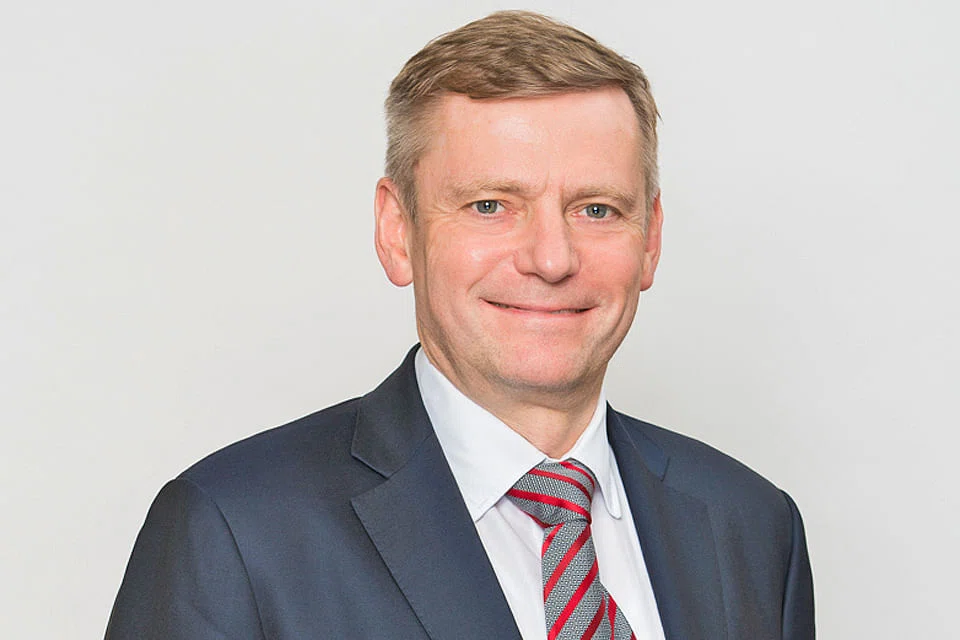
THE built environment industry faces a number of challenges both at the owner-operator, as well at the engineering and construction level, says Dr Uwe Krueger, Head, Industrials, Business Services, Energy & Resources at Singapore state investor Temasek Holdings.
"The industry will benefit from quicker adoption of digital technologies and innovation. There has been little systematic progress on productivity over decades. Performance can be significantly improved by adopting a more holistic view across the entire value chain, from project financing, planning as well as to actual execution," says Dr Krueger.
The world will be facing a US$15 trillion deficit in infrastructure investment by 2040. The affordable housing gap now stands at US$650 billion a year; a problem that will only grow as urban populations expand.
"Therefore, there is a pressing need for the built environment industry to embrace technology, and for public and private sector stakeholders to collaborate. The industry faces a number of challenges including quality issues in execution, and time and budget overruns due to poor project management.
"The good news is, we're already seeing several positive changes. For example in the area of financing, the World Economic Forum is leading inter-governmental efforts to advocate a shift towards blended finance."
Importantly, on project planning and execution, there is an unprecedented emergence of promising construction-tech start-ups with innovative business models and technology applications. "These are promising signs that industry is finally restarting its innovation engine," says Dr Krueger.
Looking ahead, he says there are four changes that he sees as essential for the industry:
He says that the built environment industry has the fantastic privilege to plan, design and built the environment where people will live and work in the 21st century and beyond.
A holistic approach is needed for the urban development of the future where energy, water, waste and the social and cultural aspects are all considered in a responsible way.
"The built environment encompasses everything from residential and commercial buildings to parks and community spaces, public utilities and transportation systems, and even how these elements interact with each other. Therefore it involves a wide range of stakeholders - architects, designers, city planners, engineering and construction players, policymakers and of course users of the spaces."
Responsible urban planning requires a comprehensive and creative approach where all stakeholders are adequately incentivised to work towards a common vision - to create sustainable and smart living environment in a financially viable way, he adds.
He says digitalisation can help in the built environment industry's transformation as it has already reaped enormous benefits for various industrial sectors, most notably for advanced manufacturing. Industry 4.0 applied to the construction industry can aid a similar industry transformation by plugging productivity and performance gaps, and tackling environmental challenges.
"Simple improvements such as process digitalisation across design, scheduling, material management, crew tracking can go a long way in ensuring transparency, timely risk assessment and quality control. This will ultimately lead to better and more reliable project outcomes with significant cost savings."
Use of modern survey technology such as LIDAR (Light Detection and Ranging) maps, GPS and drones, which are all more accessible today, can help avoid surprises and bring down project costs substantially.
At the same time, innovative construction approaches, such as 3-D printing and preassembled modules, can lower costs and speed up construction while improving quality and safety.
He says that on its part, Temasek is helping the local built environment industry to transform itself and take advantage of the new opportunities that are opening up as its portfolio includes several companies that play an important role in Singapore's overall built environment. These companies lend their knowledge and expertise to the broader Temasek ecosystem.
For instance, in the field of engineering consultation, there is Surbana Jurong, which is a leading engineering consulting firm in Asia. In real estate there are CapitaLand, which is one of the largest real estate groups in Asia, and Mapletree, a real estate development, investment and management company headquartered in Singapore.
In the area of transportation there is SMRT, which is a multi-modal public transport operator in Singapore. In engineering and technology, there is ST Engineering, which is a global technology, defence and engineering group.
"The breadth of our expertise adds strategic value to companies looking to tap on early stage innovation and tech. We recognise that such investments often require longer gestation periods, and our patient capital allows us to take long term positions where required," says Dr Krueger.
"Our global presence and network helps us connect our portfolio companies to potential partners and growth opportunities.
"Finally, from our vantage point, we actively seek opportunities to create synergies between our portfolio companies, or facilitate engagement with external stakeholders like government bodies."
A recent example would be the combination of CapitaLand and Ascendas-Singbridge to create one of the top 10 real estate investment managers globally.
Share with us your feedback on BT's products and services