A track record of innovation
Elmich has invested heavily in developing sustainable products that reduce costs and save the environment
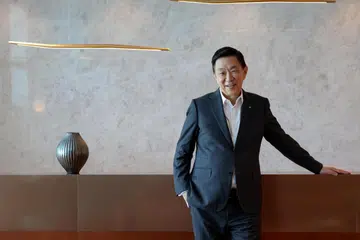
AFTER operating his waterproofing business for a decade, Alan Lee spotted an opportunity to develop a new line of business. The founder of green technology firm Elmich saw that many buildings in Singapore had used gravel to drain out rainwater.
But, at the time in the early 1990s, another new product had come onto the market: a plastic drainage cell that would do the same job as gravel, but in a much more efficient manner.
"It was a no brainer. Between 300kg of gravel and a 2.5kg plastic drainage cell, clearly one was the better choice," he says. With a lighter load, there is more freedom for architects and engineers to design buildings, he notes.
"We were the first in Asia and Singapore to introduce the product to the market. It took time but now no one uses gravel any more."
This is the type of product Mr Lee considers to be sustainable: one that increases efficiency, whether by using less energy, resources or manpower. "It has to make sense. Otherwise why have products that say they are sustainable?" he says.
Over time, the firm - which was founded in 1985 and now has offices in 27 countries - has introduced other products that have made a difference in the built environment sector in terms of saving the planet as well as resources for the firm.
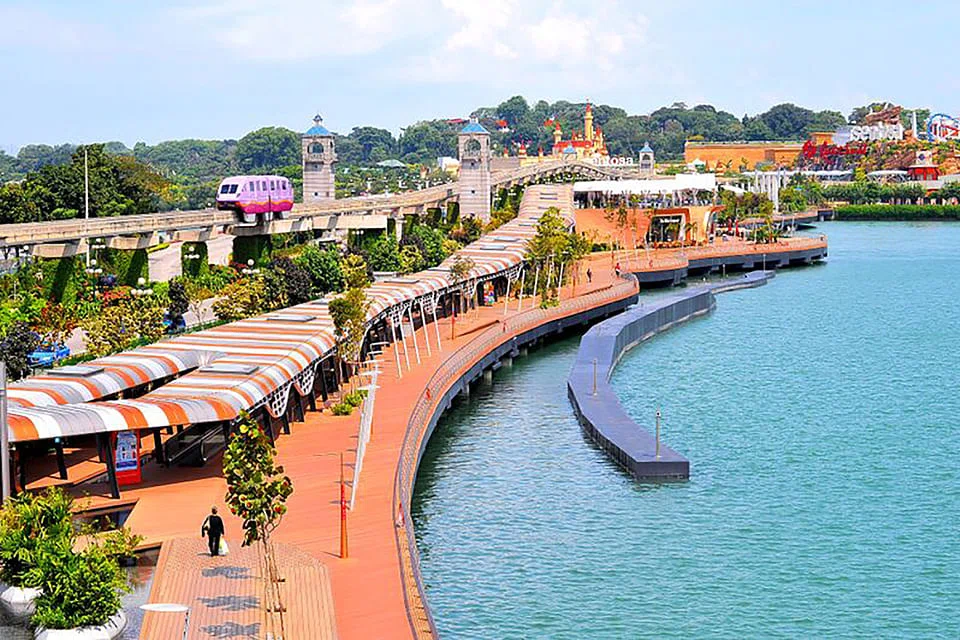
Another example is the boardwalk linking Sentosa to VivoCity. Initially, the plans had stipulated concrete stumps to support the structure. But Elmich's proposal was to put pedestals made of plastic that could be fit to measure according to the height required to support the boardwalk.
"Concrete was heavy and you needed to cast it, and it had to be perfectly cast. With our product you could easily adjust when required," he says. "It saves manpower, materials and costs. That's sustainable."
Elmich was given the Top Honour at the Green Technology Awards this year for its contributions to the industry. The company has put in great effort to develop innovative products, holding more than 130 patents.
It has also ensured that the firms it works with buy only from its approved suppliers, ensuring both quality as well as sustainability.
"As virtually all our products are made from recycled plastics which are quite abundant, we have been able to contain the prices to levels significantly lower than non-green alternatives," says Mr Lee. The company has five engineers among its staff of about 40 who attend and can help fix problems for their clients.
Mr Lee also notes that in many European countries such as Germany and Switzerland, environmental sustainability is a major consideration and customers are prepared to pay more for these products. Here, there is less willingness for customers to pay unless the products are "good and cheap".
"One of our clients, a German multinational, gave us nearly perfect scores in their assessment of suppliers, except for one category: price," he says. "They said the price can be a bit better. We got eight out of 10. That's pretty good I think."
Still, Mr Lee believes that the sustainable way of doing business has become mainstream and bodes well for companies like his. "This is no flash in the pan. This way of doing business is here to stay."