

Trading the Asian markets
Close monitoring of global and regional developments is essential for the active and short-term trader. Nonetheless, an appropriate risk and money management system may help investors achieve a profitable outcome
INTEREST in trading Asia has risen in tandem with the region's growth story. With the expansion of advanced economies projected to remain at modest levels, the higher growth expectations of emerging Asia make it a compelling investment theme for the next couple of years. The development of Asia and increased cross-border flow of capital present plenty of opportunities for traders.
Two major themes recently dominated the Asian financial markets. First, the anticipation of a precise timeline for the increase in the US Federal Reserve's (Fed) interest rate stoked market volatility as traders expressed their varying directional biases through their positioning. Lately, markets have pushed back expectations of the Fed's rate normalisation to the second half of the year. The delay bolsters current loose monetary conditions, led by the European Central Bank and Bank of Japan's (BOJ) considerable expansion of money supply (also known as "quantitative easing"). Over one-third of the 25 central banks who have eased monetary policy are in Asia (ex-Japan). In spite of such "coordinated" action, inflation expectations have not quite reacted as hoped, owing to sustained low oil prices depressing prices. An implication of this is that the present state of easy money could persist for a while.
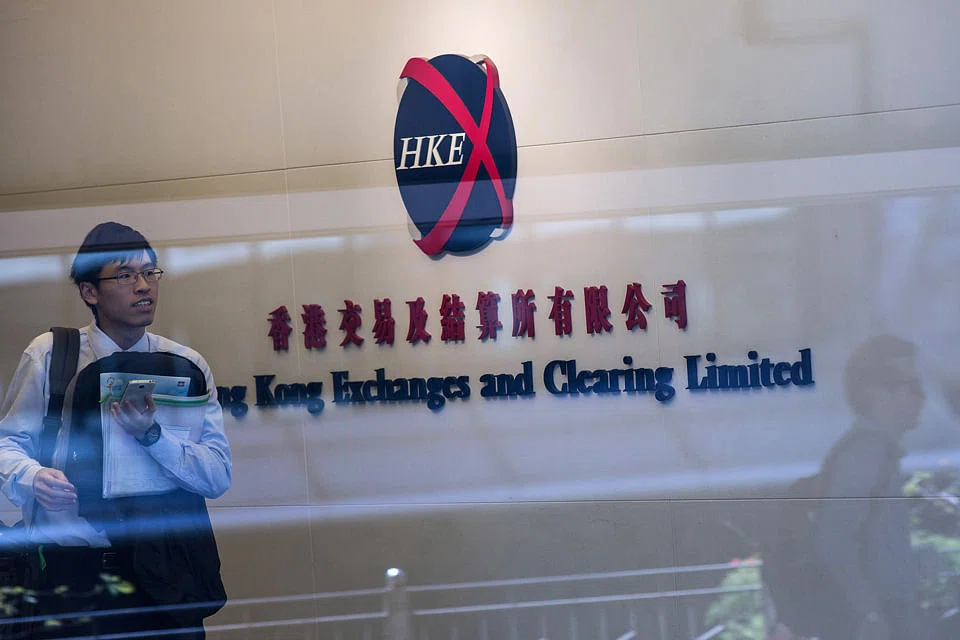
Second, mainland China and Hong Kong shares have rallied to incredible levels, spurred on by several policy developments. A one-two combination of People's Bank of China easing and liberalisation of equity trading rules broke the floodgates. The FTSE China A50 Index soared past 13,000 to multi-year highs while the Shanghai Shenzhen CSI 300 is targeting 4,500. In addition, the valuation gap between A-shares and H-shares lured mainland investors to Hong Kong's stock market via the Stock Connect facility. The Hang Seng Index soared 12.5 per cent in the first two weeks of April to test 28,000. A-shares are Chinese firms incorporated in China and traded on the Shanghai and Shenzhen exchanges, while H-shares are Chinese companies incorporated in China and listed in Hong Kong. H-shares are open to foreign participation. The torrent of hot money from mainland China into Hong Kong has led to a 65 per cent spike in the share price of Hong Kong Exchanges and Clearing Ltd (HKEx), the territory's bourse operator.
A market value of US$44 billion helped HKEx displace the US' CME Group as the world's largest exchange operator.
Unlike developed capital markets, access to some emerging Asian markets may be restricted for offshore traders. This is why the development of structured products has helped retail traders to gain a foothold in previously inaccessible markets.
Bespoke nature
Structured products are instruments that are combined with traditional investment products and financial derivatives. As such, structured products are highly customisable and would attract investors who have specific risk-reward profile.
There are structured products whose investment objective is to protect capital, while others are more interested in yield enhancement or performance participation.
Adding to the bespoke nature, structured products may offer several features that could be desirable to the trader. Some offer margin trading, which allow you to scale up your investment while putting in just a small percentage of your capital, ie "margin". In a Contracts for Difference (CFDs) product, you may leverage up to 50 times your invested amount. Others such as index funds are suitable for investors who prefer a passive investment approach, low costs and diversification.
As with all things in trading, there are key risks associated with the involvement in structured products. If you are trading a product where its underlying asset is based in a foreign country, your position may be vulnerable to risks relating to market movements, politics, exchange rate, counterparty, liquidity, and operations.
Moreover, the complexity of some structured products may be too complicated for less-experienced investors to appreciate. Therefore, understanding the products and risks as well as having a robust risk and money management strategy are vital to your trading lifespan.
So how can investors get started in trading Asia? If you prefer to be hands-off and delegate research and trading responsibilities to professional fund managers, an array of Asia-centric mutual funds and exchange-traded funds (ETFs) are available. They can range from region- to country-specific or focus on sectors or index trackers. iShares China Large-Cap ETF and Deutsche X-trackers Harvest CSI 300 China A-Shares ETF are two ETFs incorporated in the US that track the performance of Chinese A-shares. ETFs offer a low-cost and straightforward way of investing in Asia as well as benefit from professional management and diversification.
For those leaning towards active management, outright purchase of the financial assets through a brokerage may be an option. Notwithstanding the restrictions on foreign investors in some Asian countries, there are ways to invest in these markets. S-shares (or S-chips) and CFDs provide a means to buy shares in a foreign company. S-shares are Chinese companies listed on the SGX, whereas CFDs are an agreement between the trader and a brokerage to enter a position on an asset class without owning the underlying asset. CFDs are not confined to equities. There are CFDs for foreign exchange, commodities and indices.
Fuelling gyrations
Increased volatility presents more trading opportunities. Market movements in Asia over the next six to 12 months are expected to centre on the two themes while potential further expansion of BOJ's QQE ("quantitative and qualitative easing") programme and the ongoing Greek situation could also fuel Asian market gyrations. This means the real moves are still to come. Close monitoring of global and regional developments is essential for the active and short-term trader. Nonetheless, trading the Asian markets may prove profitable with the appropriate risk and money management system.
Disclaimer: The information is intended by IG Asia Pte Ltd ("IG") (Co Reg No 200510021K) for general circulation. It does not take into account the specific investment objectives, financial situation or particular needs of any particular person. You should take into account your specific investment objectives, financial situation or particular needs before making a commitment to trade, including seeking advice from an independent financial adviser regarding the suitability of the investment, under a separate engagement, as you deem fit. Please also read our research disclaimer at IG.com.sg
TRENDING NOW

SoftBank’s Son plans US$50 billion Malaysia tech outlay: Anwar Ibrahim
Singapore expects all parties to honour commitments, says PM Wong after Indonesia cuts gas exports

Gas Supply may pursue remedies if contract breached following Indonesia’s export cuts: Tan See Leng

Why the biggest business decision about AI isn’t which model to choose

