

A 'yes' from Scots means upheaval for rest of UK
Cameron makes last-minute emotional appeal; either outcome a win-win for Salmond
THE touch and go Scottish Referendum is proving to be the most significant British political event since 1975, when the UK populace voted to stay in the European Economic Community (EEC).
At issue is not only the uncertainty involving the potential rebirth after 307 years, of an independent Scotland, but political and economic upheaval for England, Wales and Northern Ireland in the rest of the United Kingdom.
The key economic questions relating to separation is what would be Scotland's currency if the UK government refused to allow the nation access to sterling monetary union and whether oil, whisky, fishing, other resources and other businesses would generate sufficient revenue to finance health, education, policing, social services, transport, armed forces public spending. A yes vote would be mostly damaging for the rest of the UK, economists say. The government and balance of payments current accounts are in deficit and the nation would lose oil and other revenue.
The average of the latest polls indicates that the vote is going to the wire with the Unionists "No" camp only a couple of points ahead of the combined Scottish National Party (SNP) and Scottish Green Party "Yes" for Independence campaign. The key question is what some 15 to 20 per cent of undecided voters, including 16 to 17-year boys and girls, will do when they enter the voting booths on Thursday.
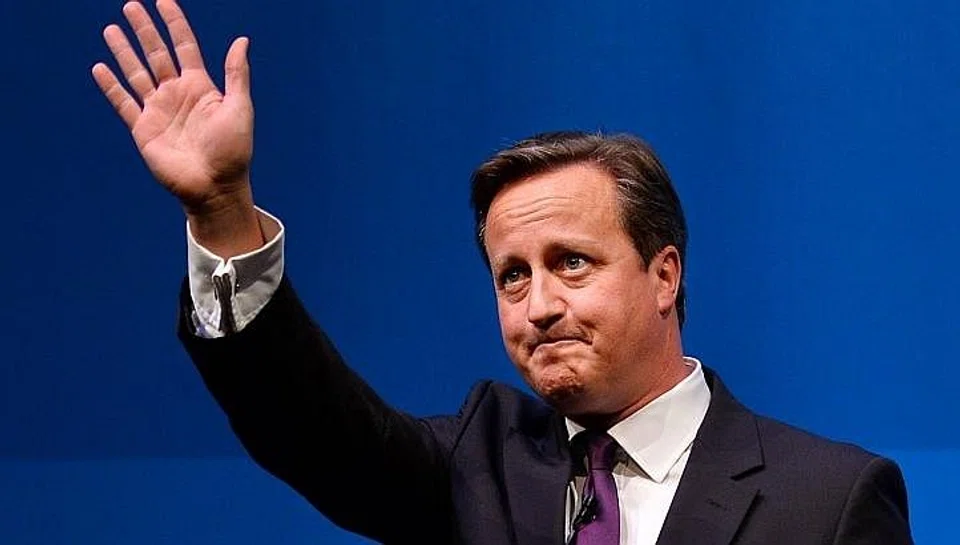
In an emotional appeal, Prime Minister David Cameron summed up the view of the Unionists. He warned of the consequences of fracturing from the Union, cautioning that a yes vote would end the UK "for good, for ever". It would deprive the Scottish people of a shared currency and pooled pension arrangements, he claimed.
Mr Cameron, with a voice close to breaking, said: "It is my duty to be clear about the likely consequences of a yes vote. Independence would not be a trial separation. It would be a painful divorce." Independence would mean Scotland's border with England - and the sea routes to Northern Ireland - would become international frontiers, Mr Cameron continued, and that more than half of Scottish mortgages would suddenly be provided by banks in a foreign country.
All three UK parties, the Conservatives, Labour and Liberal Democrats, which unbiased commentators believe are in a state of panic, have signed a pledge to give Scotland "Devo-Max" i.e. greater devolution if Scotland remains in the Union.
Alex Salmond, Scotland First Minister and head of the Scottish National Party (SNP) warned voters, however, that promises had been made before and none of the parties has agreed to potential extra powers for Scotland, including taxation.
Moreover "devo max' would encourage England, Wales and Northern Ireland to seek devolution, contend former secretary of Wales John Redwood, and other conservative English MPs.
Mr Salmond described the referendum with its enthusiastic vibrant response from Scottish residents as a remarkable example of democracy, adding: "The next time (Cameron) comes to Scotland... following a Yes vote it will be to engage in serious post-referendum talks in the best interests of the people of Scotland and the rest of the UK, as pledged in the Edinburgh Agreement (of 2012)."
A narrow victory regardless of the outcome will bring in its wake market, business and political uncertainty for Britain, contend business people. Sterling, for example, has already fallen by 6 per cent from its mid summer peak, share prices have weakened and Cross Border Capital which monitors international financial flows estimates that some US$27 billion left the UK last month because of worries about Scotland.
Moreover, ahead of a General Election in May 2015, Mr Cameron and the Coalition Government are under acute pressure.
Whatever the Referendum outcome it is "win, win" for the shrewd political operator, Mr Salmond and the Scots and "lose, lose" for Mr Cameron and the Westminster parliament following what is regarded as a dismal, negative campaign.
Martin Sorrell, CEO of WPP Group, the international advertising and public relations group, sums it up: "It would be better to have a decisive result one way or the other."
Mr Sorrell is betting that the Unionists will win but fears that if there is a Yes victory, the fragmentation of the UK could damage British business. On the other hand if Scotland proved it had a "coherent strategy economically and socially" with resultant growth, WPP would invest in the country, "similarly to small population countries such as Singapore or Uruguay."
Douglas Flint, chairman of HSBC and a non resident Scot, who can't vote, warned that "the transition from the existing currency union would be complex and fraught with danger". Independence could prompt "capital flight" from the country and leave its financial system in a "parlous state".
Martin Gilbert, chief executive of Aberdeen Asset Management, Scotland's largest asset manager, thought Scotland would prosper whatever the outcome of the vote.
The company has stated that it is officially neutral in the independence debate and has no plans to move its headquarters from Aberdeen. Mr Gilbert dismissed suggestions from Mr Cameron and the Bank of England governor Mark Carney that a currency union was incompatible with national sovereignty.
"A sterling union would be both desirable and highly likely whatever is said in London now."
But if monetary union were to be refused, Mr Gilbert maintained that "sterlingisation" - in which an independent Scotland kept the pound without a formal deal - would be a "pretty good option".
TRENDING NOW

He built the Vingroup empire. Now South-east Asia’s richest man is handing some key roles to his sons

Seatrium allocates S$200 million for new share buyback programme

32 companies, 6 individuals bag accolades at Singapore Corporate Awards 2026
Stocks to watch: Mapletree Logistics Trust, Seatrium, Keppel DC Reit, Food Empire

