

Carbon credit crash course
Many climate mitigation strategies rely on credits and offsets in the interim. Here’s a quick rundown on how they work.
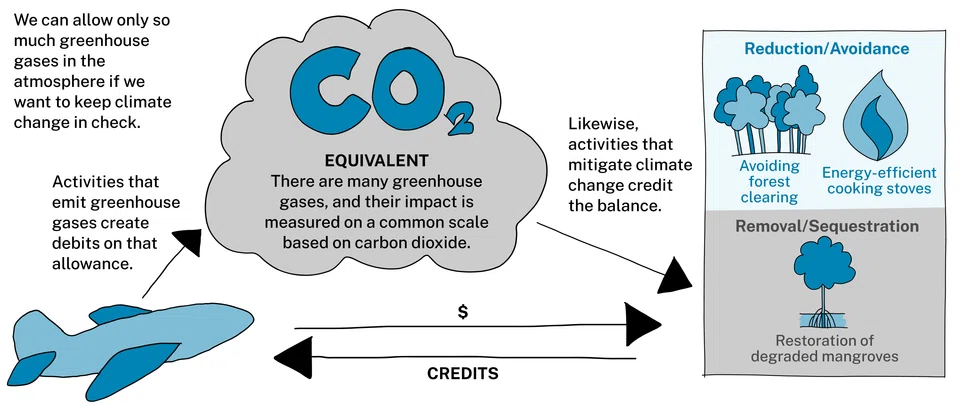
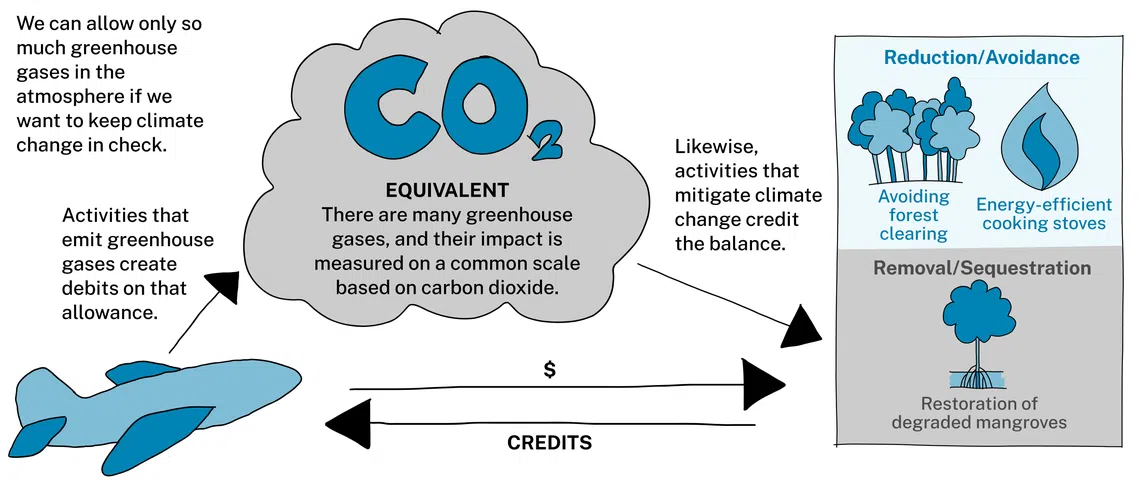
Carbon credits represent measurable amounts of greenhouse gases that have been kept out or removed from the atmosphere. They allow climate mitigating projects to access funding from those who want to offset the impact of their emissions.
Reduction credits represent more than 90% of the voluntary market, and are significantly cheaper than removal credits.
KEY PRINCIPLES FOR GOOD-QUALITY CREDITS
TRADING CARBON
There are broadly two types of markets for carbon credits.
Mandatory These markets are created and regulated by compliance regimes, such as cap-and-trade schemes. European Union Allowances account for about 90 per cent of the mandatory carbon market.
Voluntary Those who want to mitigate their emissions even though they are not required to do so can use voluntary markets. Exchanges are beginning to gain ground, but most voluntary trading is still over the counter, which makes market share elusive.
VERIFYING QUALITY CREDITS
The voluntary market relies on independent standard bodies to accredit good quality credits. The Verified Carbon Standard, set by Verra, has become the most widely used standard.
CHALLENGES
Perverse incentives Over-reliance on offsets can delay the significant changes to human activity that are necessary to avoid the worst of climate change.
Quality problems Poor-quality credits erode confidence in carbon markets, raising the importance of standards and verifiers like Verra.
Undeveloped markets Reference contracts, futures, clearing and other trade infrastructure have been proposed to improve price discovery and comparability in a highly inefficient market.
SUPPLYING CARBON CREDITS
The volume of carbon traded has been growing, and Asia contributes most of the carbon traded.
Forestry and land use projects account for more than half of voluntary carbon credits, but they are also among the most expensive.
Sources: Taskforce on Scaling Voluntary Carbon Market, Ecosystem Marketplace, Refinitiv, Verra, Greenhouse Gas Management Institute, Stockholm Environment Institute and McKinsey.
TRENDING NOW

Government to bring forward raising of retirement age, give employers more financial support to create flexi-load jobs
Former minister Maliki Osman, Revolut chairman join Asia Gulf Holdings advisory board

Is Manila Asia’s new dining hot spot?

Simba at risk of losing operating licence over spectrum misuse

