

110,000 local hires supported by Jobs Growth Incentive in October: Josephine Teo
 Add BT as a preferred source
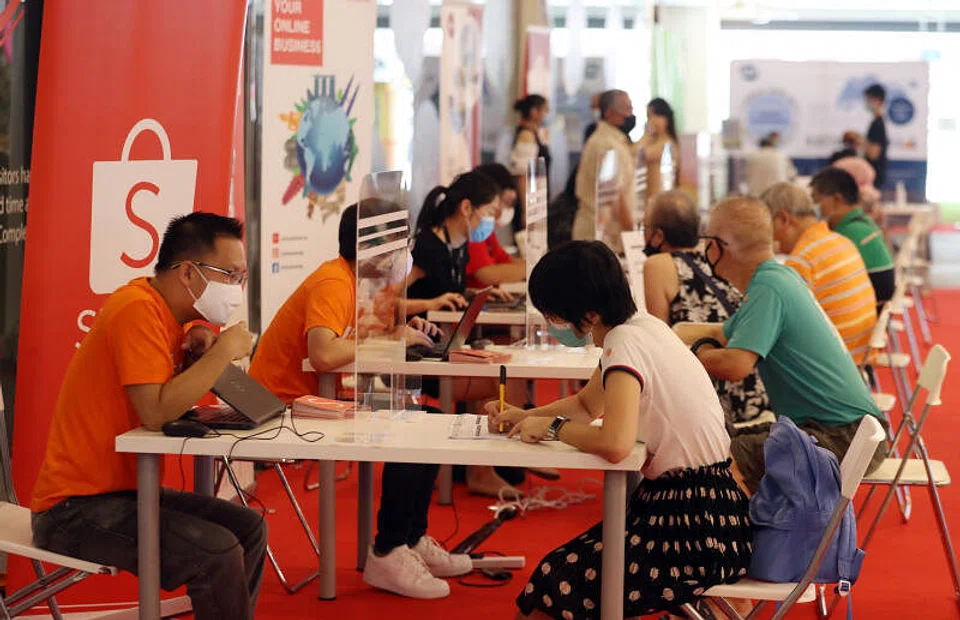
THE cumulative number of local hires supported by the Jobs Growth Incentive (JGI) rose to 110,000 in October, the second month since the scheme's implementation, up from 50,000 in the first month.
To complement job-matching efforts, the government is working with employment agencies, and has introduced the Human Capital Partnership (Employment Agencies) Mark to help jobseekers and employers identify exemplary agencies, Manpower Minister Josephine Teo said at a media briefing on Monday.
With the JGI originally meant to run from September 2020 to February 2021, National Trades Union Congress assistant secretary-general Desmond Choo said the labour movement looks forward to an extension of the JGI, "especially for the more mature workers", as well as a more targeted Jobs Support Scheme.
Replying to a question from the media, Mrs Teo said that the issue of whether to extend the scheme is being discussed, adding that Deputy Prime Minister and Finance Minister Heng Swee Keat may address this soon: "I think we won't have to wait very much longer." Mr Heng is set to deliver the Budget speech on Feb 16.
As at October, JGI-supported hires were from across some 26,000 employers, of which more than 11,000 were newly eligible for payouts, with the rest having already qualified for payouts in September.
Of the 14,000 or so employers who qualified in September, about 80 per cent maintained or expanded their local hiring in October.
Navigate Asia in
a new global order
Get the insights delivered to your inbox.
Most eligible employers hired one or two local workers, while a fifth hired five or more local workers.
Similar to September, about half of the new hires on the scheme in October were aged 40 and above. Under the JGI, the government co-pays 25 per cent of the first S$5,000 of gross monthly wages for 12 months for new hires aged below 40, and 50 per cent for those aged 40 and above.
Food services was the sector with the most new hires, with 17,800 supported by the JGI. Other top hiring sectors were wholesale trade, with 9,800; professional services, with 8,400; retail, with 7,000; and construction, with 7,000.
Though resident employment has returned to pre-pandemic levels and unemployment rates have declined for two months in a row, there could still be labour market churn underneath these apparently steady topline figures, noted Mrs Teo.
The government is paying particular attention to mid-career workers, as "matches do not come quite so easily" for this group, she said. That is why the government is also roping in employment agencies, which "can help employers consider candidates that they sometimes overlook".
The Human Capital Partnership (Employment Agencies) programme, introduced on Dec 28 last year, recognises employment agencies that have shown a strong commitment to fair recruitment practices, and helped client companies strengthen the Singaporean core in their workforce. Five employment agencies have been appointed partners so far.
It is an expansion of the existing HCP Programme, which has recognised about 600 employers since its launch in February 2017.
Decoding Asia newsletter: your guide to navigating Asia in a new global order. Sign up here to get Decoding Asia newsletter. Delivered to your inbox. Free.
Copyright SPH Media. All rights reserved.
TRENDING NOW

Singapore developer in limbo after Timor-Leste’s shock scrapping of major township project
On the board but frozen out: The Taib family feud tearing Sarawak construction giant apart

US-China summit: Trump sees ‘better’ ties, Xi warns over Taiwan, as talks conclude

That ‘cheap’ Malaysia condo could cost Singapore buyers far more than they think

