

163 new locally transmitted Covid-19 cases in Singapore, including 106 linked to Jurong Fishery Port
 Add BT as a preferred source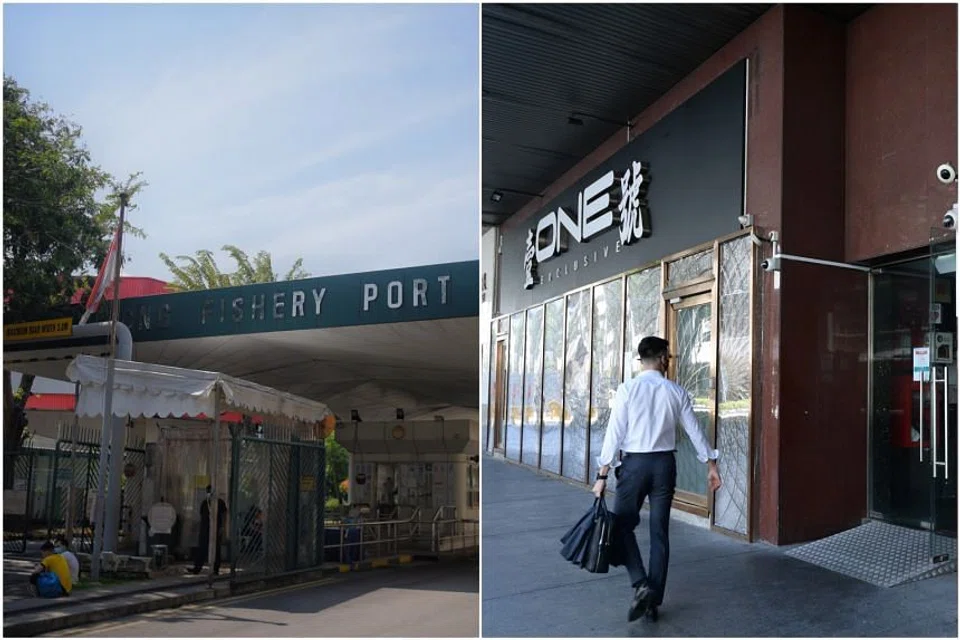
DeeperDive is a beta AI feature. Refer to full articles for the facts.
Singapore
THERE were 163 new locally transmitted coronavirus cases as at Monday afternoon, including 106 cases linked to the growing cluster linked to the Jurong Fishery Port, and markets and food centres.
The Jurong Fishery Port cluster has also been confirmed to be linked to the KTV cluster.
In a Facebook post, Health Minister Ong Ye Kung said that the two clusters differ genetically from the Delta variant that infected people in the clusters at Tan Tock Seng Hospital and Changi Airport, but are closer to what has been detected in imported cases from Indonesia.
He said studies are ongoing to establish their relationship and findings will be explained to the public when the Ministry of Health (MOH) has more conclusive results.
With Monday's addition of 106 cases linked to Jurong Fishery Port, the total number of cases in this cluster now numbers 279.
Navigate Asia in
a new global order
Get the insights delivered to your inbox.
There were also 19 new cases linked to the KTV cluster. The cluster has a total of 192 cases.
These two are currently Singapore's largest active Covid-19 clusters.
Mr Ong said: "As we deal with these two big clusters and test extensively, we should continue to expect many reported cases in the coming days, and must be prepared to make adjustments or even take decisive actions to suppress the cases."
He added that while the KTV cluster is "settling down", the one at Jurong Fishery Port is rising worryingly.
More than 5,000 staff, hostesses and patrons have been tested for the KTV cluster, and the yield is trending down by the day. "In other words, we are exhausting the uncovering of cases from our various rings of surveillance."
On the other hand, the port cluster is seeding cases in various markets, as well as in the communities around them.
Mr Ong outlined four rings of defence to contain the cluster.
First, all 700 workers at the port have been quarantined and several cases have been uncovered.
The second ring covers more than 860 people such as fishmongers and delivery drivers who had visited the port. They have been issued health risk warnings, which means they have to undergo polymerase chain reaction (PCR) tests and self-isolate until they receive their results.
"We have more or less completed testing and detected 26 cases amongst them. It is a high number," said Mr Ong.
The third ring covers other stallholders of all other markets. Notifications have been sent to these stallholders as a precaution. They are scheduled to go to regional screening centres for testing.
The fourth ring covers residents around the market. Those living around markets with positive cases are advised to minimise their movements and social interactions, as well as do their marketing during off-peak hours.
The National Environment Agency is setting up wastewater testing in as many locations as practicable, and MOH will be mounting special operations in these estates, he said.
He said by Tuesday, half of Singapore's population should have received both doses of the Covid-19 vaccination and urged those eligible to get jabbed.
"Vaccination is gathering pace. For the past few weeks, we have vaccinated up to 80,000 a day. Demand has flipped towards second doses, which now account for about 70 per cent of all doses."
Of the 163 locally transmitted cases on Monday, 66 were linked to previous cases and had already been quarantined.
There were 71 other linked cases detected through surveillance, as well as 10 new unlinked cases.
Among the locally transmitted cases is an unvaccinated senior above 70, who is at risk of serious illness, said MOH.
There were also nine imported cases who had been placed on stay-home notice (SHN) on arrival in Singapore, added MOH.
Four of these cases was detected on arrival in Singapore, while five developed symptoms during SHN or isolation.
The total number of cases in Singapore stands at 63,245. THE STRAITS TIMES
Decoding Asia newsletter: your guide to navigating Asia in a new global order. Sign up here to get Decoding Asia newsletter. Delivered to your inbox. Free.
Copyright SPH Media. All rights reserved.
TRENDING NOW
‘Boring’ is the new black: The stars are aligning for a Singapore stock market revival
Near sell-out launches in March boost developer sales to 1,300 units after four slow months

China pips the US if Asean is forced to choose, but analysts warn against reading it like a sports result

Genting Singapore’s Lim Kok Thay receives S$7.5 million pay package for FY2025

