7.3-magnitude quake hits east Japan, tsunami advisory issued
 Add BT as a preferred source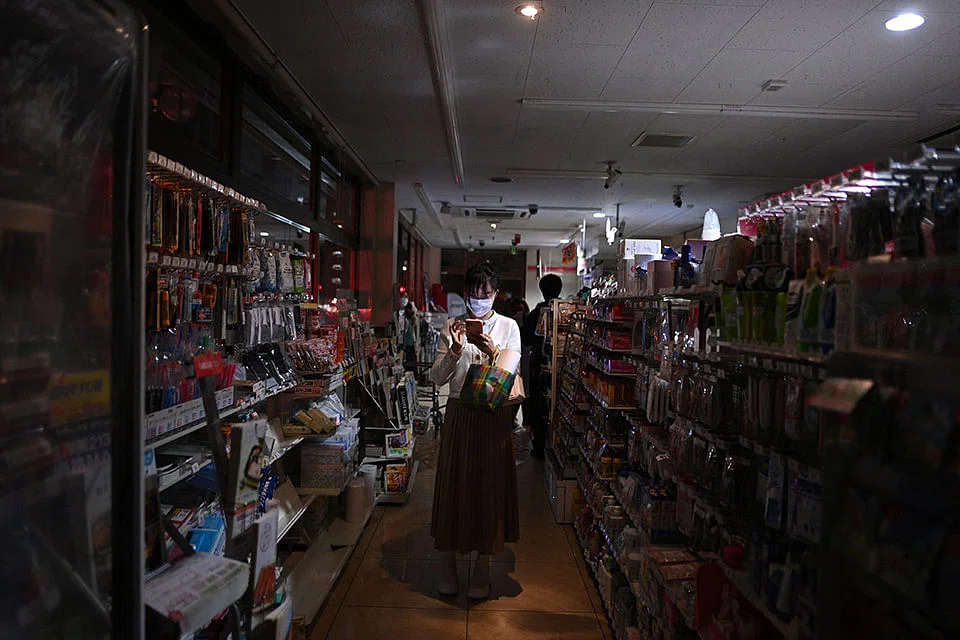
DeeperDive is a beta AI feature. Refer to full articles for the facts.
[TOKYO] A powerful 7.3-magnitude quake jolted east Japan on Wednesday (Mar 16) night, rattling the capital Tokyo and prompting a tsunami advisory for parts of the northeast coast, the Japan Meteorological Agency said.
The quake was centred off the coast of the Fukushima region at a depth of 60 kilometres (37 miles).
Shortly after it hit at 11.36 pm (1436 GMT) an advisory for tsunami waves of one metre was issued for parts of the coast.
There were no immediate reports of damage or injuries, but at least 2 million households were left without power, including 700,000 in Tokyo, electricity provider TEPCO said.
In the north-eastern region, 156,000 households had no power, regional energy company Tohoku Electric Power said.
Prime Minister Fumio Kishida told reporters the government was gathering information on the situation.
Navigate Asia in
a new global order
Get the insights delivered to your inbox.
"We will commit ourselves to gathering information, do our best to rescue those affected by the (quake) and communicate information appropriately," he said.
TEPCO also said in a tweet that it was checking operations at the Fukushima nuclear plant that went into meltdown 11 years ago after a huge 9.0-magnitude quake hit off the eastern coast on Mar 11, 2011, triggering a tsunami and nuclear disaster.
The nuclear regulation authority said there were no abnormalities detected at Onagawa nuclear plant in northeastern Miyagi prefecture.
Regional train company JR East said it was experiencing significant disruption to its operations.
Japan sits on the Pacific "Ring of Fire", an arc of intense seismic activity that stretches through South-east Asia and across the Pacific basin.
The country is regularly hit by quakes, and has strict construction regulations intended to ensure buildings can withstand strong tremors.
But it remains haunted by the memory of the 2011 undersea quake in northeastern Japan that triggered a deadly tsunami and unleashed the Fukushima nuclear accident.
A minute's silence was held on Friday, the anniversary of the disaster, to remember the some 18,500 people left dead or missing in the tsunami.
Around the stricken Fukushima plant, extensive decontamination has been carried out, and this year 5 former residents of Futaba, the region's last uninhabited town, returned to live there on a trial basis.
Around 12 per cent of Fukushima was once declared unsafe but no-go zones now cover just 2.4 per cent of the prefecture, although populations in many towns remain far lower than before. AFP
Decoding Asia newsletter: your guide to navigating Asia in a new global order. Sign up here to get Decoding Asia newsletter. Delivered to your inbox. Free.
Copyright SPH Media. All rights reserved.