

Abe urges central bank to pre-empt credit squeeze
Analysts say he aims to calm markets post-Brexit, but is also worried about Japanese banks' heavy lending abroad
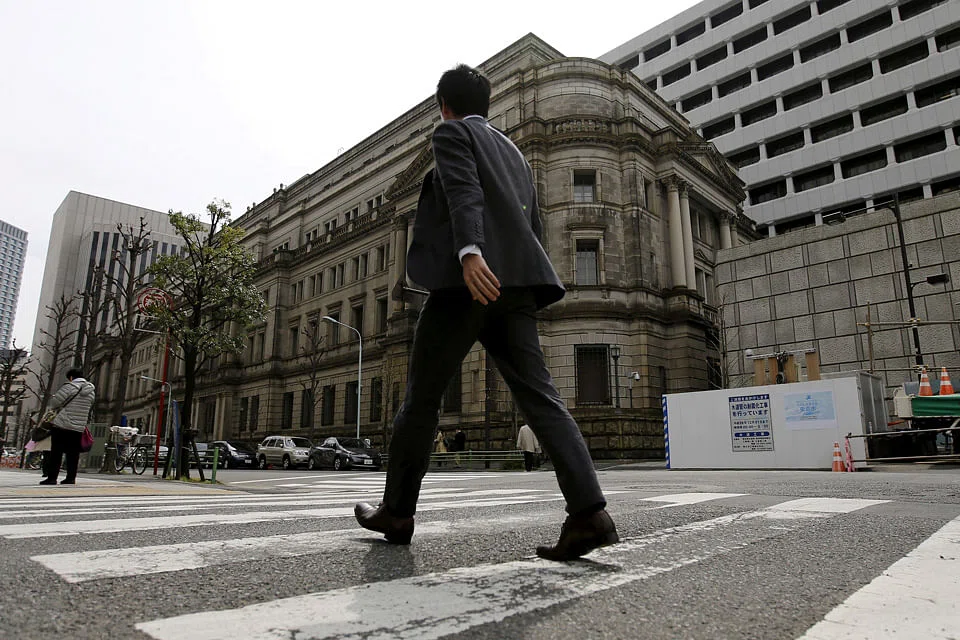
Tokyo
PRIME Minister Shinzo Abe on Wednesday urged Bank of Japan (BOJ) governor Haruhiko Kuroda to ensure that the central bank provides ample funds to financial markets to forestall a credit squeeze in the wake of last week's Brexit shock.
The move was seen partly as reflecting Mr Abe's desire to calm markets in the run-up to next month's election in the Upper House, but some analysts have detected an undercurrent of concern about the situation of Japanese banks operating overseas as well.
The Business Times reported recently that these banks have stepped up their overseas lending dramatically, to the point where the BOJ now feels that vigilance is called for regarding the currency risks the banks are taking on.
These banks have been pushed increasingly into overseas lending by their home country's declining interest rates, which have taken a recent dip into negative territory.
Although financial markets showed signs on Wednesday of regaining some stability in the wake of the extreme turmoil experienced last Friday and early this week, Mr Abe said after a meeting with Mr Kuroda and with Minister of Finance Taro Aso that a "sense of uncertainty and worry about risks remains in the markets".
Mr Abe urged Mr Aso at the meeting to keep a close watch on currency moves and respond flexibly to market developments, in coordination with the Group of Seven (G7) economies, whose activities Japan is chairing in the current year.
A dramatic post-Brexit surge in the value of the yen threatens to damage Japan's exports and corporate overseas earnings severely, but a more hidden danger is that currency market turbulence could create a credit squeeze for dollar-dependent Japanese banks lending overseas.
Banks have responded to a long period of low, zero and now, negative, interest rates by looking to overseas loan markets in Asia, North America, Europe and elsewhere; the amount of such overseas lending now exceeds that of British, European and US banks, said the BOJ.
Between 30 and 40 per cent of total assets at Japan's Big Three megabanks - Mitsubishi UFJ Financial Group, Sumitomo Mitsui Financial Group and Mizuho Financial Group - are now represented by overseas loans made by overseas branches or in foreign currency loans from Japan.
Foreign currency loans by the trio more than doubled from around 30 trillion yen (S$393.9 billion) in 2010 to above 70 trillion yen billion at the end of last year. The biggest proportion of loans made by Japanese banks, mainly to Japanese and other corporate borrowers overseas, are denominated in dollars as few overseas borrowers need yen loans.
Banks must borrow in dollars from interbank markets or buy currency-hedging instruments in markets, where they can be squeezed by variable funding costs or maturity mismatches. The BOJ had warned banks earlier this year to "pay careful attention to the liquidity situation in the foreign currency funding market".
Mr Kuroda said on Wednesday after his meeting with Mr Abe that the BOJ stands ready to provide dollars to the extent possible and whenever necessary.
But BOJ officials had indicated prior to the Brexit vote that the central bank did not wish to become a lender of last resort. The Japanese central bank had urged banks to ensure that they had adequate foreign currency funding.
On the domestic front, Mr Abe used his Wednesday meeting with the heads of the BOJ and the Ministry of Finance to raise his concern that the Brexit vote would have a severe impact on the financial markets and could damage the economy and the image of Abenomics.
Data released on Wednesday showed that retail sales in Japan fell by a steeper-than-expected 1.9 per cent last month from the month before; it was a third consecutive monthly decline.
Faced with stagnating domestic demand and anaemic export growth, Mr Abe is expected to announce a 10 trillion yen fiscal boost to the world's third largest economy before long.
Veteran Japan analyst Jesper Koll of Wisdom Tree Japan suggested in comments made available to The Business Times that this is likely to be financed by an increase in the BOJ's purchases of Japanese Government Bonds, as fiscal spending is increasingly "coordinated" with BOJ easing.
Meanwhile, Mr Abe is expected to retain a high public profile on issues related to the economy, analysts say.
Yasuji Yajima, chief economist at NLI Research Institute in Tokyo, was quoted by Reuters as having said: "There are not a lot of policy tools left for the authorities to reboot the economy. Therefore, Mr Abe has no choice but to hold meetings one after another - at least until the July election."
TRENDING NOW

‘We don’t want to stay as we are’: CEO Patrick Ng builds a more resilient Huationg
URA to review guidelines on floor space to give developers more design flexibility: Chee Hong Tat

He built the Vingroup empire. Now South-east Asia’s richest man is handing some key roles to his sons

32 companies, 6 individuals bag accolades at Singapore Corporate Awards 2026

