

Abenomics needs to be 'reloaded', says hard-hitting IMF report
Fund also urges Bank of Japan to put greater emphasis on achieving its 2 per cent inflation target in a stable manner
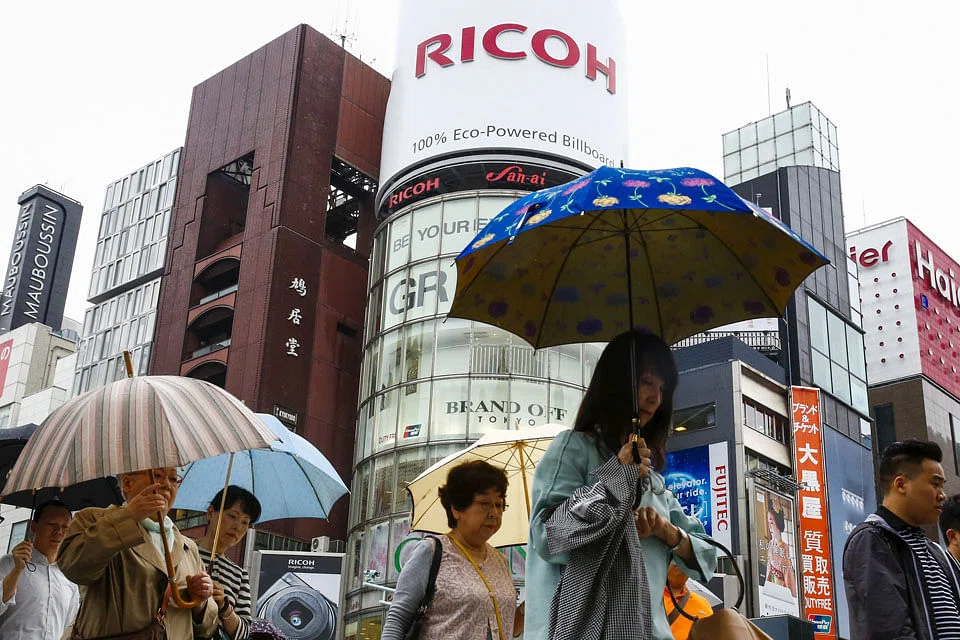
Tokyo
ABENOMICS "needs to be reloaded", the International Monetary Fund (IMF) said on Thursday in an often hard-hitting report analysing the successes and failures of the set of economic policies that bear the name of Japanese Prime Minister Shinzo Abe.
"In addition to swift implementation of already announced reforms, further high-impact structural reforms are urgently needed to lift growth, facilitate fiscal consolidation, and unburden monetary policy," the IMF said.
The report on the health of the world's third largest economy also urged the Bank of Japan to "put greater emphasis on achieving (its) 2 per cent inflation target in a stable manner" and suggested that the target is unachievable under current policies.
The stern policy prescriptions came in the Washington-based IMF's latest annual Article 1V report on Japan. Under Article IV of the IMF's Articles of Agreement, the IMF holds bilateral discussions with members, usually every year, involving staff meeting with high level officials of the country.
A "modest economic recovery is underway", the report said, adding: "GDP is expected to grow at above-potential this year (0.8 per cent) buoyed by gradually strengthening private consumption on higher real wages and a gradual recovery of external demand."
Meanwhile, "inflation remains well below the Bank of Japan's 2 per cent target partly due to commodity price developments, but will start to pick up towards the end of this year with dissipation of the negative effects of falling oil prices and higher wage growth".
Growth in Japan's economy is projected to stabilise at around 0.7 per cent over the medium term with improvements in productivity and capital formation and higher labour force participation offsetting headwinds from the diminishing labour force.
With the closing of the output gap between actual and potential output, a tight labour market and renewed favourable wage-price dynamics, Japan's inflation is expected to increase gradually to about 1.5 per cent over the medium term under current policies, the IMF said.
"However, risks to this outlook are tilted to the downside with the most important risks stemming from weak domestic demand and incomplete policies, particularly with regard to the fiscal consolidation and structural reforms," the report said.
"Abenomics needs to be reloaded so that policy shortcomings do not become a drag on growth and inflation. In addition to swift implementation of already announced reforms, further high-impact structural reforms are urgently needed to lift growth, facilitate fiscal consolidation, and unburden monetary policy."
Japan's next round of reforms should aim to "lift labour supply, reduce labour market duality, continue with agricultural and services sector deregulation and turn the financial sector into a driver of reforms", the IMF urged.
"A credible medium-term fiscal consolidation plan is needed to remove uncertainty about the direction of policies that may be holding back domestic demand.
"The medium-term fiscal reform plan should aim to put debt on a downward path, based on realistic economic assumptions, and specify structural revenue and expenditure measures upfront."
Meanwhile, the Bank of Japan "needs to stand ready to ease further, provide stronger guidance to markets through enhanced communication, and put greater emphasis on achieving the 2 per cent inflation target in a stable manner", the IMF said. .
But at the same time, it warned that "further monetary easing without bolder structural reforms and a credible medium-term fiscal consolidation plan could lead to sluggish domestic demand and overreliance on yen depreciation to pursue domestic policy objectives, with possible adverse spillovers abroad".
This appeared to be a reference to the fact that some of Japan's competitors have complained that Japanese authorities are "targeting" the yen exchange rate under expansionary monetary policies designed ostensibly to boost growth.
In an accompanying commentary of the Article 1V report, IMF executive directors suggested that it is "essential to strengthen all elements of the (Japanese) government's economic strategy to lift growth and create benefits for the global economy".
They noted that "the further depreciation of the yen relative to its 2014 average and improvement in Japan's terms of trade, while beneficial for the domestic economy, make it important to continue with bold structural reforms and credible fiscal consolidation to avoid overreliance on depreciation of the yen".






